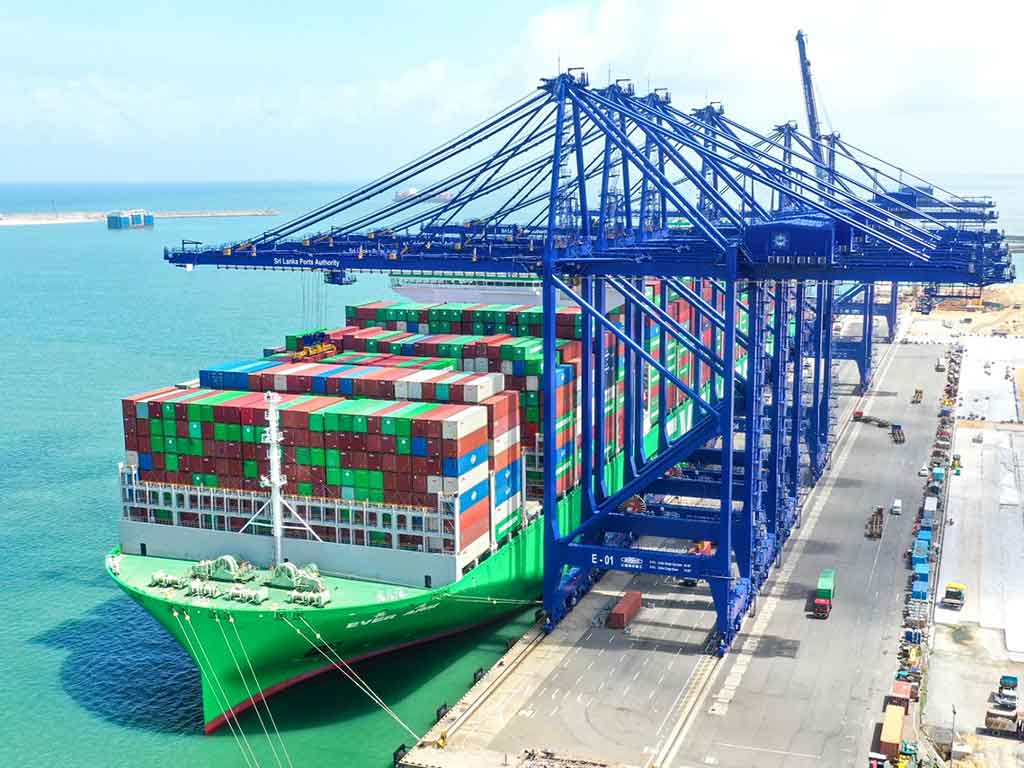
Growing delays at the Colombo Port have pushed foreign cargo ships to bypass Sri Lanka altogether, triggering fears of major supply chain disruptions and threatening the stability of the country’s vital garment industry.
It has been reported that foreign cargo vessels are increasingly avoiding the Colombo Port due to operational delays and prolonged congestion. According to the Joint Garment Associations Forum, this developing trend poses a direct threat to the confidence global buyers have long placed in the Sri Lankan garment industry. The association warns that the delays undermine the industry’s credibility in timely delivery, one of the country’s strongest competitive advantages.
The association stresses that urgent reforms are needed to control and reduce container congestion at the Colombo Port. It says the delays in port operations have created a costly and time consuming problem that jeopardizes trade efficiency. Exporters who rely on global competitiveness are now deeply concerned about the risks this situation presents.

The garment sector, which depends heavily on uninterrupted logistics and timely shipments, faces severe impacts if foreign vessels continue to reroute. The association notes that in recent months, some shipping companies have chosen to avoid Colombo one or two days before arrival. Many of these ships are container vessels carrying raw materials essential for the industry, arriving from Asian supply hubs. This shift intensifies the seriousness of the crisis.
The association further warns that if a ship carrying vital fabrics, buttons and accessories needed by the garment industry bypasses Colombo or faces significant delays, the consequences could be devastating. Missing shipments or late arrivals could halt production, disrupt export schedules and damage long standing relationships with international buyers.
The industry is calling for immediate intervention, stronger management and structural reforms to restore the port’s reliability before long term damage is done to Sri Lanka’s export economy.