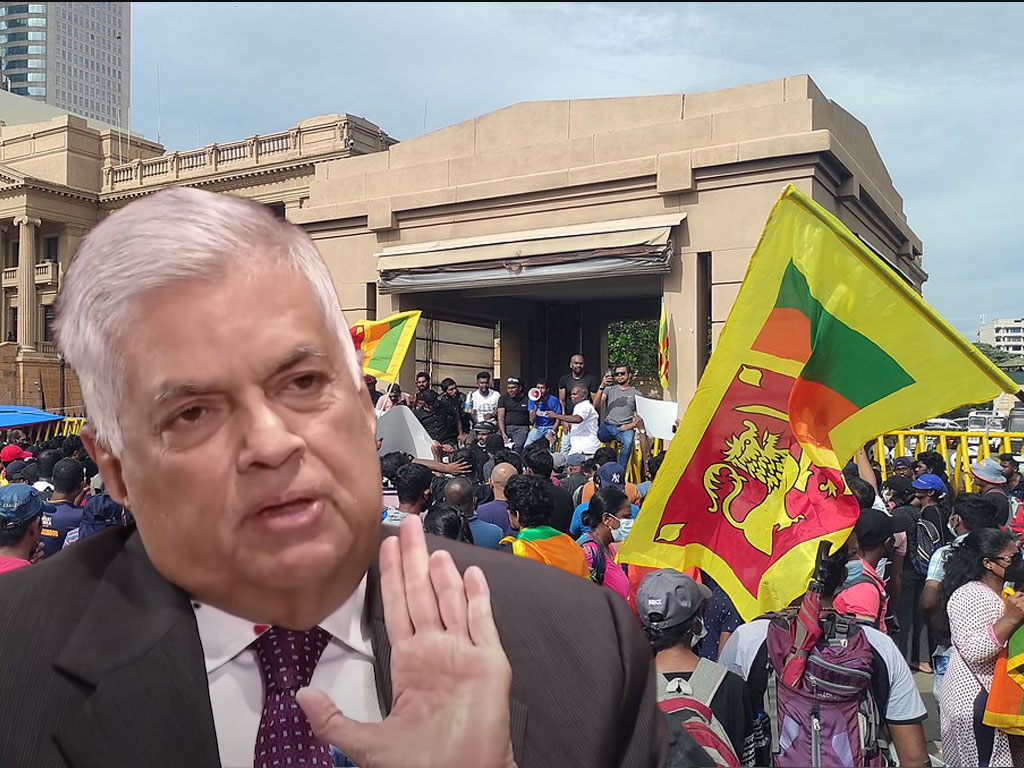
Former President Ranil Wickremesinghe says he met every major demand of the Aragalaya protest movement, yet still lost the next election, calling it the perfect example of how unpredictable and unforgiving democracy can be.
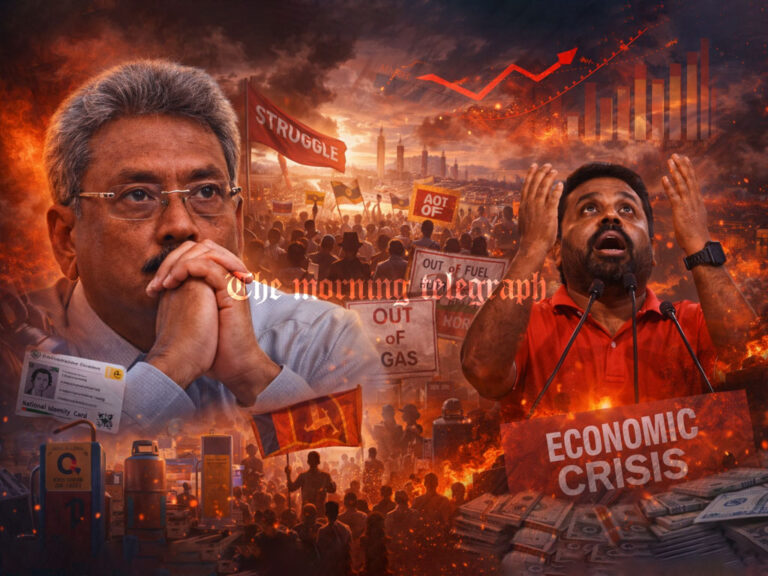
Former President Ranil Wickremesinghe says he protected Sri Lanka’s democracy during one of the most turbulent periods in recent history, even as the country was engulfed in crisis during the 2022 Golf Face struggle. Speaking at an event in Colombo on the 20th, he said the threat to Sri Lankan democracy was far more severe than in many other Asian nations, but the country managed to find solutions without bowing to any foreign force.
He pointed out that Bangladesh had to fire during a similar crisis, while Nepal struggled to control social media unrest. Ranil Wickremesinghe said Sri Lanka handled its problems independently through democratic processes, even when international media criticised the government’s actions.

He recalled with humour how “The BBC and Al Jazeera were everywhere saying that the struggle was suppressed. If we talk about suppression, I lost the next presidential election. I don’t think there has been a successful suppression of them anywhere in the world.” He said this outcome itself was proof that Sri Lanka’s democracy remained intact.
The former President said he responded to the three main demands raised during the Aragalaya along with several other national demands. He stated that he granted fertilizer, fuel, and food relief requested by the public, stabilising essential supplies during the height of the crisis. He added that he safeguarded democratic space and ensured the passage of the Anti-Corruption Act in response to the demand to eliminate corruption, describing it as a crucial legislative reform.
Ranil Wickremesinghe said Sri Lanka is the oldest democratic state in Asia and emphasized that every government must recognise, protect, and strengthen that legacy. He said losing the next election despite fulfilling the public’s demands was not a contradiction, but the nature of democracy itself.