Thirty six years after its leader was murdered in a brutal crackdown, the party that once waged a bloody insurrection now controls Sri Lanka’s government. This is the untold story of their dangerous transformation and the critical test facing a nation on the brink.
Comrade Rohana Wijeweera, the founder of the Janatha Vimukthi Peramuna (JVP), was arrested and subsequently murdered 36 years ago on November 13. His disappearance in 1989 symbolised the turbulent end of the JVP’s second insurrection, extreme political violence involving the State, its affiliated groups, and the JVP itself. This anniversary offers a crucial chance to reflect on the past and extract vital lessons that will determine Sri Lanka’s future political trajectory and democratic resilience.
The late 1980s represent one of the most painful chapters in Sri Lanka’s post-independence history. The 1983 anti-Tamil riots and the 1987 Indo Lanka Peace Accord transformed existing political tensions into open conflict. The Accord, introduced as a peace initiative, instead triggered widespread mistrust and heightened nationalism in the South. The JVP, operating underground as it was already proscribed, seized on these sentiments to launch its armed campaign against the State in a violent uprising that would claim thousands of lives.

Both sides responded with escalating violence in a brutal conflict that saw thousands of civilians, activists, and ordinary youth pay with their lives. Forced disappearances and extrajudicial killings became tragically commonplace during this dark period of Sri Lanka’s political history. The year 1989 also coincided with major global shifts that would reshape political ideologies worldwide. The fall of the Berlin Wall and the dissolution of the Soviet Union signified the decline of the socialist order that had inspired many leftist movements globally, including those in Sri Lanka. Meanwhile, neoliberal economic policies were rapidly expanding, reshaping international relations and national priorities in ways that would fundamentally alter Sri Lanka’s economic landscape.
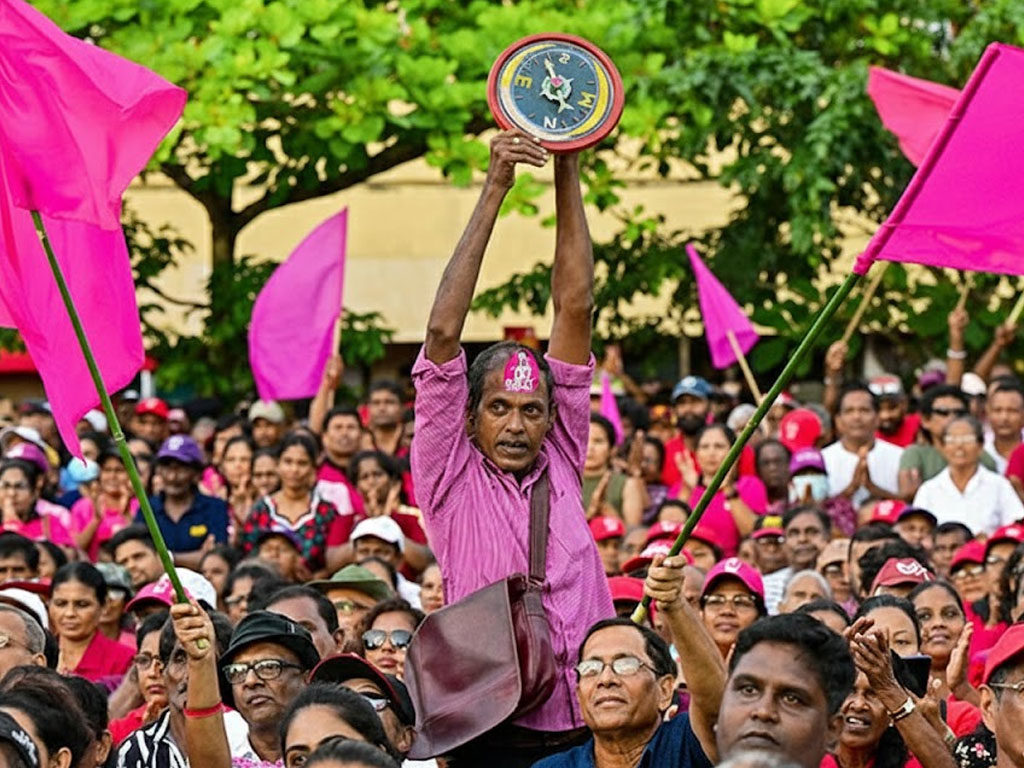
Today, Sri Lanka stands in a dramatically different political reality that demonstrates remarkable political transformation. The JVP, which struggled through parliamentary democracy for decades, has travelled an extraordinary path into mainstream politics through strategic political evolution. The National People’s Power (NPP) coalition led by the JVP achieved resounding victories in 2024, forming the government under President Anura Kumara Dissanayake in a stunning electoral victory.
The NPP administration has committed itself to combating corruption, controlling narcotics trafficking, and rebuilding the credibility of public institutions as part of its comprehensive governance reform agenda. Like other global movements for reform, such as the progressive shift symbolised by Zohran Mamdani’s recent mayoral win in New York, the NPP government emerged from widespread public demand for change following years of economic decline and mismanagement by previous regimes. However, gaining political power represents only the first step in this democratic transition. Transforming governance and rebuilding trust will require a sustained commitment to transparency, accountability, and social justice through consistent policy implementation.
Sri Lankan politics has long struggled with the tension between blind loyalty to party, ethnicity, or faith, compromise with entrenched interests, and the quest for justice for all citizens in a complex multicultural society. Blind loyalty distorts democratic decision-making and leaves little room for dissent or rational debate, creating significant challenges for democratic governance. During both the Southern insurrections and the Northern conflict, loyalty to leadership rather than to truth or humanity justified violence and silenced differing voices, demonstrating how political extremism can undermine social cohesion. Such total and uncritical allegiance continues to threaten our institutions and civic values in contemporary Sri Lankan politics.
Globally, many countries struggle to separate religion from governance, and Sri Lanka faces this same challenge as a multiethnic, multireligious society with constitutional preferences granted to the majority faith. Effective democracy requires that national policy be guided by equal citizenship rather than sectarian influence to ensure genuine national unity. Class compromise refers to alliances formed between leftist groups and capitalist factions, a phenomenon with deep roots in Sri Lanka’s political history. Partnerships between socialist parties and the SLFP date back to the 1950s, and while such arrangements achieved short-term reforms, they also diluted transformative agendas through political accommodation. The global rise of neoliberalism from the 1970s further tilted power towards capital, normalising privatisation and diminishing labour rights in ways that affected Sri Lanka’s economic development.
Against this backdrop, social justice seeks to remove structural barriers and guarantee equal opportunities, particularly for marginalised communities in need of economic empowerment. It calls for redistributing power as well as resources, a principle increasingly central to contemporary political reform and progressive policy making.
The violent episodes of the late 1980s continue to be the most contested part of JVP history, representing unresolved trauma in the nation’s collective memory. Allegations against government death squads and armed JVP units remain unresolved, contributing to deep emotional trauma among families that had become targets of the violence, highlighting the urgent need for transitional justice. To their credit, in 2014, the JVP publicly acknowledged its role in the conflict and expressed regret for the suffering caused, marking an important moral step toward national reconciliation and conflict resolution. When the JVP returned to democratic politics in the 1990s, it was perceived as a sign of its readiness to participate in institutional procedures and nonviolent discourse, signaling a commitment to democratic norms.
Electoral success followed this political rehabilitation, especially in the 2004 parliamentary polls where the JVP entered government as part of the United People’s Freedom Alliance (UPFA). This participation provided valuable governance experience yet also raised internal debates about ideological consistency and coalition politics that would shape the party’s future direction.
Following the 2022 Aragalaya protests, public confidence in political elites plummeted, creating an opportunity for political renewal. The eventual ascent of the NPP reflected broad frustration with corruption and economic instability that had characterized previous administrations. Inheriting a fragile economy, the new government must now balance fiscal constraints while protecting vulnerable communities through careful economic management. Despite early criticism, the administration has worked within the IMF programme to achieve stabilisation while also signalling greater safeguards for social welfare as part of its poverty alleviation strategy. The 2025 budget introduced measures aimed at supporting low-income families, promoting local industry, and restoring economic growth through strategic fiscal policy.
Success, however, will rely on visible results, particularly in reducing poverty, supporting small and medium enterprises, and strengthening agricultural and employment opportunities to address citizen needs.
The NPP’s electoral coalition brought together youth, workers, and professionals from diverse regional and ethnic backgrounds, demonstrating impressive social mobilization. It demonstrated that politics in Sri Lanka can transcend traditional divides through inclusive politics. Yet, much more must be done to achieve genuine national reconciliation. The concerns of Tamil and Muslim communities, including language rights, land issues, and political representation, remain unresolved, requiring urgent attention to minority rights. A firm and fair commitment to meaningful devolution is essential for lasting peace and political stability.
Sri Lanka’s dependence on a majoritarian model of governance has increased mistrust and fuelled decades of conflict, underscoring the need for constitutional reform. In contrast, global examples show alternative approaches that could inform Sri Lanka’s path forward. Belgium, for instance, has achieved equality between its Dutch and French-speaking populations through a system of constitutional power-sharing that actually strengthens national unity rather than undermining it. The government’s recent commitment to allocating funds for Provincial Council elections is a positive signal for democratic decentralization. A clear roadmap for fully implementing the 13th Amendment would reaffirm Sri Lanka’s commitment to pluralism and reconciliation through power sharing arrangements.
The central message from the upheavals of our recent past is simple and profound: democracy cannot rely on blind loyalty if it is to survive and thrive. Effective governance must be built on several key pillars: informed public trust, respect for facts and law, accountability for wrongdoing, openness to criticism, and civic participation at all levels to ensure democratic consolidation.
Both Sri Lanka and the United States illustrate how political gains achieved through wide grassroots mobilisation must be continuously nurtured through ongoing civic engagement. The NPP came to power on a wave of public activism that represented a popular mandate for change. Maintaining that engagement, especially among young citizens, will determine whether reform succeeds or stalls in this critical juncture. At the same time, legal and institutional reforms must be seen to deliver justice through robust anti-corruption measures. While anti-corruption and anti-narcotics measures are underway, delays in holding offenders accountable may erode trust in the government’s commitment to rule of law. People need to see that the law applies equally to all to believe in systemic change. Governance must remain focused on easing the daily burdens of citizens: cost of living pressures, unemployment, healthcare, and education represent key policy priorities. Economic stability and social dignity must progress hand in hand for sustainable development.
As we remember the harrowing events of November 1989, we are reminded that political violence and blind allegiance brought only divisions and tragedies that scarred a generation. The responsibility of this generation, and its elected representatives, is to ensure such mistakes are never repeated through historical consciousness.
Sri Lanka’s path forward hence requires fundamental shifts in political culture: critical thinking over unquestioning obedience, democratic debate over emotional polarisation, integrity over expediency, and unity in diversity over majoritarian dominance as guiding principles for national renewal.
From the beginning, many JVP members and supporters believed that following orders without questioning was the only way to realise their goals, reflecting problematic party discipline. Nevertheless, that obedience can be attributed to the blind loyalty that unconditionally supported the unprincipled deviations from a left perspective, which ultimately led to devastating consequences for the nation. A lack of democratic debate allowed the formation of groups within the JVP and caused the party to split more than once, illustrating the dangers of internal factionalism. Factions were unwilling to reach consensus when their political perspectives diverged, though throughout its history, the JVP largely reached decisions through unanimity in its internal processes.
Given that they have been elected to power, the NPP must take these issues more seriously to ensure effective governance. To prevent emotional polarisation, which could weaken it as a political entity, democratic debate must be encouraged so the party can arrive at programmatic positions through internal democracy.
The JVP’s transformation into a governing force shows that societies can progress beyond their conflicts through political maturation. The challenge now is to create a political culture where trust is earned through transparent actions and not demanded through loyalty in a new social contract. If Sri Lanka can develop an inclusive and mature democracy that respects all citizens and learns from its past, those painful memories will serve the noble purpose of guiding us toward a just and peaceful tomorrow through national healing.