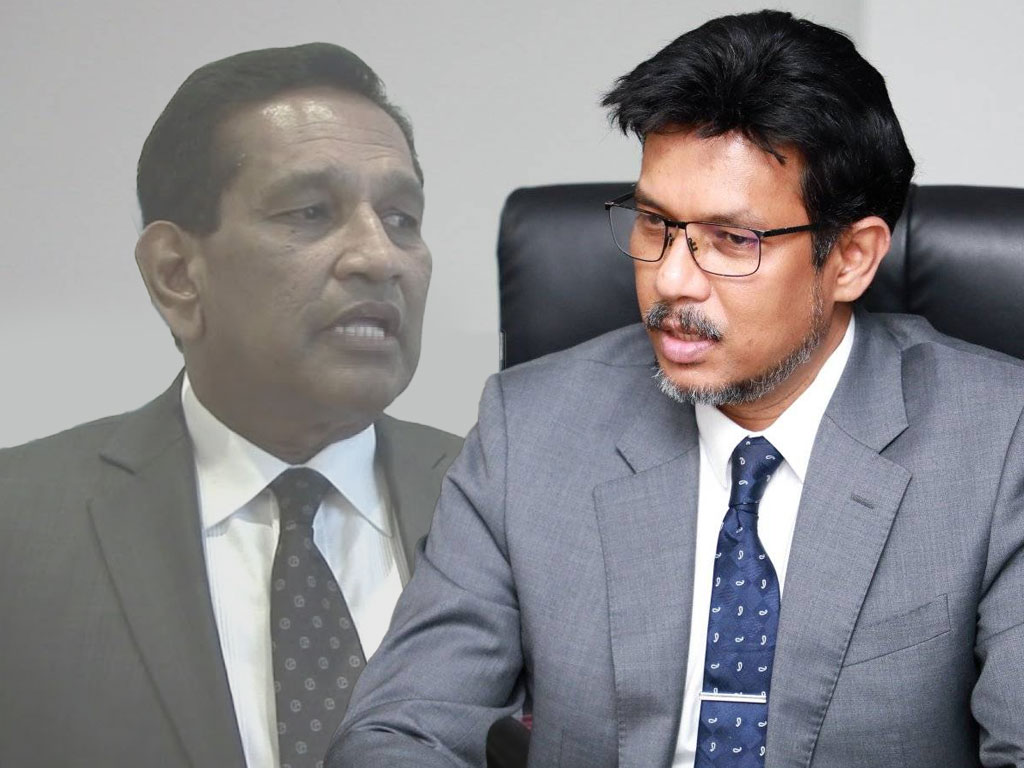
A constitutional time bomb ticks for Deputy Minister Eranga Weeraratne as his continued shareholding in companies with government contracts threatens to explode his political career, mirroring a famous past case that cost an MP his seat.
A serious constitutional crisis is brewing around Digital Deputy Minister Eranga Weeraratne’s right to remain in Parliament. The controversy ignited when opposition MP Prasad Siriwardena exposed that companies owned by the Deputy Minister, Omobio (Pvt) Ltd and Eimsky Business Solutions (Pvt) Ltd, have been awarded government contracts.

The Deputy Minister’s defense claims he acted properly by resigning as CEO of both companies on the day he was sworn into ministerial office. He further argued the contracts were signed before he became a minister. While this may seem to resolve the issue, a deeper legal violation remains. Crucially, Weeraratne admitted he remains a shareholder in these companies.
This is where the constitutional breach occurs. Sri Lankan law mandates that any parliamentary candidate must sever all business ties with government-contracted companies by their nomination day, not their ministerial appointment day. By remaining a shareholder, Weeraratne appears to be in clear violation, potentially rendering his parliamentary seat illegitimate.
This scenario is not without precedent. In a landmark 1999 case, MP Rajitha Senaratne was stripped of his seat for the exact same reason—holding shares in a company that supplied dental equipment to the government. The Court of Appeal ruled against him, issuing a “Quo Warrant Writ” to abolish his seat and a “Mandamus Writ” to enforce the decision. This established a powerful legal benchmark that now directly threatens Deputy Minister Weeraratne.
The opposition now has a clear legal avenue to challenge his position, testing both their resolve and the judiciary’s consistency. This case becomes a litmus test for accountability and the rule of law in Sri Lanka’s current political landscape. For the government, this is a damaging scandal, and for Deputy Minister Weeraratne, the looming court battle poses an existential threat to his political career, echoing a history he likely hoped would not repeat itself.