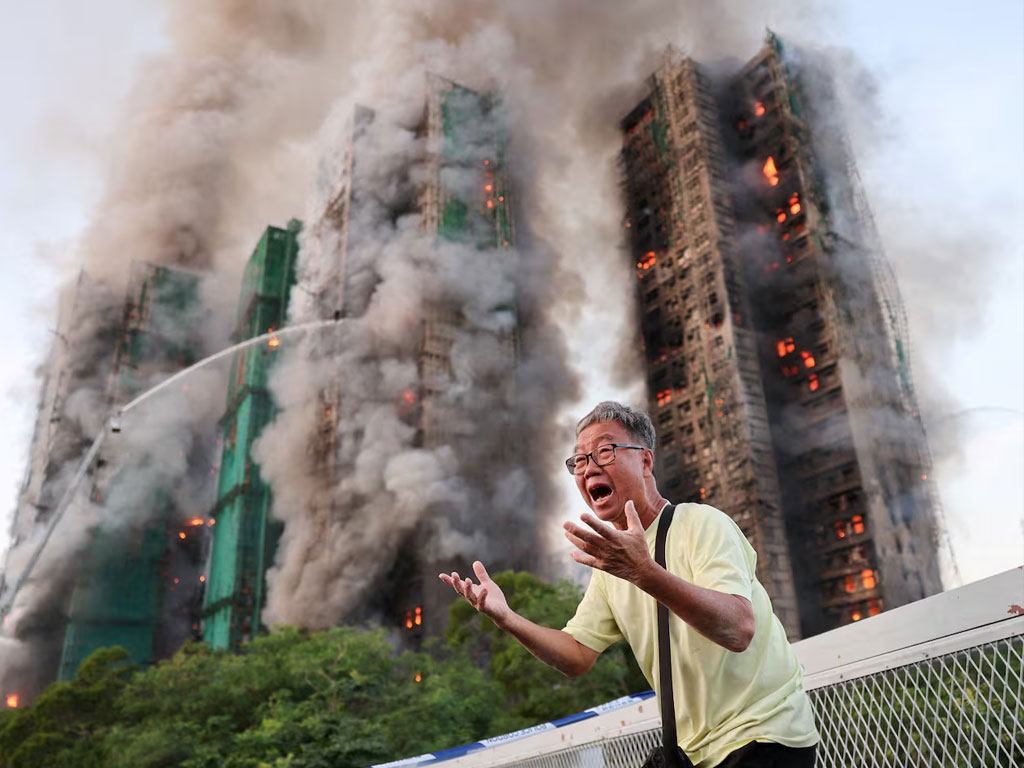
A catastrophe grips Hong Kong as a towering blaze tears through bamboo-wrapped skyscrapers, leaving dozens dead, hundreds missing and an entire city shaken to its core.
Deadliest Fire in Decades
Hong Kong was plunged into tragedy as a massive fire tore through several high-rise residential towers in the Tai Po district, killing at least 36 people and leaving 279 missing. Authorities described it as the city’s most devastating blaze since the 1996 Kowloon fire that claimed 41 lives. Flames surged upward through 32-storey buildings wrapped in flammable green construction mesh and bamboo scaffolding, creating a deadly chimney effect that trapped residents inside.
Rescue crews battled intense heat and suffocating smoke for hours as stunned onlookers watched their homes, neighbors and loved ones swallowed by the inferno. Police have arrested three men on suspicion of manslaughter as officials scramble to determine the cause of the disaster.

Scaffolding Collapse and a City Paralyzed
The blaze was intensified by the bamboo scaffolding surrounding the towers, a traditional but increasingly controversial construction method being phased out across Hong Kong since March. Frames were seen collapsing onto the streets as firefighters fought to reach upper floors. The heat was so extreme that access became almost impossible at times, delaying rescue efforts and worsening the death toll.
The Wang Fuk Court housing complex, home to 2,000 units across eight residential blocks, suffered catastrophic damage. Residents who managed to escape described the moment the fire erupted. Harry Cheung, 66, who has lived in Block Two for more than four decades, heard a loud noise around 2:45 p.m. He fled immediately, grabbing only what he could carry. He admitted he still had no idea where he would sleep that night.
One elderly resident, a 71-year-old named Wong, broke down in tears as he told reporters that his wife was trapped inside the building. The emotional toll across the community has been immense as families anxiously await news of the missing.
Firefighters Struggle as Death Toll Rises
A firefighter was among the 36 people killed, and at least 29 others were hospitalized. Some 900 residents have taken refuge in eight temporary shelters. Hong Kong Chief Executive John Lee stated that the government’s top priorities were extinguishing the fire, rescuing trapped individuals and supporting survivors. He promised a full investigation once emergency operations conclude.
By late evening, the fire department said that flames in three towers had been brought under control, but four buildings remained fiercely ablaze. Fire engines and ambulances lined Tai Po Road, one of Hong Kong’s major transport routes, which had to be fully closed. The closure crippled mobility in the area, adding to chaos and tension.
China Calls for All-Out Rescue Effort
From Beijing, Chinese President Xi Jinping urged Hong Kong authorities to mount an all-out effort to control the fire and minimize casualties. State media reported that central government agencies were monitoring the situation closely and stood ready to offer support if required.
Hong Kong’s Education Bureau ordered at least six schools to close due to heavy traffic disruptions and safety concerns. The city’s Transport Department confirmed that several buses had been diverted to avoid the disaster area.
Housing Crisis Fuels Public Anger
Hong Kong’s housing crisis, long a source of social discontent, is adding another layer of tension. The fire broke out in a subsidized home ownership complex undergoing extensive renovations costing HK$330 million. Many residents had already been coping with construction disruptions for more than a year.
The tragedy is likely to intensify public frustration ahead of Hong Kong’s upcoming legislative elections. With property prices among the highest in the world and rents nearing record levels, residents widely believe that authorities have not done enough to improve safety standards or address affordability issues.
A Look Back at Hong Kong’s Fire Safety Challenges
The city has faced scrutiny in the past over fire safety regulations, particularly after the 1996 Kowloon disaster. That fire, caused by welding sparks during a renovation, led to major changes in safety standards for high-rise buildings. Yet Wednesday’s blaze has raised tough questions about whether those improvements have kept pace with modern development, population growth and construction practices.
This latest tragedy also reminded the public about the risks of bamboo scaffolding. Although widely admired for its versatility and strength, bamboo poses significant safety hazards. Between 2019 and 2024, 22 deaths involving bamboo scaffolders were recorded, prompting Hong Kong’s government to begin phasing it out. Officials mandated that half of all public construction projects must now use metal frames instead. While fire risk was not initially cited as a reason for the phase-out, recent incidents have highlighted the material’s vulnerabilities.
A Community in Shock
Tai Po, a densely populated suburban district near the mainland border, is home to roughly 300,000 residents. Many of them live in the Wang Fuk Court complex, which has been occupied since 1983. With thousands now displaced, the emotional and economic impact is expected to be severe.
Residents described scenes of panic as smoke filled stairwells and alarms rang out. Some tried to flee with pets and possessions, while others were forced to wait for rescue on balconies or rooftops. Videos circulating online showed flames shooting up the sides of the buildings as the green mesh covering the scaffolding burned like cloth.
For families still searching for missing loved ones, the wait has been agonizing. Emergency teams continue to enter the most dangerously affected blocks, but many floors remain inaccessible due to structural instability.
Investigation to Follow After Rescue Efforts
Chief Executive John Lee has vowed a thorough investigation into the blaze, the construction practices at the site and the actions of those responsible. Authorities will also review fire safety protocols and high-rise evacuation procedures. Residents are demanding clear answers, with many questioning whether ongoing renovations and outdated scaffolding materials played a critical role in the disaster’s scale.
Conclusion
Wednesday’s inferno has shaken Hong Kong to its core. A combination of dense urban living, aging infrastructure, unsafe scaffolding and complex renovation work created a perfect storm that turned into one of the city’s worst disasters in decades. As firefighters continue to battle remaining hotspots and families await news of the missing, the city must now confront difficult questions about safety, preparedness and responsibility.