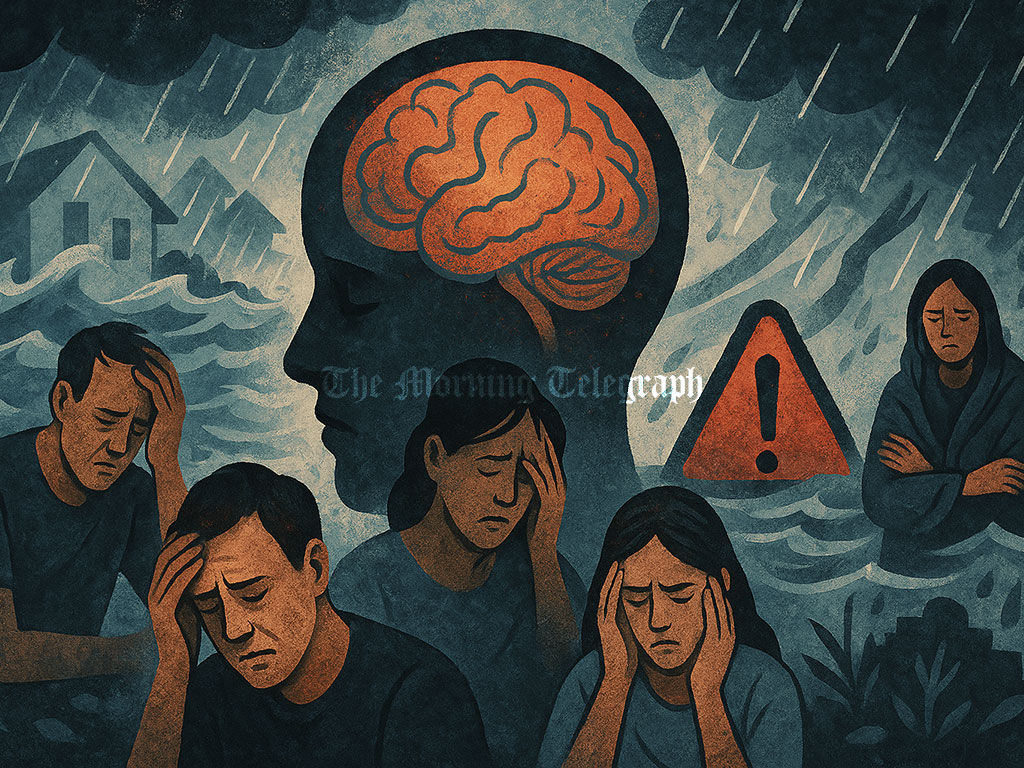
As floods, landslides and nonstop rain engulf the island, mental health experts warn that the invisible psychological impact may be just as dangerous as the physical destruction.
Many people are facing a disaster situation due to the severe weather affecting the island, and daily life has been disrupted by continuous rain. In such a disaster, most attention is directed toward warnings issued by the weather service, rescue teams and disaster authorities. While people take necessary steps to stay physically safe, the impact on mental health often goes unnoticed.

Be careful of the mental impact
How can people maintain their mental health while surrounded by distressing updates, frightening visuals and constant uncertainty? Specialist psychiatrist Rumi Ruben explained that heavy rains, floods and landslides do not only destroy houses, roads and lives. They also leave behind deep psychological wounds. People directly experiencing the disaster, and even those watching sensitive scenes on news or social media, may feel anxious, afraid and unsafe.
“When something like that happens, they may become anxious and unable to make decisions. They may have problems with sleep. They may also be unable to concentrate on everyday things. They may also experience stress.” According to the specialist, these emotional reactions are common during large scale disasters where families feel overwhelmed and powerless.
Obtain only reliable information
The doctor emphasized that obtaining accurate news from reliable sources during a disaster is crucial. With social media filled with alarming videos, rumours and exaggerated posts, many people unknowingly make their mental state worse by consuming non stop distressing content. The doctor explained that unnecessary or inaccurate information can lead to fear and confusion.
“It is important to get accurate information. Sometimes, the only thing that goes on social media is information about accidents that have had a terrible impact. The temptation to look at them frequently only weakens the mental state.” The doctor added that incorrect details or repeated viewing of shocking content creates unnecessary anxiety.
Limit information seeking
Dr. Ruben also stated that limiting disaster related information is essential for emotional balance. People should avoid spending long periods scrolling through dramatic updates, as this overwhelms the mind. “We should also limit the search for such information, it is not good to spend more time on it than necessary. What happens with such things is that the brain gets filled with information about the accident. Then it starts remembering these all the time. The time to focus on other things decreases. Then the distress increases further.”
What can those who are stuck at home do?
With thousands stranded in their homes or temporary shelters, the doctor advised simple activities that help reduce mental stress. These include short meditation, deep breathing, indoor family games, and watching movies or reading books that are not related to the disaster. She emphasized that knowing you are safe and focusing on calm activities can help settle the mind during tense moments.
What to do when facing mental stress
According to the specialist, staying connected with others is vital. “It is important for those who have faced such problems to stay connected with others. It is more important to talk to relatives, neighbors, and tell them about their problems than to be alone.” She noted that children, elderly individuals and people with disabilities often isolate themselves, which worsens mental stress.
What can those who are under mental stress do to overcome it?
Dr. Ruben highlighted the importance of proper sleep, hydration and regular meals. “At times like this, we do not eat properly. We forget to drink water. It is important to drink plenty of water to prevent dehydration. It is also important to get the right amount of food. Rest is more important than being stressed and exhausted. Rest for the body also affects the mind.” She added that emotional support is essential, and anyone under severe stress should be approached with care and understanding.
The public can also call the national mental health helpline 1926 for immediate assistance.