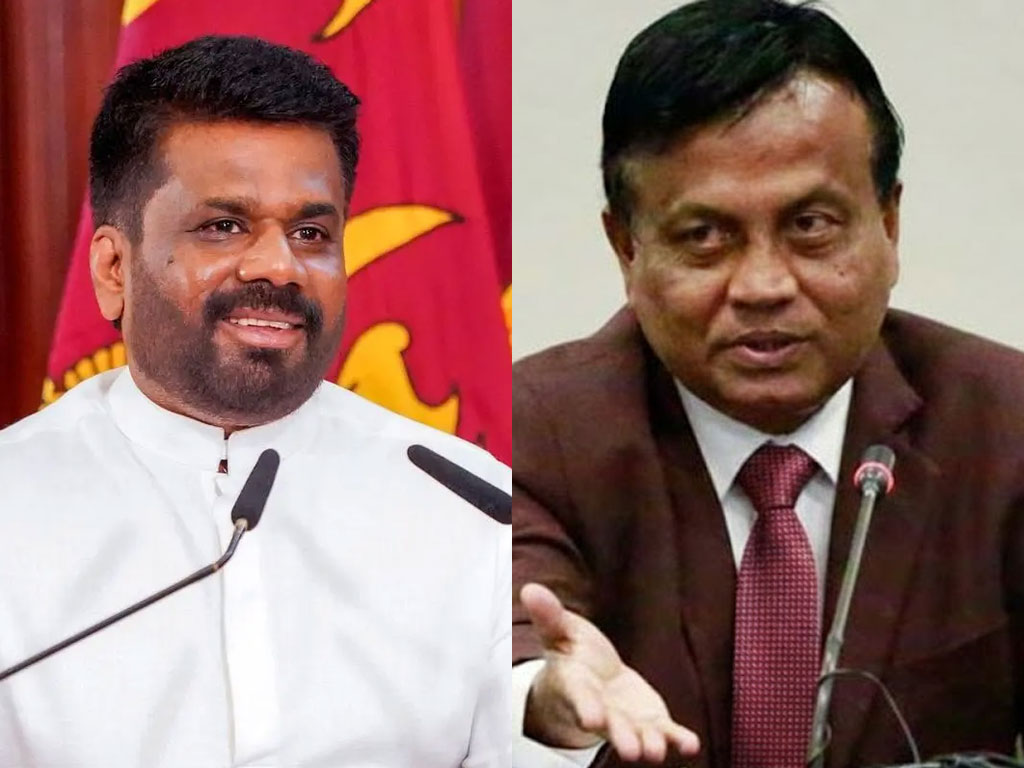
A widening political storm has erupted in Sri Lanka as the President, the Deputy Minister of Public Security and the Minister in charge of the police deliver sharply conflicting messages about the state of emergency, raising urgent national concerns about free expression, civil liberties and whether emergency powers could be misused during a time of disaster.
President Anura Kumara Dissanayake declared a state of emergency with the aim of maintaining essential services due to the ongoing disaster situation in the country. The declaration, applied across the entire island from November 28, was introduced for the stated purpose of safeguarding national security, maintaining public order and ensuring the uninterrupted operation of essential services after floods, landslides and the wider fallout caused by Cyclone Ditva.

Public Security Minister Ananda Wijepala stated that regulations under the emergency law automatically come into force as soon as a state of emergency is declared. He acknowledged the presence of emergency powers but emphasized that the government had no intention of allowing these powers to be used to intimidate or suppress the public. His position closely followed the assurance made by the President in a national address delivered on November 30, where the President stated that emergency powers would only be used to coordinate disaster management and post disaster reconstruction.
In the national address, the President told the people that the government had imposed the emergency solely to increase efficiency in relief services and reconstruction efforts. “We have imposed a state of emergency to provide effective services, manage this disaster situation and provide the legal protection and resources needed for a speedy and efficient reconstruction. I would like to give one assurance to the citizens of this country. We will not use this state of emergency for any other repressive action except to help manage this disaster and effectively build our country,” President Anura Kumara Dissanayake said.
However, controversy erupted when Deputy Minister of Public Security Sunil Watagala delivered a speech to government officials and police officers that directly contradicted both the President and the Minister of Public Security. In his remarks, he appeared to encourage the use of emergency regulations to take legal action against individuals who criticize the President and government ministers on social media. His statements intensified public fears that emergency powers could be used to control speech, target political opponents and curtail freedom of expression.
The Deputy Minister stated that emergency law regulations include provisions to take action against those who make defamatory or critical statements against the President and government ministers online. He claimed that social media platforms were being used to spread what he described as baseless allegations. “After taking over social media, baseless mudslinging is being launched against the President and a few elected officials of certain political authorities. Then this can develop. This is what people who are currently abroad are doing on social media. They are doing it to the President, and attacking other members of political authorities can become a common practice. In a day or two, the MPs in the Hogala area can also attack each other.”
The Deputy Minister then read aloud sections of emergency regulations to the police officers, instructing them to enforce the law strictly. He warned that any individual who attempted to distort information about the disaster situation or spread misinformation through physical means, online platforms or artificial intelligence technology would face punishment. “No one can do such propaganda with the aim of spreading false ideas, distortions regarding this catastrophic situation, physically, online, through AI technology, anything like that. It has been covered. Online technology, AI technology cannot be revealed by any of them. It has been described as part of public security.”
He further explained that the Criminal Investigation Department had already received twenty related complaints and that the emergency regulations treated such offenders severely. He made a point of stating that, under the emergency gazette, individuals arrested for these offenses would be considered accused, not suspects. “The special thing about this gazette is that it is not a suspect who is arrested, but an accused who is arrested. Tell that to the citizens,” he told police officers. In video footage of the event, Dr Kaushalya Ariyaratne can be seen nodding in agreement with the Deputy Minister’s directives.
Watagala went on to justify his instructions by referring to the severity of the disaster. “People have been buried, people have sacrificed their lives. We will never allow anyone to fish in dirty water in such an environment. We must never allow narrow personal political gains to be made at this time,” he said.
The opposition responded strongly. Samagi Jana Balawegaya MP Mujibur Rahman accused the government of attempting to intimidate social media activists and silence the independent media. He stated that the government was using the emergency law to target those who criticize its actions and expose essential information. According to Rahman, emergency regulations were being used to suppress what could not be suppressed under normal law. “The President is sending two ministers to inform the police to take action against the media against the government. It is very dangerous. What is this going to do, what is this going to do is to suppress what cannot be done under ordinary law, those who speak out against the government and expose facts, under the Emergency Law. This is a very dangerous journey. In the past, all the ministers in the front row ran to Shani and cried, Shani, look at what has been done to us, Shani did nothing, Shani knows that if you do these things, you will get Shani, that is why Shani did nothing. Now these people have realized that going to Shani is useless. Now they are seeing that the government is now trying to use the Emergency Law to suppress the freedom of the media in this country and the freedom of speech of the people here, to hide the true information and to intimidate the activists and media here on social media.”
When questioned about the conflicting messages, Public Security Minister Ananda Wijepala reiterated that emergency powers would not be used for repression under any circumstances. He stated that no action would be allowed that might frighten, oppress or disturb the public. “This will not be used for any repressive purpose. But we cannot allow anyone to take action that would cause the public to be oppressed, frightened or disturbed, whether there was an emergency law or not. We do not care about statements made in politics.” He repeated that emergency regulations would only be used for disaster related needs.
Meanwhile, the Centre for Policy Alternatives expressed concerns about the President’s decision to use emergency regulations despite the availability of the Sri Lanka Disaster Management Act No. 13 of 2005. The organization explained that the Act was specifically designed for humanitarian disasters such as floods, landslides and cyclones, and questioned whether emergency powers were truly necessary. They warned that Sri Lanka must avoid returning to a cycle where states of emergency lead to deeper governance crises. They urged the government to uphold democratic norms, protect human rights and avoid undermining the rule of law during a time of hardship.
The Sri Lanka Professional Journalists Association also strongly condemned the Deputy Minister’s statements. They claimed that the government was threatening media freedom and freedom of expression. In a statement issued by President Duminda Sampath and Secretary Ranga Bandaranaike, the association said, “The fact that the very people who stood for freedom of speech and expression before coming to power are now issuing orders to abolish freedom of speech and expression shows that the current government has embarked on a path against democracy. We strongly condemn the Deputy Minister’s statement in a context where we have observed numerous instances of the government threatening media freedom during the past year of rule.”