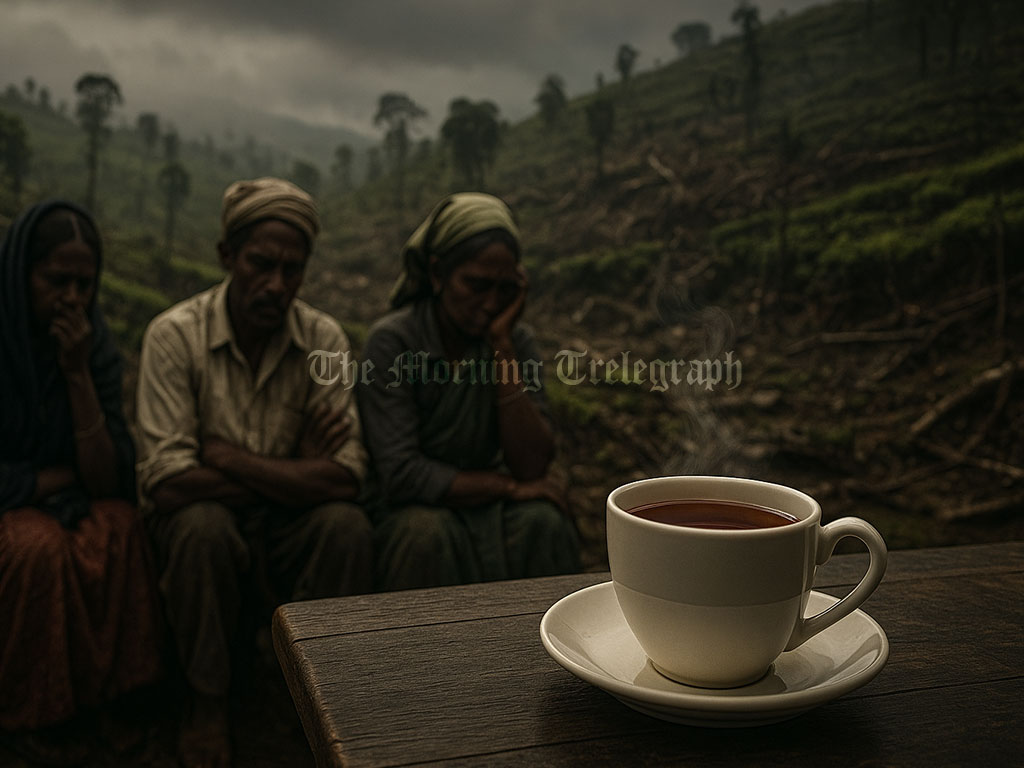
Beyond flooded fields, Sri Lanka’s iconic tea trade faces a crushing blow as critical machinery lies broken, needing overseas repair, threatening exports and livelihoods for months to come.
The fury of Cyclone Ditwah has swept through Sri Lanka’s rolling central highlands, leaving a trail of destruction that extends far beyond submerged homes. The nation’s iconic tea industry, a cornerstone of the economy and global reputation, has been dealt a severe and potentially long-lasting blow. While the picturesque plantations themselves may recover, the heart of the export operation specialized processing machinery has been critically damaged, with repairs requiring a complex and time-consuming international effort that spells major financial losses.

The Colombo Tea Traders Association has revealed the stark reality. Lushantha De Silva, the Association Chairman, outlined the scale of the challenge, stating, ‘There are 30 companies that export tea, bringing a value about Rs. 110 billion a year in exports, and it may take two or three weeks to get functioning again, during that time the tea industry will be facing losses, however damaged machinery will take months to restore as Sri Lanka does not have the technology to restore these machines, therefore we have to send them abroad.’ This admission points to a critical vulnerability in the national supply chain. The industry can regain partial function within weeks, but a full return to pre-cyclone export capacity is a matter of many months, not weeks.
The damage assessment is ongoing, but early reports confirm significant setbacks. ‘The Chairman said that some machines that produce tea bags are damaged, and after a full inspection, the total damage will be assessed. ‘Government will need to support the industry to get it back on its feet.’ He added. This call for state intervention underscores the economic importance of the sector, which is a major employer and foreign exchange earner. The road to recovery is paved with logistical and financial hurdles.
On the ground, tea estate owners like Samantha Dodangoda face a dual crisis: infrastructure and human resource. While the tea bushes themselves may be resilient, the ability to harvest and transport the leaves is now in jeopardy. ‘Production won’t slow down, but the challenge is that the tea pluckers will not go to pluck these days, and after seeing all these video clips, they will get scared to go to those hills until it is safe,’ Dodangoda explained, highlighting the psychological impact on the essential workforce.
Furthermore, the physical connectivity of the industry is shattered. ‘Samantha also said that the main issue is rebuilding in the sense that the road infrastructure is the biggest issue that the government will face. ‘Transportation will definitely be tough, and it will take some time, but they will find routes to come for sure because you know you can’t keep those roads closed forever.’ This disruption to transport networks means that even if tea is plucked and processed, getting it to auction houses in Colombo and onto waiting ships will be a monumental challenge, causing delays and potentially damaging the quality and reputation of Ceylon Tea in competitive international markets.
The aftermath of Cyclone Ditwah reveals that the storm’s impact on Sri Lanka is not just immediate and humanitarian, but deeply structural and economic. The tea industry’s struggle encapsulates the wider national recovery effort: repairing advanced technology, restoring shattered infrastructure, and reassuring a traumatized workforce. The flavour of recovery for Sri Lanka’s tea lands will be one of patience, significant investment, and resilience in the face of a daunting logistical puzzle.