Sri Lanka’s President issues a stark warning after Cyclone Ditwah’s destruction, urging strict action, rapid compensation and long term rebuilding to prevent future tragedies.
President Anura Kumara Dissanayake stressed that while natural disasters such as floods, storms and landslides cannot be prevented, the tragedy of human loss and large scale property destruction can be significantly reduced with stronger planning and governance. Speaking in the aftermath of Cyclone Ditwah, he highlighted the urgent need for a proper study of the central highlands and the preparation of a long term ecological restoration plan to protect vulnerable regions already showing signs of environmental erosion.

The President underscored the importance of enforcing the full powers entrusted to local authorities to prevent similar disasters in the future. He added that illegal constructions must no longer be tolerated and that allowing unauthorized buildings in areas prone to landslides and extreme weather has placed countless lives at risk.
He also stated that the Ceylon Electricity Board must be held accountable for providing electricity to unauthorized locations that should never have been connected to the national grid. According to the President, such decisions directly weaken disaster management efforts and increase vulnerability during severe weather events.
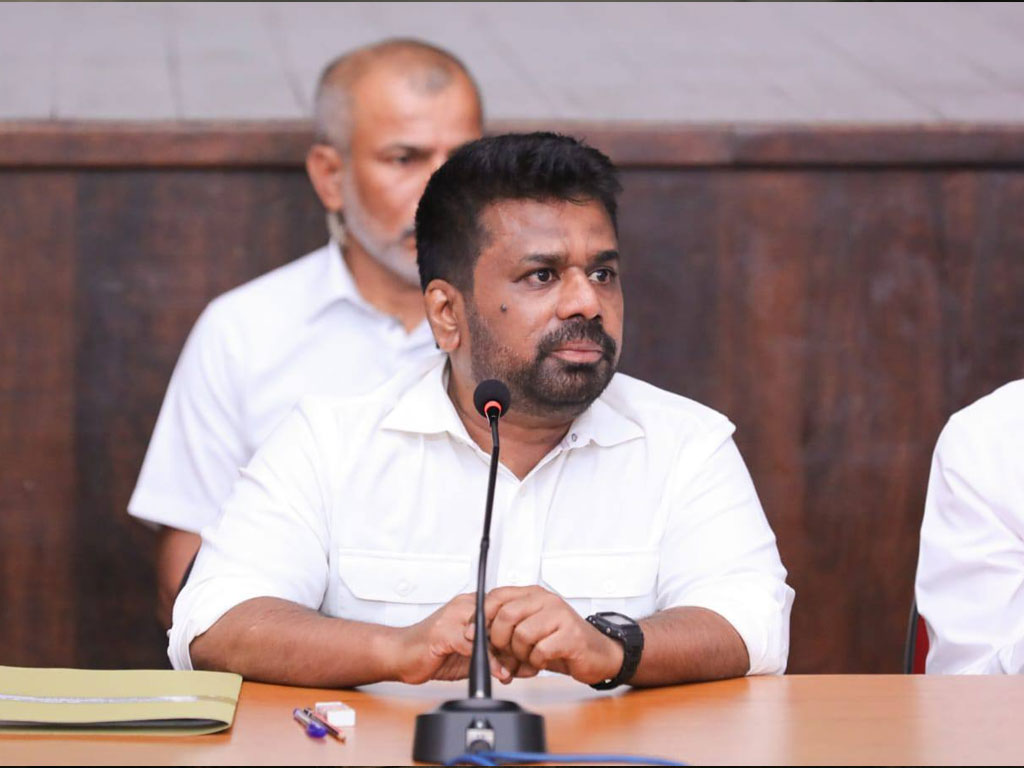
The President made these remarks during the Kandy District Coordinating Committee meeting held at the Kandy District Secretariat this morning.
Compensation and Support for Affected Farmers
President Dissanayake instructed officials to expedite the payment of the Rs. 200,000 compensation allocated to identified farmers and damaged agricultural fields. He directed authorities to submit a detailed report within two weeks outlining the full extent of vegetable cultivation affected in the district.
According to the plan, Rs. 150,000 per hectare will be paid to vegetable farmers whose crops were destroyed by the disaster. He further stated that the same compensation scheme will be extended to farmers who suffered losses in banana cultivation once the necessary amendments are completed.
The President emphasized that agriculture must be restored quickly to protect food security and stabilize rural incomes. Keywords such as food production, agro recovery and disaster compensation were highlighted as critical national priorities.
Impact on Livestock and the Need for Updated Data
A broad discussion also took place regarding the heavy impact on the livestock sector following Cyclone Ditwah. The President highlighted the need to maintain updated data on farms, herds and livestock operations to ensure rapid recovery planning.
He explained the importance of restarting damaged livestock farms as soon as possible. Quick reactivation of dairy, poultry and egg production centers is vital to restoring income opportunities for farmers and meeting the country’s essential food needs.
The President added that livestock rehabilitation must become a central component of the national disaster recovery effort, ensuring that rural economies do not collapse due to prolonged disruptions.
Restoring Fuel Supply and Transport Access
Fuel supply disruptions in Pussellawa and Meetalawa were also reviewed. The President instructed that fuel must be delivered to these areas before evening through coordinated action by the Road Development Authority, the Tri Forces and the Police. Road blockages caused by landslides and fallen trees have hindered critical transportation routes, and restoring these connections is essential for normalcy.
He stressed that uninterrupted fuel access directly affects emergency response, agricultural activity, school transportation and district level logistics.
Reopening Schools and Restoring Essential Services
The resumption of schools in the Kandy District was discussed in detail. President Dissanayake instructed officials to minimize delays in reopening classrooms to ensure that scheduled examinations can take place without disruption. Education continuity is a priority in disaster recovery, particularly for children in affected communities.
He also examined the steps taken to restore health services, railway operations and communication facilities across the district. The President emphasized that essential services must return to full functionality to support the overall recovery process and rebuild public confidence.
Housing Damage and Resettlement Planning
The President reviewed the scale of housing damage and the plans for resettlement of affected families. He discussed the roles of the Geological Survey and Mines Bureau and the staffing required to strengthen future assessments.
He confirmed that state owned lands in adjacent safer areas will be identified and presented for resettlement activities. Necessary interventions will be made through discussions with relevant institutions to release these lands efficiently.
The President emphasized that the government’s objective is to resettle people safely and ensure that compensation paid for destroyed or partly damaged homes is used correctly for reconstruction. Continuous evaluations will be conducted to guarantee proper utilization.
He stressed that all compensation payments must be completed before 31 December under the 2025 Budget to avoid burdening the 2026 Budget. He said the dedication of state officials is essential to successfully implement all recovery programmes and restore public life swiftly.