A major setback has hit the President’s appointment powers as his nominee for Auditor General fails to secure approval amid revelations of ongoing disciplinary and anti-corruption investigations.
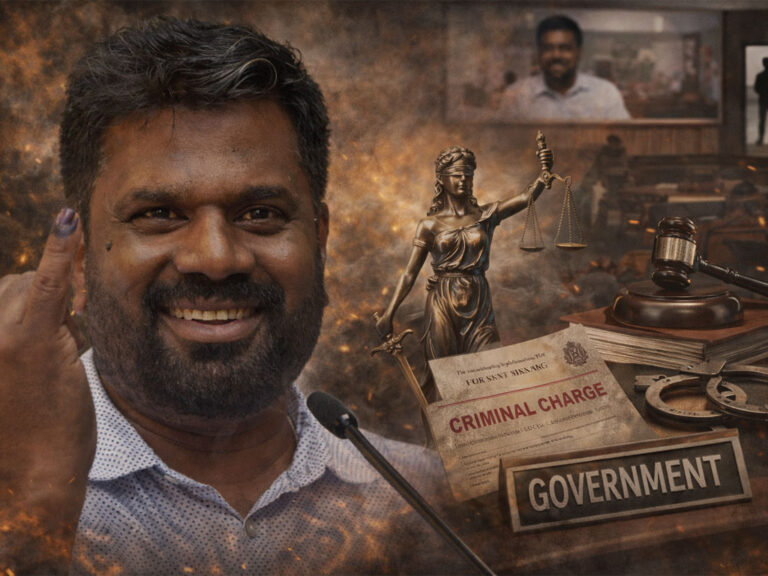
The appointment of a new Auditor General has once again been delayed after the nominee recommended by President Anura Kumara Dissanayake failed to obtain the minimum number of votes required for approval by the Constitutional Council. According to reports, the President had proposed the name of Senior Deputy Auditor General L. S. I. Jayaratne for appointment as Acting Auditor General for a temporary period of three months.

Under the Constitution, at least five votes are required from the ten-member Constitutional Council to approve or reject any such appointment. If this minimum threshold is not met, the recommendation is automatically deemed rejected. The Constitutional Council met on Friday under the chairmanship of Speaker Jagath Wickramaratne to consider the President’s recommendation.
During the meeting, one of the three civil society representatives serving on the Council objected to the nominee’s name and presented information relating to several investigations connected to her. It was revealed that a disciplinary inquiry had been conducted into the President’s nominee and that a separate investigation was currently being carried out by the Anti-Corruption Commission. These disclosures appear to have significantly influenced the outcome of the vote.
At the final count, only four members of the Council voted in favor of the recommended candidate, while two members voted against. Two other members abstained from voting altogether. As a result, the recommendation failed to reach the mandatory five-vote requirement and was therefore rejected under constitutional procedure.
It was also reported that Opposition Leader Sajith Premadasa was not present at the Constitutional Council meeting held on Friday. This rejection marks yet another obstacle in the long-running delay to appoint a permanent Auditor General.
The Constitutional Council has now rejected three separate nominees put forward by President Anura Kumara Dissanayake for the position of Auditor General, further deepening the institutional deadlock surrounding one of the country’s most crucial financial oversight roles. The repeated failures raise serious concerns about governance, transparency, and political consensus in Sri Lanka’s accountability framework.