By Roshan Jayasinghe
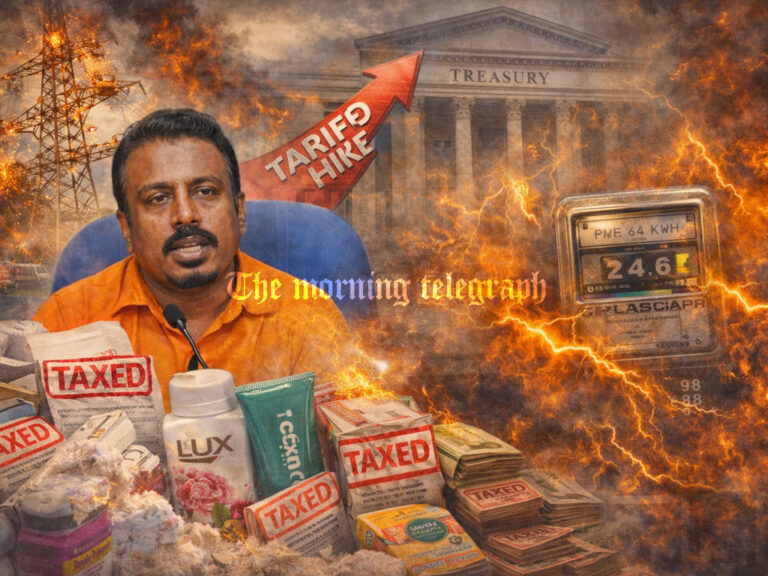
We live in a time where information reaches us before we have even properly woken up. A notification, a headline, a video clip, a message shared by a friend. Some of it is useful, some of it is noise, and some of it is carefully designed to trigger fear, outrage or confusion. If we are not careful, the way we start our morning is not decided by us, but by whatever story shouts the loudest.

This small gap between waking up and reacting is important. If we fill it with chaos, the day becomes chaotic. If we fill it with clarity, the day takes on a calmer and more grounded quality. The point of this reflection is not to ignore what is happening in the world, but to invite a different way of seeing it, one that is based on truth, understanding and responsibility, rather than fear and automatic reaction.
To see the world clearly, we must first trust that what we are looking at is real. That means choosing news and information that value truth more than sensation. There are still media outlets that work with this standard. Associated Press, Reuters and the straightforward reporting sections of the BBC are known for factual accuracy and low distortion. They focus on what actually happened, not on what will get the biggest emotional response. Alongside this, there are platforms dedicated to constructive and solution-based stories, such as Positive News, The Optimist Daily and Reasons to Be Cheerful. They remind us that while there is struggle, there is also progress, healing and human goodness quietly at work.
This matters because the quality of the information we consume shapes the quality of our inner world. Good information does more than keep us updated. It stabilizes us. It reduces unnecessary fear. It gives us a realistic picture of what needs to be corrected and what is already working. Without that grounding, it is easy to slide into despair or numbness, believing the world is worse than it actually is.
At the same time, truth on its own is not enough. We also need honesty in how we look at our problems. Constructive and responsible criticism is essential if we want to grow as individuals and as societies. We must be able to point to corruption, incompetence, outdated systems and harmful behaviour without turning it into pure blame or hatred. Honest criticism is not negativity. It is a form of medicine. It cleans the wound so that healing is possible.
When truthful reporting is combined with constructive criticism, something powerful happens. We begin to see the root causes behind the events of our time. We realise that most crises are not random. They come from patterns, from old beliefs, from systems that no longer fit the world we are living in. When we see the roots clearly, we also begin to see what can be changed. We move from reacting emotionally to responding intelligently. This is how people evolve. This is how nations evolve.
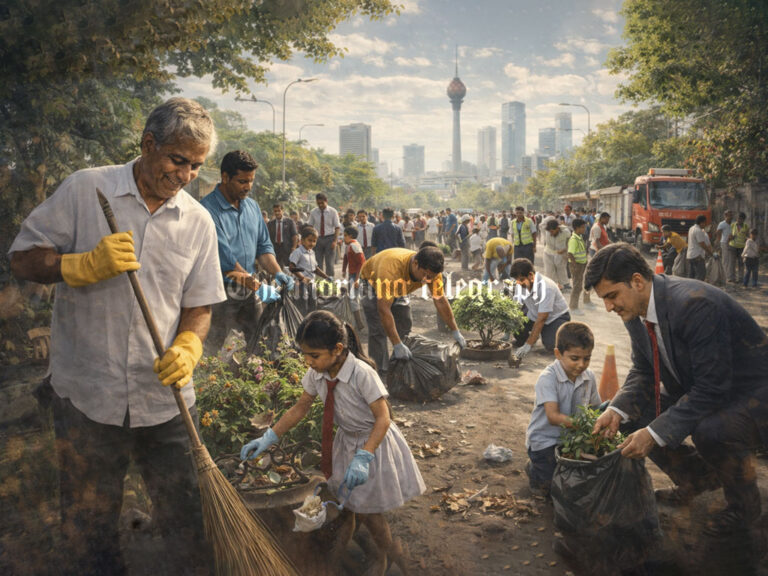
It is also important to remember that there is far more good happening than the daily news usually reflects. There are breakthroughs in medicine and technology, communities quietly rebuilding after hardship, environmental efforts bearing fruit, creative young minds stepping up with new ideas and ordinary people performing small acts of kindness that never get reported. Progress often does not shout. It moves slowly and steadily, and it is easy to overlook. But it is real. Paying attention to it is not denial. It is balance.
So as you begin your day, you have a simple choice. You can hand your mind over to the loudest headline, or you can choose to start from a place of clarity. You can ask yourself what kind of information you are allowing into your inner space. Does it respect your intelligence, or does it try to manipulate your emotions? Does it help you understand, or does it just leave you feeling helpless and angry? You deserve better than constant noise.
The invitation is not to turn away from the world, and not to drown in it either. It is to meet it with an open mind and a steady heart. Seek truth, not drama. Seek understanding, not confusion. When you see something wrong, do not lose faith and collapse into hopelessness. Look for the deeper cause. Look for what can be corrected. Look for the lesson that is being shown to us as a human family.
A conscious citizen is not someone who avoids reality, and not someone who blindly absorbs everything. A conscious citizen is someone who chooses carefully what they believe, how they respond and what they contribute. When more of us live this way, our communities become wiser. Our countries become calmer. Our shared future becomes more capable of real healing.
We rise by understanding. We rise by honesty. We rise by choosing truth and responsibility over fear and noise, one morning at a time.
Author’s note:
I wrote this piece as a reminder first to myself, and then to anyone who reads it, that we still have a choice in how we meet the world each day. We may not be able to control global events, but we can decide the quality of mind and heart we bring to them. My hope is that this reflection helps you start your morning from a place of clarity and steadiness, so that you become part of the healing rather than part of the reaction.
About the Author
Roshan Jayasinghe is a writer and observer of human systems. His work explores the gap between man made constructs and lived humanity, with a focus on how economics, trade and everyday choices intersect with questions of fairness, responsibility and inner alignment. Through essays for publications in The Morning Telegraph, he aims to remind readers that they are not passengers in a fixed machine, but active custodians of a shared world.