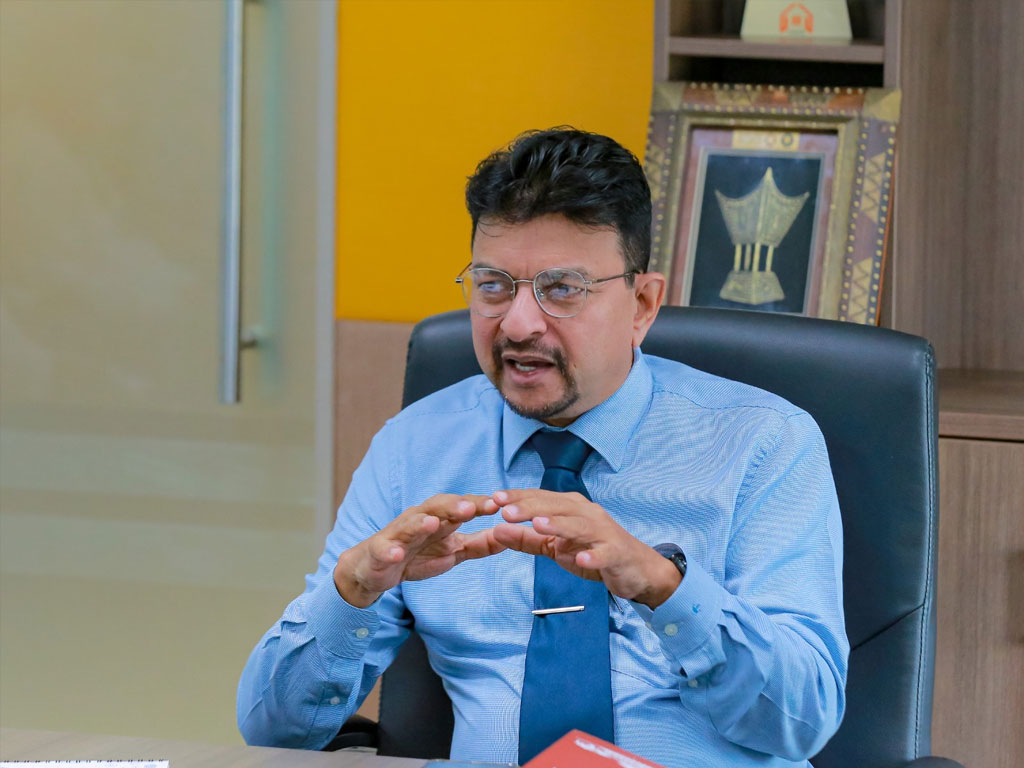
A fresh political storm has erupted as Deputy Minister Mahinda Jayasinghe accuses the opposition of knowingly withholding cyclone warnings, calling for legal action against rival parties for what he describes as a serious failure of public duty.
Deputy Minister Mahinda Jayasinghe has called for legal action against opposition parties, accusing them of remaining silent for nearly two weeks despite allegedly knowing about an impending cyclone warning from November 12. Speaking to reporters, Jayasinghe said the opposition must be sued if they were genuinely aware of the warning and still failed to inform the government in time to prevent the damage caused by the disaster.

He firmly rejected opposition claims that there had been official cyclone warnings from the Meteorology Department or the Irrigation Department on November 12. According to the Deputy Minister, the government had not received any such prior alert during that period. He said the accusations being made after the disaster were misleading and were being used purely for political advantage rather than public safety.
Jayasinghe argued that even if the opposition truly had early knowledge of the potential cyclone, their silence amounted to a serious breach of responsibility. He stressed that the opposition is not exempt from accountability simply because they are not in power. “The opposition parties also have a responsibility just like the government. They too are elected representatives chosen by the people’s vote,” he said. “If they were aware of such a warning and deliberately chose not to share it, that is an even greater wrongdoing.”
He pointed out that opposition members, particularly from the Samagi Jana Balawegaya and the Sri Lanka Podujana Peramuna, had been actively attending Parliament during the budget debate from November 12 to November 26. According to Jayasinghe, none of them raised any concern about an approaching cyclone during those 14 crucial days. Instead, he said, they remained silent and only revealed these claims after the disaster had already struck the country.
“The government is being questioned today for what happened, but if the opposition truly had this information and chose to hide it, then they are guilty of a far more serious crime,” Jayasinghe stated. “Just as the government has a duty to prevent disasters, the opposition also has a duty to protect the public. They failed in that responsibility.”
He emphasized that legal proceedings should be directed at those who allegedly concealed the warning rather than at the authorities who, he insisted, were not informed in advance. According to Jayasinghe, accountability should be based on facts, not political narratives formed after the event.
His comments come at a time when Sri Lanka continues to grapple with the aftermath of severe weather that caused widespread flooding, landslides and displacement. Public anger has grown as communities question whether earlier warnings could have reduced the scale of destruction. The opposition has repeatedly accused the government of ignoring early alerts, while the government maintains that no such formal warnings were issued during the period in question.
Jayasinghe’s statement has now shifted the political debate toward the responsibility of opposition leaders, raising fresh questions about parliamentary accountability, disaster preparedness and the ethical duties of elected representatives beyond party lines. The call for legal action is expected to intensify political tensions at a time when public confidence in disaster response systems is already under strain.
As investigations continue into the timelines of weather alerts and institutional communication, the nation now finds itself watching not only the skies, but also a looming legal and political battle over who truly bears responsibility for the lack of early action.