As Sri Lanka struggles to recover from Ditwah, economists warn that price controls and renewed money printing could quietly repeat the same policy mistakes that deepened the nation’s post-COVID economic collapse.
The Parable of the Broken Window
In 1850, French economist Frederic Bastiat introduced the world to “The Parable of the Broken Window.” In the story, a boy breaks a shop window and a glazier earns six francs to repair it. Onlookers claim the accident is good for business because the glazier is paid and commerce continues. Bastiat argued that this logic only considers what is seen, the glazier’s gain, while ignoring what is unseen.
The shopkeeper, now six francs poorer, cannot use that money to buy a new hat, shoes, or a book. The unseen cost is the lost business for the tailor, the shoemaker, and the bookseller. In a better outcome, the shopkeeper would have both his window and a new purchase. Bastiat’s lesson was simple but powerful. Sound economic policy must consider not only immediate visible outcomes but also hidden long term consequences.
Sri Lanka’s national progress has repeatedly been undermined by policies that ignore these unseen effects. This pattern is clearly visible today in the policy response to Ditwah and in the direction of monetary policy.

The Fallacy of Price Controls in a Disaster
After Ditwah, shortages of food, drinking water, medicine, and essential goods rapidly emerged. Retail traders, facing limited supply, damaged transport routes, and higher operating risks, responded by increasing prices. The Commissioner General of Essential Services declared such price increases immoral and illegal and promised legal action. However, this response ignores critical unseen market mechanisms that are essential during a disaster.
Higher prices during scarcity perform important economic functions. They ration limited goods, ensuring that water is used for patients rather than watering gardens. They discourage unnecessary hoarding. More importantly, higher prices encourage entrepreneurs to take major risks by navigating flooded roads and unstable supply chains to bring essential food and medicine into affected areas. Over time, this increase in supply and competition naturally pushes prices back down and speeds up recovery.
This model already works efficiently in Sri Lanka’s private sector. In telecommunications, internet usage is carefully controlled through time based and usage based pricing. General data is priced higher, while social media platforms such as WhatsApp and entertainment services are offered through special low cost data packages. Off peak data is cheaper or unlimited. This system prevents shortages of internet access, which has now become a critical public good.
Private transport services have shown similar resilience. Flexible pricing through ride bidding and smart mobile apps ensures availability even during crisis periods. These examples show how market driven incentive systems ensure supply without government punishment.
When businesses are targeted for raising prices, these natural corrective forces are blocked. The seen effect is the temporary suppression of price increases. The unseen consequence is extended shortages, inefficient allocation of resources, and reduced private sector participation in national recovery.
The Central Bank and the Inflation Tax
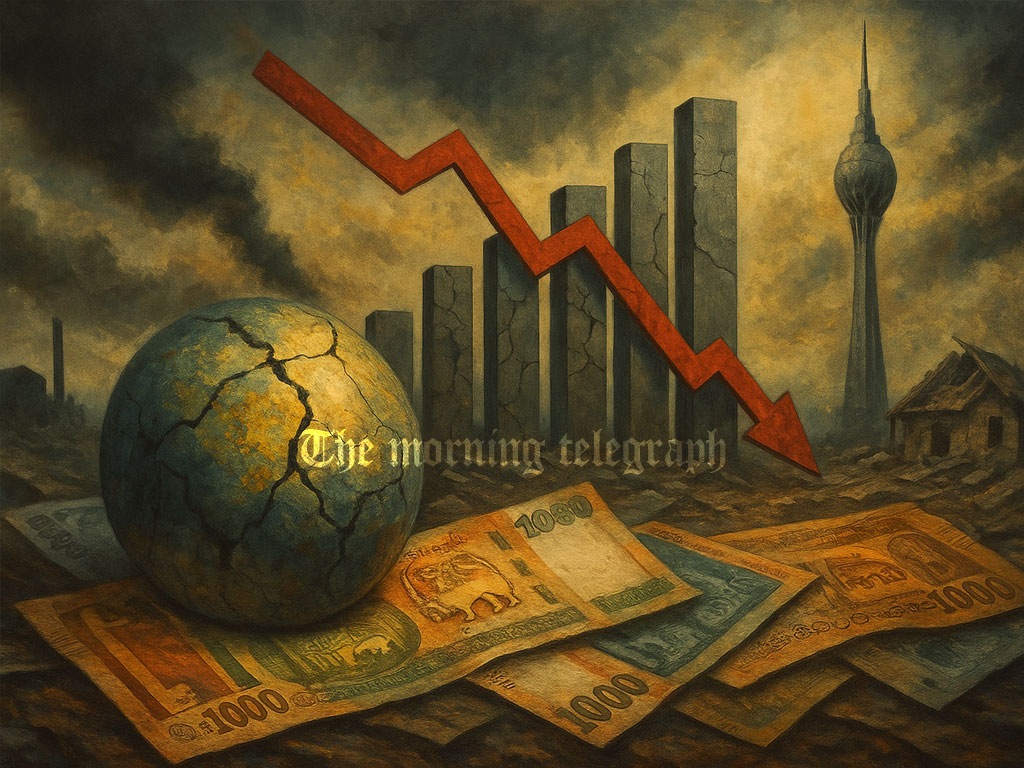
Following the COVID pandemic, Sri Lanka faced severe economic turmoil. The rupee collapsed, inflation surged, and the cost of living rose sharply. If the same policy direction continues after Ditwah, a similar outcome remains highly likely.
The government has promised major public relief programs. This requires increased government spending. However, tax revenue remains limited under weak economic conditions. To fill this gap, the most convenient solution becomes borrowing from the central bank, just as it happened in the past.
The core reason for the post COVID crisis was large scale money printing by the central bank. Driven by political pressure, the bank expanded the money supply to fund spending when tax revenue failed to match expenses. Classical economics states clearly that inflation is caused by the supply of money, while price increases are only the visible symptom.
This created what economists call the invisible tax. Without an official levy, people lost purchasing power as prices rose. Through the Cantillon Effect, those closest to newly created money such as contractors and financial institutions benefited first. The general population paid the price later through rising food, fuel, rent, and transport costs. In effect, wealth was transferred from the poor to the rich.
Nobel Prize winner Friedrich Hayek warned that cheap credit creates artificial booms followed by painful crashes when real resources are exhausted. These cycles gradually weaken economies. Sri Lanka has suffered this repeated weakening since the creation of the central bank in 1950. Before that, the rupee was tied to the Sterling Pound and inflation was structurally limited.
As Jorg Guido Hulsmann explains in “The Ethics of Money Production”, inflation promotes debt, destroys savings, breaks family stability as people migrate for survival, concentrates power within the state, and even fuels war. Sri Lanka’s post independence history reflects all these symptoms.
Even the construction of the Lotus Tower just before the economic collapse mirrors the so called Skyscraper Index, a classic sign of an inflation driven economic bubble.
Conclusion: Learning to See the Unseen
Price controls and emergency money printing appear politically attractive because they offer immediate relief. However, they only address the visible political pressure while triggering hidden long term economic destruction. This repeats the broken window fallacy by celebrating short term spending while destroying future opportunity.
The Monetary Law Act assigns the central bank the responsibility of maintaining financial stability, economic stability, and price stability. By every objective measure, that mandate has failed. The cultural damage caused by decades of inflation driven policy has deeply affected Sri Lankan society.
Globally, central banking itself is now under scrutiny. From the “End the Fed” movement in the United States to Javier Milei’s proposals in Argentina to eliminate the central bank entirely, the old model is being challenged.
While politically difficult, Sri Lanka must begin trusting the knowledge system of the market instead of trying to override it. No central authority can realistically control the millions of prices that govern a modern economy. Economic history across developed nations repeatedly proves this truth.
The proper role of government should narrow toward core duties. These include enforcing the rule of law, protecting property rights, and maintaining a stable currency. These foundations allow private enterprise to rebuild production, employment, and national income.
A disciplined framework of government restraint would unlock capital, reward savers, and allow prices to guide resources efficiently. The unseen reward would be a nation that is stronger, more adaptive, and more prosperous.
Only by recognizing both the seen and unseen consequences of policy can Sri Lanka build a truly resilient recovery from Ditwah and secure a sustainable future.
SOURCE :- SRI LANKA GUARDIAN