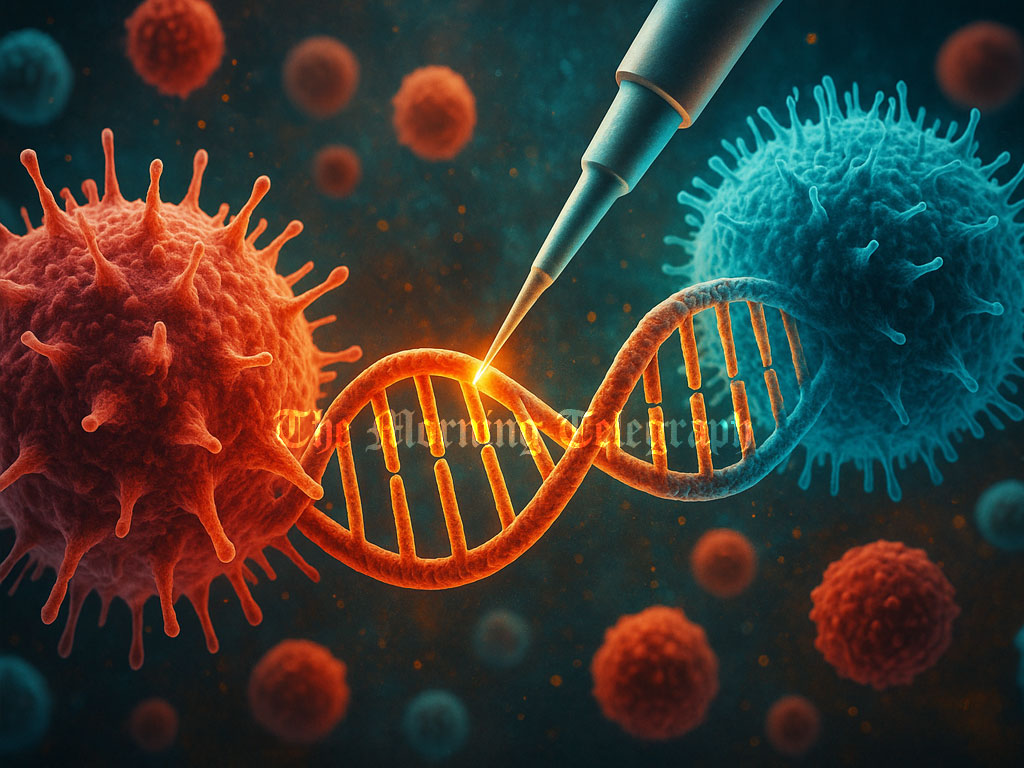
A cutting-edge gene-edited therapy once thought impossible is now rewriting the fate of patients with deadly, treatment-resistant blood cancers, turning modified immune cells into powerful living medicines capable of hunting down and eliminating the disease.
A remarkable new treatment once viewed as pure science fiction has shown the ability to reverse aggressive and previously incurable blood cancers in several patients. The therapy works by editing the DNA inside white blood cells so they become a living medicine capable of attacking cancer. The first patient, a girl whose case became public in 2022, continues to live cancer free and is now planning to pursue a future in cancer research. Since then, eight children and two adults with T cell acute lymphoblastic leukaemia have received the same therapy, and nearly two thirds have entered remission after all other treatments had failed.

The disease normally begins when T cells, which should protect the body, multiply out of control. For the patients in the trial, chemotherapy and bone marrow transplants had not worked, leaving this experimental therapy as their last possible chance. The approach developed at University College London and Great Ormond Street Hospital uses a method called base editing. This allows scientists to change one tiny part of the genetic code at an exact location. Researchers modified healthy donor T cells through a series of steps to prevent them from harming the patient, protect them from certain cancer medicines and program them to destroy any cells carrying a specific marker found on the cancer. These modified cells were then infused into patients. If the cancer was undetectable after four weeks, the patients underwent a transplant to rebuild a healthy immune system.
The results, published in the New England Journal of Medicine, show that nine of the first eleven patients reached a deep remission, and seven remain free of the disease months or years later. Doctors caution that the treatment is intense, with a significant risk of infection during the period when the immune system is dismantled. In a small number of cases, the cancer adapted by shedding the marker the treatment was targeting. Even so, doctors describe the outcomes as remarkable and say the findings offer real hope for people who previously had none.