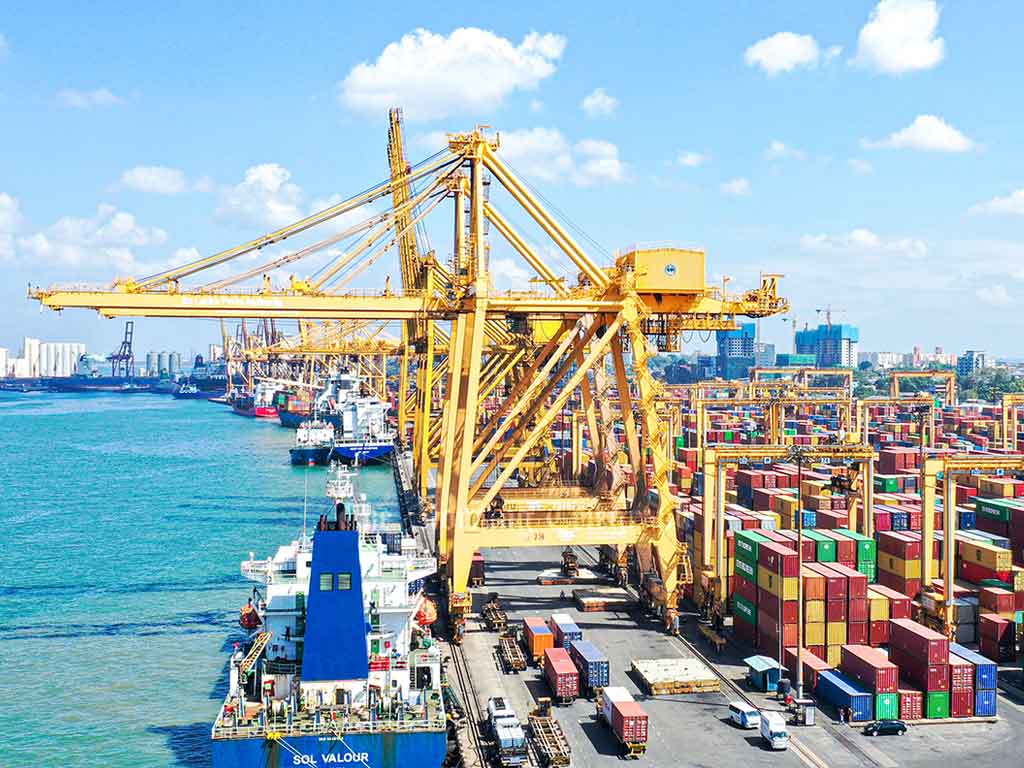
A perfect storm of cyclone aftermath, port closures and staffing gaps has pushed Colombo Port to the brink, leaving importers desperate and critical food supplies trapped in mounting container queues.
Sri Lanka’s Container Transport Vehicle Owners Association says close to five thousand imported containers, including essential food items, are now stuck at Colombo Port due to severe delays in customs clearance. Chairman Sanath Manjula said the containers have piled up across the CICT yard and other port yards, creating significant congestion. However, Customs Media Spokesperson and Director of Customs Chandana Punchihewa denied the number, stating there is “no such large stock of containers.”

The association also reports that around four hundred containers loaded onto vehicles are currently waiting in queues at the port for clearance. They explain that Cyclone Ditwah halted port operations for three days, preventing ships from entering and forcing anchored vessels to remain outside. These delays occurred just as the country began receiving increased shipments of goods for the Christmas and New Year season.
Although Colombo Port has three customs clearance centers, one was flooded during the cyclone. Clearance continued afterward, but the association says delays worsened because two thousand two hundred fifty to two thousand three hundred containers were already in the yard awaiting release. They add that delays from other government agency officials, the lack of 24-hour staffing, insufficient customs officers and limited inspection capacity worsened the backlog. Food inspection reports alone take about three days. The association says at least five hundred containers should be released daily, but only one hundred to one hundred fifty are being cleared now.
They also note that warnings were issued earlier about possible December congestion.
Customs Media Spokesperson Punchihewa acknowledged the earlier shutdown, saying, “The terminal was not working for three days. There were containers that accumulated during those days. There is a normal number of containers in the port. But there is no way that there are 5,000.” He said gate pass procedures may give a misleading impression of congestion. He confirmed that flooding at the Grayline 01 yard forced inspections to shift to the RCT yard, adding two to three hours per container. He also said congestion is usual at the end of November and December due to higher container volumes.