A nation bruised yet unbroken, Sri Lanka now stands face to face with the true scale of Cyclone Ditwah’s devastation, a disaster so vast that its impact has reshaped lives, landscapes and the country’s path forward.
Lives Lost, Families Shattered
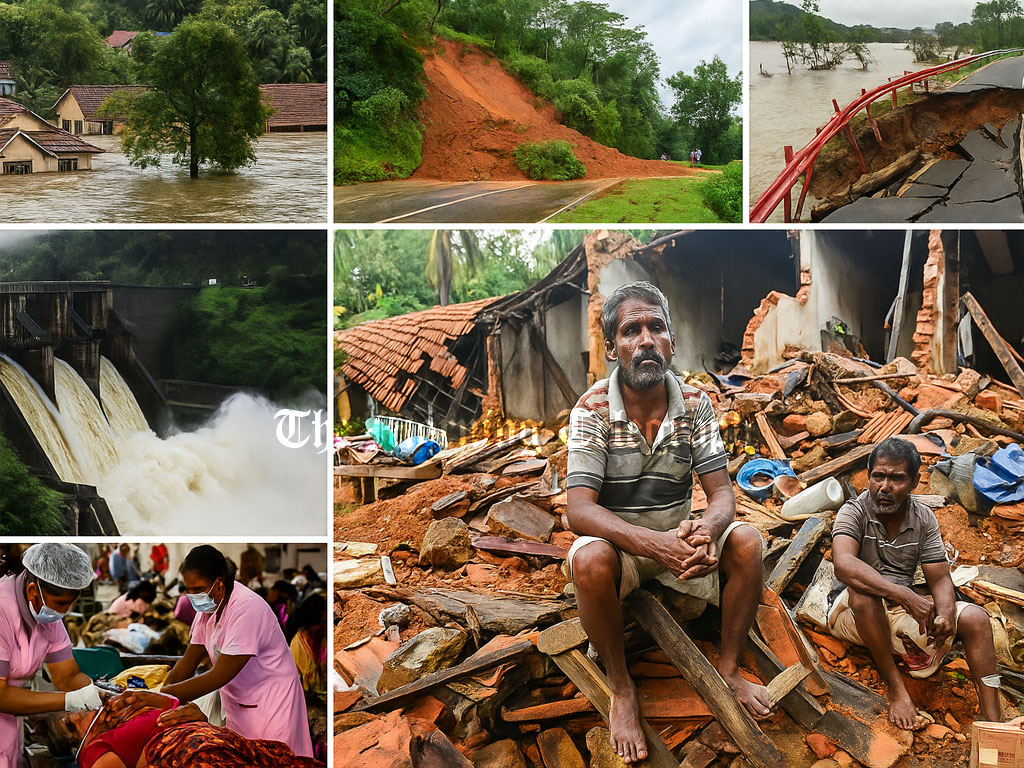
Cyclone Ditwah left Sri Lanka confronting a national calamity of extraordinary magnitude. In just a few days, the storm triggered lethal landslides, unprecedented flooding and the collapse of essential infrastructure that millions depended on for survival. Entire districts were cut off, thousands were displaced and the national economy suffered staggering blows. The numbers reveal how deeply Sri Lanka has been shaken by one of its most severe crises in living memory.
The human toll is devastating. A total of 639 people have been confirmed dead, according to the Disaster Management Centre. Most of these lives were lost in the districts of Kandy, Badulla, Nuwara Eliya and Matale where landslides and flash floods struck suddenly, giving residents no time to escape the danger.
Up to 203 people are still reported missing, with families continuing their desperate search for loved ones in regions that remain difficult to access. The scale of human loss has overwhelmed communities and intensified the urgency for relief efforts.
More than 2.3 million people were affected by Cyclone Ditwah’s sweeping destruction. UNDP estimates that more than two million Sri Lankans experienced flooding, displacement, property loss, livelihood setbacks or severe disruption to daily life. Among them, over 275,000 children suffered the loss of homes, schools and emotional security, with UNICEF warning of rising post-flood disease risks and trauma among young survivors.

Homes, Schools and Sacred Spaces Destroyed
Sri Lanka’s housing sector faced historic destruction. More than 5,000 houses were completely destroyed, leaving thousands of families reliant on emergency shelters and government support. A further 86,882 homes were partially damaged, many of them unsafe to return to.
Cyclone Ditwah also struck the country’s cultural and spiritual heart. A total of 764 religious sites were damaged, including 379 Buddhist Temples, 165 Hindu Kovils, 63 Churches and 157 Mosques, stripping communities of their sacred gathering places.
Education infrastructure was heavily affected. 159 schools in the Central Province were damaged, with 115 schools converted into temporary camps for displaced families. UNDP also revealed that floodwaters reached nearly 720,000 buildings across the country, meaning one in every twelve buildings was exposed to significant flooding.
Infrastructure Crushed Under the Weight of the Storm
Cyclone Ditwah tested and broke Sri Lanka’s physical infrastructure on an unprecedented scale. UNDP reported that more than 1.1 million hectares of land, nearly 20 percent of the country, were inundated. This immense flooding overwhelmed roads, railways and entire districts.
Around 247 kilometres of roads were damaged, while over 16,000 kilometres of road networks and 278 kilometres of railways were exposed to rising floodwaters. UNDP notes that the total length of roads affected is long enough to wrap around the coastline of Sri Lanka more than twelve times.
More than 40 bridges were damaged, including the collapse of the Nayaru bridge in Mullaitivu and severe structural weakening of the Yakkala bridge. This critical damage cut off communities already battling rising waters and landslides.
Highway damages are estimated at 190 billion rupees, a reflection of how severely transport and commerce have been disrupted.
Only 30 percent of the railway network is now operational. Out of 1,593 kilometres of railway track, just 478 kilometres remain usable, and thirty nine power sets are stranded across the country.
Power outages affected 3.9 million consumers, plunging nearly the entire country into darkness at the peak of the storm. More than 150 water supply systems failed, with major treatment plants in Kandy, Ambatale and surrounding areas forced to shut down after being submerged.
Sri Lanka’s agricultural infrastructure also suffered severe damage. More than 1,777 tanks, 483 dams, 1,936 canals and 328 agricultural roads were damaged under the Department of Agricultural Services, cutting off irrigation networks and impacting future harvests.
Economic Shockwaves Across the Nation
Cyclone Ditwah’s economic impact is being described as one of the most damaging in Sri Lankan history. Over 600,000 acres of crops were destroyed, affecting vegetable growers, paddy fields and food supply chains. The country is already witnessing sharp increases in vegetable prices.
The poultry sector was also hit hard, with 3 million hens lost, raising fears of a nationwide egg shortage. Coastal farming communities in Puttalam suffered massively, with more than 600 prawn farms destroyed.
Economists warn that Sri Lanka faces a GDP loss between 0.5 and 0.7 percent, a major setback for a nation already navigating a fragile economic recovery. Total economic losses from Cyclone Ditwah are estimated between 6 and 7 billion US dollars, covering agriculture, energy, infrastructure, housing and transportation networks.
Unprecedented Flooding and Rising Waters
Cyclone Ditwah triggered water levels not seen in decades. Spill gates of seven major reservoirs including Kala Wewa and Rajanganaya had to be opened to prevent dangerous pressure build-up.
The Kelani River reached historic highs, with the Nagalagam Street gauge surpassing 8.45 feet, forcing mass evacuations across Colombo suburbs such as Kelaniya, Biyagama and Kolonnawa.
Several regions including Rugam in Batticaloa, parts of Mullaitivu and Vavuniya recorded more than 300 millimetres of rainfall, marking some of the heaviest rain ever documented in a single period in Sri Lanka.
Health Risks Intensify After the Cyclone
Medical experts warn of long-term health consequences. Cardiologists note that heart attack risk increased by almost 40 percent due to stress and exhaustion related to the disaster.
Health authorities report rising cases of leptospirosis, diarrhea, chikungunya, dengue and skin infections, driven by contaminated water, poor sanitation and overcrowded shelters.
Crowded conditions in safe centres have also triggered a surge in pink eye cases, prompting health alerts for displaced families.
Relief Efforts, Donations and National Solidarity
Despite the devastation, Sri Lankans have demonstrated extraordinary unity. The Rebuilding Sri Lanka Fund surpassed 697 million rupees, supported by contributions from across the public and private sectors.
Sri Lanka Cricket donated 300 million rupees, Port City Colombo contributed funds and machinery, the Bandaranaike Foundation donated 250 million rupees, and Lanka Ashok Leyland provided vehicles worth more than 65 million rupees.
The government announced 5 million rupees as compensation for fully destroyed houses and allocated 1.2 billion rupees for emergency relief. A total of 878 safe centres are now sheltering 86,040 individuals from 27,145 displaced families.
Global Aid Reaches Sri Lanka
More than 70 countries have pledged help. India deployed C-17 and C-130 aircraft, Bailey bridge units and specialist rescue teams. The UAE established a continuous air bridge with emergency supplies. China sent 85 tonnes of humanitarian aid, while the United States provided 2 million US dollars in life-saving support.
The Maldives delivered 25,000 cases of canned tuna and financial support. Japan, Bangladesh, Pakistan, Myanmar, Korea and Israel also contributed medical teams, food stocks and relief materials.
This marks one of the largest international support efforts Sri Lanka has received in recent years.
A Nation Forever Changed Yet Rising Again
Cyclone Ditwah has altered Sri Lanka’s landscape, its communities and its future. Yet within the destruction lies powerful evidence of resilience. Neighbours sheltered neighbours, volunteers worked around the clock and global partners stepped forward without hesitation.
Even as the country continues to count its losses, Sri Lankans are proving once again that unity can emerge from tragedy, and that rebuilding is not just possible but already underway.
This data is as of 10th December, 4.00 PM.