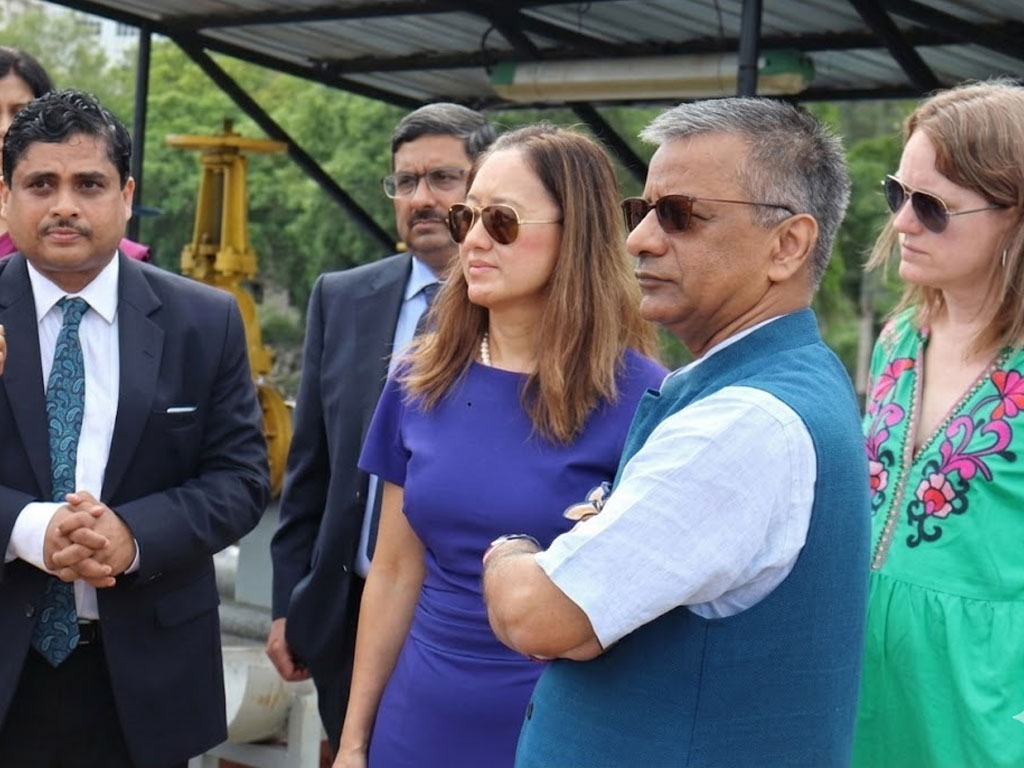
A sitting Speaker was secretly asked to seize power. He said no. This is the untold story of the foreign pressure at the heart of Sri Lanka’s great political crisis.
The convulsive events of the 2022 Aragalaya uprising, which forced a president from office and set the nation on a new and uncertain path, continue to cast long shadows. Among the most persistent and troubling is the whispered allegation of a foreign-orchestrated bid to install an interim president, a constitutional coup in the chaotic making. For years, this claim swirled in the realm of accusation and denial, a murky subplot in a national drama. Now, a central figure has broken his silence, not in a courtroom or a parliamentary probe that never materialized, but in the pages of a book. His testimony shifts the geopolitical axis of the story, pulling back the curtain on a clandestine meeting that lays bare the intense external pressures shaping Sri Lanka’s moment of existential crisis.

Finally, former Speaker Mahinda Yapa Abeywardena has moved to set the record straight regarding that controversial, never-investigated proposal for him to assume the presidency. He has disclosed the precise circumstances of an approach made by external powers on the fateful morning of 13 July 2022. The scene was one of high tension: a large-scale protest, which many believe was staged and orchestrated, surged outside his official residence near Parliament, a symbol of the state under siege. In this pressured atmosphere, a discreet visitor arrived with an extraordinary proposition.
Critically, Abeywardena has clarified a point of major geopolitical significance. It was not the United States Ambassador, but the then Indian High Commissioner to Colombo, Gopal Baglay, who directly asked him to accept the presidency immediately. This revelation comes via Professor Sunanda Maddumabandara, former Senior Media Advisor to President Ranil Wickremesinghe, in his seminal work ‘Aragalaye Balaya’ (Power of Aragalaya). The account is startling in its specificity. Maddumabandara quotes Abeywardena as receiving a firm assurance from the seasoned Indian diplomat: if he agreed to take the country’s leadership, the volatile, violent situation outside his gates would be brought under control “within 45 minutes.” Baglay reportedly assured him there was “absolutely no harm” in him succeeding the fleeing President Gotabaya Rajapaksa. As Professor Maddumabandara astutely observed to the writer, only an entity with direct influence or control over the protest campaign could offer such a precise, guaranteed timeframe in the midst of national chaos.
This disclosure fundamentally alters the public narrative. It directly contradicts earlier claims from figures like National Freedom Front leader Wimal Weerawansa and writer Sena Thoradeniya, who had pointed fingers squarely at US Ambassador Julie Chung. Ambassador Chung had vehemently denied Weerawansa’s allegations at the time, labelling them “baseless allegations” and “outright lies” in a book that “should be labelled fiction.” However, she was strategically constrained, unable to reveal that the proposal had indeed come from her Indian counterpart. This dynamic hints at a carefully coordinated US-Indian partnership in managing the Aragalaya crisis, with India, given its proximity and deeper on-ground networks, taking the lead on sensitive political operations. It suggests a division of labour in a broader regime change strategy, where Western support and Indian ground influence worked in tandem.
The Pressure Mounts: A Sequence of Coercion
Abeywardena’s steadfastness in that moment deserves historical recognition. Faced with an offer of supreme power from a major foreign power, he refused on constitutional grounds, telling High Commissioner Baglay that such a move violated Sri Lanka’s foundational law. This was an unprecedented test of personal and institutional integrity in the nation’s post-independence history. When the diplomat pressed, the Speaker held firm.
The details of the encounter paint a picture of a sophisticated pressure campaign. Baglay entered the Speaker’s residence unannounced, despite protesters supposedly blocking access, raising immediate questions about his rapport with the groups orchestrating the unrest outside. The pressure did not cease with his departure. In a sequence that indicates a multi-pronged strategy, a delegation of local actors soon arrived at the residence. This group included Ven. Omalpe Sobitha, academic Ven. Agalakada Sirisumana, trade union leader Ravi Kumudesh, and several Catholic priests. They reiterated the same proposal, with Abeywardena noting that some in the group adopted a threatening demeanour to coerce his acceptance. This two-step approach, first the foreign diplomat, then aligned local influencers, reveals a concerted effort to overwhelm the Speaker’s resistance from both international and domestic fronts.
The Deafening Silence: A Nation Avoids Investigation
Perhaps the most damning consequence of this entire episode is the resounding, deliberate silence that has followed. Sri Lanka’s institutions have demonstrated no genuine will to probe the alleged foreign-backed plot to seize power through extra-parliamentary means. While isolated incidents of violence were examined, the overarching “regime change project,” its architects, and its local facilitators remain protected by a wall of official omission. Baglay’s name was meticulously kept out of all official discourse until this literary revelation.
This investigative vacuum is not an accident but a choice, revealing a tacit understanding among the victorious political elite. President Ranil Wickremesinghe, who ultimately ascended to the presidency through a parliamentary vote after the crisis, has shown no appetite for a transparent inquiry. The Sri Lanka Podujana Peramuna (SLPP), which facilitated his rise, similarly avoids the subject. The obvious mechanism for truth-seeking, a Special Parliamentary Select Committee with a broad mandate to investigate the period from the economic collapse to the political takeover—has been conspicuously absent from parliamentary agenda. Even the Human Rights Commission of Sri Lanka, when pressed, has sidestepped the issue of external interventions. This collective institutional amnesia serves multiple interests: it protects domestic political collaborators, avoids diplomatic friction with powerful nations, and allows a new political status quo to solidify, unchallenged by an inconvenient official truth.
Leveraging Chaos: Domestic Agendas in the Crucible
The crisis also provided a window for other long-standing domestic political agendas to be aggressively advanced. Abeywardena revealed another explosive detail from that chaotic day. During a tense party leaders’ meeting in Parliament on 13 July, as protests threatened to breach the complex, TNA MP M.A. Sumanthiran proposed the immediate withdrawal of armed forces from the Northern and Eastern Provinces to redeploy them in Colombo. To the Speaker and many observers, this was a blatant attempt to exploit the national security crisis to achieve a longstanding political objective of Tamil nationalist parties, the demilitarization of the North and East. This incident underscores how the Aragalaya’s chaos created opportunities for various actors to pursue their own strategic goals, further complicating the state’s crisis management.
The role of the media, both traditional and new, was undeniably pivotal as a force multiplier. Maddumabandara highlights the partisan coverage of certain international outlets like the Hindustan Times, which actively promoted narratives favouring Rajapaksa’s removal and the installation of a new order. This media dimension was essential in shaping local and international perception, legitimizing the protest movement, and isolating the sitting government, thereby increasing the efficacy of the pressure campaign.
A Flawed Victory? Assessing the Regime Change Operation
Professor Maddumabandara’s analysis provocatively compares the Aragalaya to classic US-led regime change operations in countries like Iraq, Libya, and Ukraine. He posits, however, that the operation in Sri Lanka ultimately failed due to the constitutional fortitude of Rajapaksa, Abeywardena, and Wickremesinghe. This assessment is highly contentious and arguably flawed. While the specific tactical plan to install Speaker Abeywardena as a pliant interim leader was thwarted by his refusal, the overarching strategic goal of the operation, the removal of President Gotabaya Rajapaksa was achieved decisively and unconstitutionally. An elected president was forced from his office and his official residence by a mass protest, the scale, timing, and sustainability of which many analysts believe benefited from external logistical and narrative support.
The subsequent political and economic realignment of Sri Lanka suggests the regime change operation succeeded in altering the nation’s trajectory. The flurry of strategic Memorandums of Understanding with India, covering energy, connectivity, and even defence cooperation, alongside deepening economic and security ties with the United States, signals a fundamental foreign policy shift. Whether the original architects got their first-choice administrative vehicle is a minor detail. The ultimate outcome has firmly anchored Sri Lanka within a new geopolitical framework that aligns seamlessly with the strategic interests of both Washington and New Delhi in the Indian Ocean, particularly as a counterbalance to Chinese influence.
The Unvarnished Truth: Sovereignty Subverted
The undeniable, sobering bottom line is this: a democratically elected president and government were ousted not through a ballot or a constitutional process, but through sustained street pressure and institutional collapse, elements widely believed to have been amplified by foreign powers. Sri Lanka’s political establishment, rather than defending the constitutional order, largely acquiesced to this new reality. The 2022 crisis proved that external actors could exert influence at every level of Sri Lankan society, from grassroots mobilisation and media messaging to direct diplomacy with top officials.
The resulting damage to the political party system and public trust in democratic institutions is profound and possibly irreversible. The nation was shown to be a stage for great power competition, its internal crises offering opportunities for geopolitical manipulation. The recent catastrophe of Cyclone Ditwah has only compounded this vulnerability, stretching state capacity to its limit and deepening economic despair. In this context, the story of the “coup that never was” is far more than a historical curiosity. It is a stark case study in 21st-century geopolitical intervention, a sobering lesson in the fragility of sovereignty for small states, and a chilling warning. It reveals a nation at a crossroads, where the constitution held by a thread because one man adhered to its letter. The silence that has followed his courage is a louder indictment of the state of the nation’s politics than any protest chant could ever be, highlighting an urgent, unmet need for accountability and a genuine reclaiming of strategic independence.
SOURCE:- SRI LANKA GUARDIAN