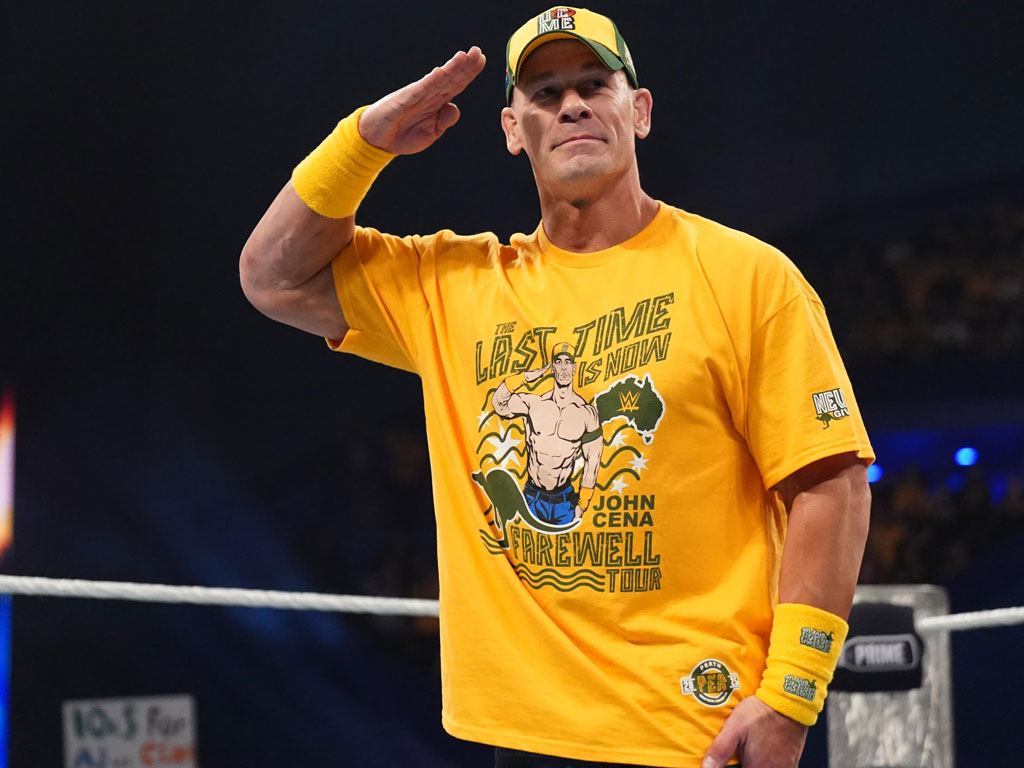
As John Cena prepares for his final WWE match, his story stands as proof that greatness is built not only on titles and strength, but on character, connection, and an authenticity that reshaped professional wrestling.
“The Last Time Is Now” is the fitting name given to the tournament that brought together 16 of wrestling’s biggest names, all competing for the chance to stand across the ring from John Cena one final time. That moment has arrived. On Saturday night in Washington DC, Cena will wrestle his last match, drawing the curtain on a career that transformed him into one of the most successful and commercially powerful figures in WWE history.

In the 8,570 days since his debut, Cena has won 17 world championships and introduced the iconic phrase “You Can’t See Me” into popular culture. Yet numbers alone fail to capture his true impact. Ask who John Cena is and the answers vary. To some, he is a legendary WWE superstar. To others, a Hollywood actor. And for many families around the world, he is forever linked to the Make A Wish Foundation.
Since entering WWE in 2002, Cena’s on screen character evolved with the times. He began as a fiery “ruthless aggression” rookie, reinvented himself as the rapping “Doctor of Thuganomics,” and later became the heroic symbol of perseverance defined by his “Never Give Up” mantra. While critics sometimes questioned his technical style in the ring, wrestling analyst Brandon Thurston of Wrestlenomics insists there is no doubt about Cena’s talent or value to the industry.
Thurston points to 2005 as a turning point, when WWE shifted into a more scripted and family friendly PG era. Cena not only adapted but thrived. From roughly 2005 to 2015, he was WWE’s biggest draw, consistently leading merchandise sales, driving pay per view buys, boosting television ratings, and filling arenas worldwide. Economically and culturally, he was the company’s cornerstone.
Cena’s influence extended beyond performance metrics. Thurston describes him as someone audiences naturally gravitated toward. Fans such as Joe Clarkson and Sabrina Nicole agree. Joe, who first watched Cena as a child, says surviving so long in a physically punishing industry is remarkable, adding that respect for Cena grew not just for his performances but for who he was as a person.
Sabrina, who remembers Cena’s debut in 2002, credits his charisma and consistency. She notes that throughout his career he largely maintained a positive, heroic persona, proving that a strong character could remain at the top regardless of crowd reactions. His presence became a constant in an industry defined by change.
Timing also played a role in Cena’s rise. With icons like The Rock and Stone Cold Steve Austin stepping away from full time competition, WWE needed a new standard bearer. Leadership recognised that Cena was reliable, disciplined, and willing to carry the company. It is widely believed that then chairman Vince McMahon ultimately made the decision, weighing Cena’s microphone skills, marketability, and long term profitability.
When Cena reduced his wrestling schedule around 2015 to pursue acting, some observers noted a decline in WWE’s overall momentum. Analysts have suggested his presence helped slow falling ratings during a difficult period for the company.
Beyond the ring, Cena built a personal brand that felt genuine. Marketing academic Dr Gillian Brooks notes that he could have relied solely on wrestling fame, but instead expanded into films, music, children’s books, and major brand partnerships. His work with Neutrogena, where he openly discussed skin cancer risks, reinforced his credibility.
Perhaps most defining is his commitment to the Make A Wish Foundation. Holding the Guinness World Record for granting more than 650 wishes, Cena has described the experience as “the coolest thing.” What began by accident became a lifelong mission, turning him into a real life hero for children facing critical illness.
In announcing that 2025 would be his final year as an active competitor, Cena spoke candidly about the physical toll of wrestling. Multiple surgeries on his neck, chest, and arms left him saying his body was “screaming to close the chapter.” Despite wrestling’s tradition of surprise returns, he has insisted he is “100% done.”
His retirement run featured matches against longtime rivals and emerging stars. While some fans criticised certain creative decisions, many agree it was a unique farewell rarely seen in WWE history.
After winning “The Last Time Is Now” tournament, Cena now faces former world heavyweight champion Gunther in his final match. With no time limit reported and global streaming access, the bout is expected to be watched worldwide.
John Cena may still chant “You Can’t See Me,” but his final fight, and the legacy he leaves behind, will be seen, felt, and remembered for generations.