As collapsing homes, threatened heritage sites, and paralyzed livelihoods expose the scale of the crisis, the government moves to evacuate families, protect sacred landmarks, and push for long-term flood control solutions across affected districts.
With the intensification of the northeast monsoon, a row of estate houses at the Welioya Estate in the Ambagamuwa Divisional Secretariat area has been declared unsafe due to the risk of landslides. Authorities confirmed that several houses have already begun collapsing, prompting the evacuation of 20 families, comprising 75 individuals, on December 13 to ensure their safety.

The displaced families have been temporarily relocated to a security center established at Dadukelle College. The Ambagamuwa Divisional Secretariat has arranged food, shelter, and other essential facilities while further assessments are carried out. Engineers from the Geology and Mining Division have warned that continued rainfall could worsen ground instability in the area, making permanent resettlement a likely necessity.
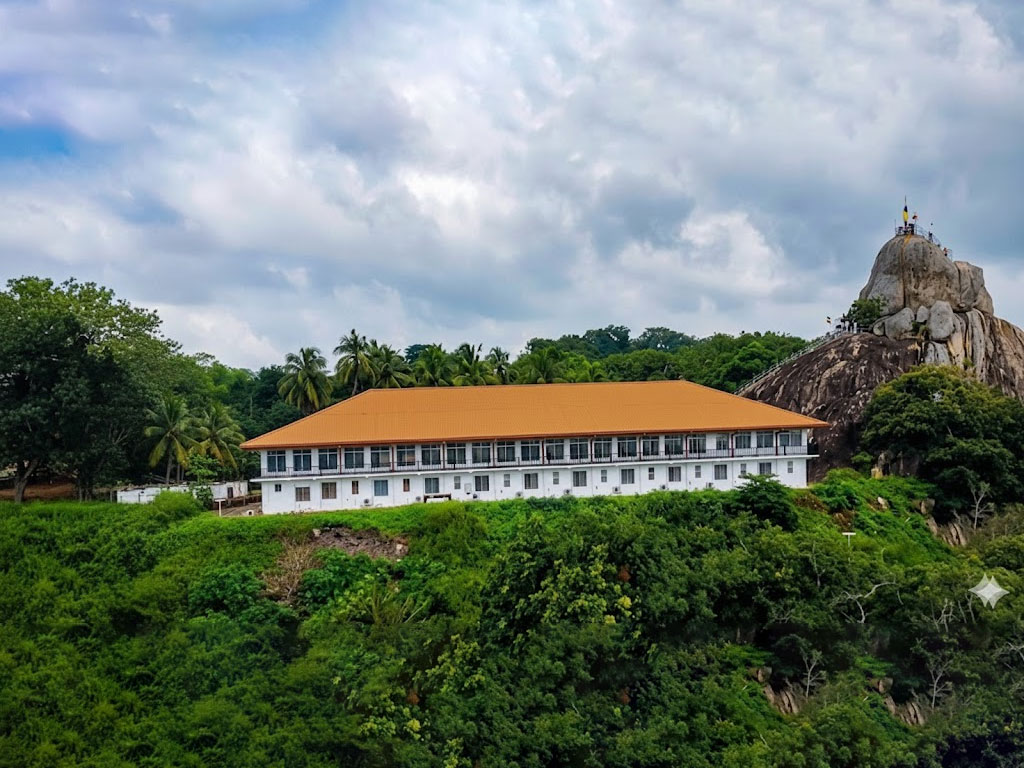
Meanwhile, serious concerns have emerged over historic and religious sites in Mihintale. Engineering inspections have revealed that the Dharma Hall located in the upper courtyard of the Mihintale Rajamaha Viharaya is at imminent risk of collapse. Experts have also confirmed that the Mihintale Giribanna Seya is similarly threatened due to soil movement and water saturation. Engineers have officially informed authorities that urgent preventive action is required to avert irreversible damage to these culturally significant structures.
Addressing the broader disaster response, President Anura Kumara Dissanayake reiterated that the government would not allow the rights of the fishing community to be violated and emphasized the need to protect both land and coastline resources. He made these remarks while attending a special coordination committee meeting at the Mannar District Secretariat, convened to review restoration efforts and infrastructure rehabilitation in the district.
Highlighting the urgency of flood mitigation, the President instructed officials to move beyond temporary measures and implement a permanent flood control program in the Mannar District, based on proper scientific studies and long-term planning. He noted that repeated disasters have shown the cost of delayed structural solutions.
The impact on livelihoods has been severe. Officials disclosed that nearly 12,000 fishermen in Mannar are currently unable to engage in fishing activities due to adverse weather conditions. Although some families were not directly affected by flooding, their income sources have been cut off. The President ordered that dry ration packs covering one week be distributed to these fishing families as immediate relief.
Discussions also included coordinating with the Chinese Embassy to distribute netting equipment previously donated by the Chinese government to affected fishing communities. In addition, concerns were raised over unauthorized land occupation in the Yodha Wewa Sanctuary watershed. The President instructed authorities to strictly enforce the law against those obstructing boundary demarcation efforts.
In Mannar alone, 70 families have lost their homes due to the disaster. Plans were discussed to construct new houses, identify suitable land, and appoint a committee to finalize locations within two weeks. The meeting also addressed the expansion of hospital facilities, including the Mannar Base Hospital, and the restoration of health and education services.
The President further directed that the Rs. 15,000 assistance allocated by the General Treasury for schoolchildren be promptly disbursed through Divisional Secretaries on recommendations from Grama Seva Officers. Extensive discussions also covered the repair of damaged highways and bridges, restoration of electricity and water supply, rehabilitation of irrigation systems, compensation for agricultural and livestock losses, and rebuilding livelihoods across affected regions.