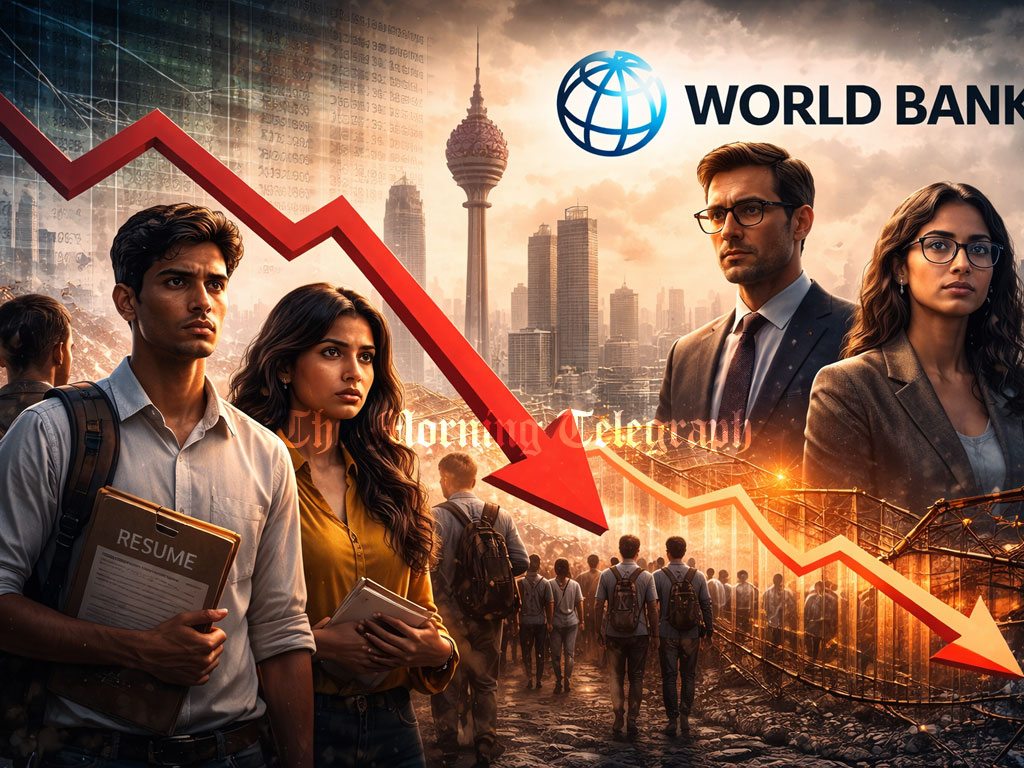
Sri Lanka faces the risk of a widening employment crisis as slow economic growth threatens job opportunities for nearly one million young people expected to enter the workforce over the next decade, according to World Bank experts.
Senior World Bank economists say the country’s current growth trajectory is not strong enough to generate the volume of jobs required to absorb the expanding labour force. While macroeconomic conditions have shown signs of stabilisation, employment creation continues to lag behind demographic pressures.
World Bank Lead Economist for Maldives, Nepal and Sri Lanka Arvind Nair said that unless growth accelerates meaningfully, Sri Lanka could face a serious jobs gap in the years ahead. He stressed that stability alone will not solve the problem if private investment and enterprise expansion do not follow.

“So we are looking at a real jobs gap if growth remains slow. That’s why we need the private sector to invest and create jobs,” Nair said, highlighting the importance of investor confidence, business reforms, and a supportive environment for entrepreneurship.
The World Bank currently projects Sri Lanka’s economic growth at around three to four per cent this year. While this represents a recovery from the depths of the economic crisis, experts warn that it remains insufficient to deliver broad based employment growth or significantly improve living standards.
Nair also pointed to the social cost of the downturn, noting that poverty levels have almost doubled since the crisis. “To reverse that, growth is a prerequisite. Growth becomes essential not just from a fiscal perspective, but also for jobs and improving people’s living standards,” he said.
World Bank Country Economist for Sri Lanka Shruti Lakhtakia said recent improvements in fiscal discipline and external sector performance are encouraging and form the foundation for recovery. However, she emphasised that stability must be preserved if the country is to achieve stronger and more durable growth.
“For any kind of growth, the first step is stability. We need to remain on the fiscal path, allow exchange rate adjustments, and ensure reforms continue so that the private sector can invest with confidence,” she said.
Lakhtakia added that while growth of about three per cent may be enough to meet debt sustainability targets under the IMF programme, it would come at a cost. Maintaining low growth would require prolonged fiscal austerity, leaving little room for the government to respond to unexpected shocks such as natural disasters.
“That level of growth is not enough to meet the aspirations of the Sri Lankan people,” she said, noting that faster growth would ease austerity pressures, support job creation, and raise household incomes across the country.