As Cyclone Ditwah leaves Sri Lanka’s transport lifelines damaged, the President turns to China for urgent technical support, signalling a renewed phase of cooperation during a national recovery effort.
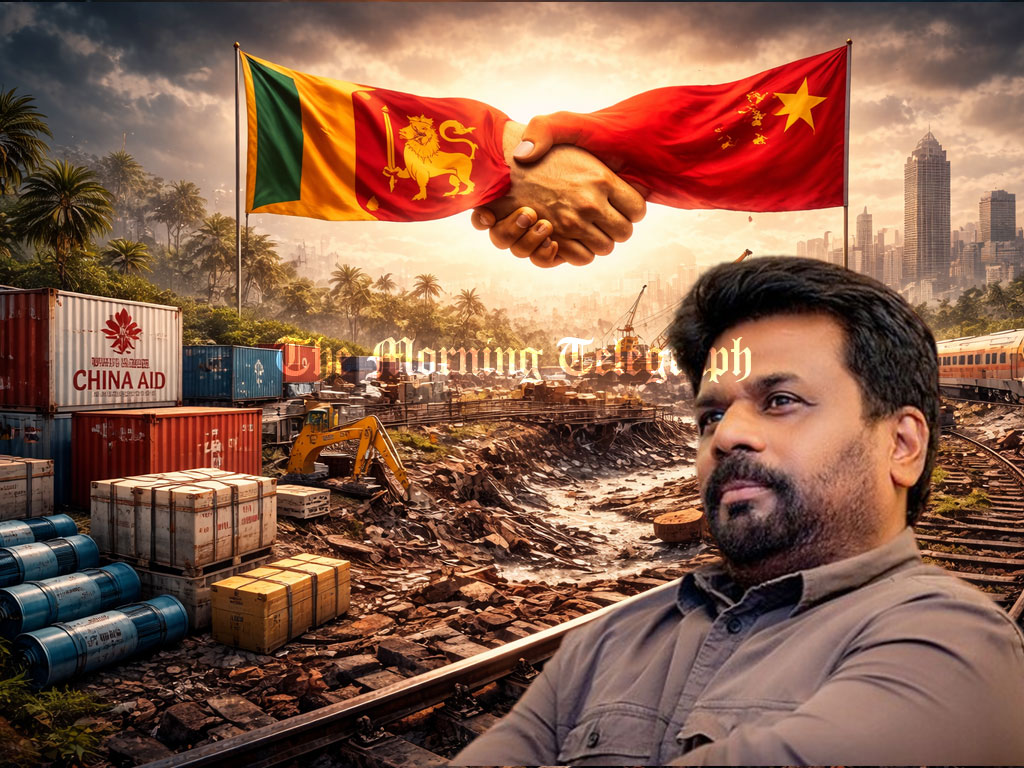
Sri Lanka has formally sought Chinese assistance to repair railway lines and infrastructure damaged by Cyclone Ditwah, as President Anura Kumara Dissanayake met a high-level Chinese delegation in Colombo to discuss post-disaster recovery and long-term cooperation.
Wang Dongming, Vice Chairman of the National People’s Congress of the People’s Republic of China, said Beijing would extend its fullest support to Sri Lanka’s efforts to rebuild lives disrupted by the cyclone. He expressed confidence that the country would return to normalcy under the leadership of President Dissanayake, despite the scale of destruction caused by the storm.

The Chinese official made these remarks during a meeting held at the Presidential Secretariat, where he conveyed the deep sorrow of the Chinese government and people over the devastation faced by Sri Lanka. He noted that China had acted swiftly to provide emergency relief and humanitarian assistance to affected communities following Cyclone Ditwah.
Wang Dongming said the visit was also intended to further strengthen the long-standing economic, cultural, and diplomatic ties between Sri Lanka and China, especially at a time when cooperation is critical for recovery and rebuilding.
President Anura Kumara Dissanayake thanked the Chinese delegation for visiting Sri Lanka during a period of national difficulty and expressed appreciation for China’s material and financial assistance. He said the support extended by Beijing had brought relief to thousands affected by flooding, landslides, and infrastructure damage.
The President said he would formally request the Chinese government, including President Xi Jinping, to provide technical expertise and assistance for the restoration and reconstruction of Sri Lanka’s damaged railway system. He explained that railway lines are a vital economic and social artery, especially for rural and disaster-affected regions.
Briefing the delegation on the government’s response, President Dissanayake said the initial focus had been on rescuing affected people and ensuring access to food, healthcare, and shelter. He added that the government is now implementing a structured national recovery program aimed at restoring livelihoods and normal daily life.
Several senior Chinese officials attended the meeting, including members of the National People’s Congress committees on foreign affairs, environmental protection, and social development, along with the Chinese Ambassador to Sri Lanka.
Representing Sri Lanka were senior government officials including the Minister of Labour and Deputy Minister of Finance and Planning Dr. Anil Jayantha Fernando, Secretary to the President Dr. Nandika Sanath Kumanayake, and Senior Additional Secretary Roshan Gamage.
The meeting underscored Sri Lanka–China cooperation, disaster recovery diplomacy, infrastructure rebuilding, and the strategic importance of international partnerships in times of crisis.