A weakening rupee has silently added hundreds of billions to Sri Lanka’s foreign debt, raising fresh concerns over economic management and the future tax burden on ordinary citizens.
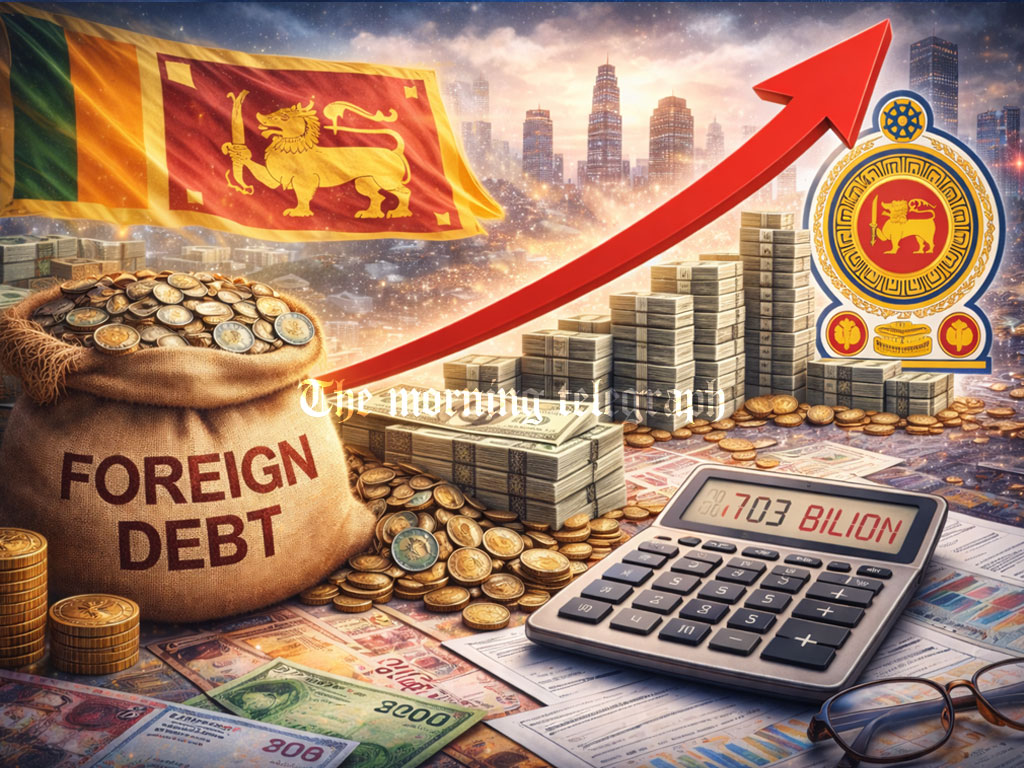
Due to the continued depreciation of the rupee against the US dollar, Sri Lanka’s foreign debt has increased by a staggering Rs. 703 billion over the past 15 months, according to a statement issued by the Sri Lanka Human Rights Centre.
The dollar, which stood at Rs. 293 in October 2024, has now climbed to Rs. 312, an increase of Rs. 19. This depreciation has directly inflated the value of Sri Lanka’s foreign debt, which stood at approximately US$ 37 billion by mid-2025. As a result, the additional burden created by the exchange rate movement alone amounts to Rs. 703 billion.

Executive Director of the Sri Lanka Human Rights Centre, Rajith Keerthi Tennakoon, noted that this loss exceeds the value of the US$ 206 million emergency financial facility provided by the International Monetary Fund under its Rapid Financing Instrument. He explained that when calculated at the current exchange rate, the rupee depreciation has erased the equivalent of the IMF support many times over.
The statement further explains that for every one-rupee depreciation against the US dollar, Sri Lanka’s external debt burden rises by approximately Rs. 37 billion. This highlights the severe sensitivity of the country’s debt position to currency fluctuations.
In 2022, amid economic collapse and policy failures, the dollar surged to Rs. 361 under official rates, with market rates exceeding Rs. 400. Subsequent economic management brought the dollar down to Rs. 293, but the rupee has once again weakened rapidly in recent months.
Economic mismanagement and the failure to attract foreign direct investment have been identified as key drivers of the growing debt burden. Ultimately, the additional Rs. 700 billion cost is expected to be recovered through increased direct and indirect taxes imposed on the public.
The statement also reveals that Sri Lanka’s foreign reserves declined from US$ 6,531 million in March 2025 to US$ 6,033 million by November 2025, reflecting further pressure on the country’s fragile economy.