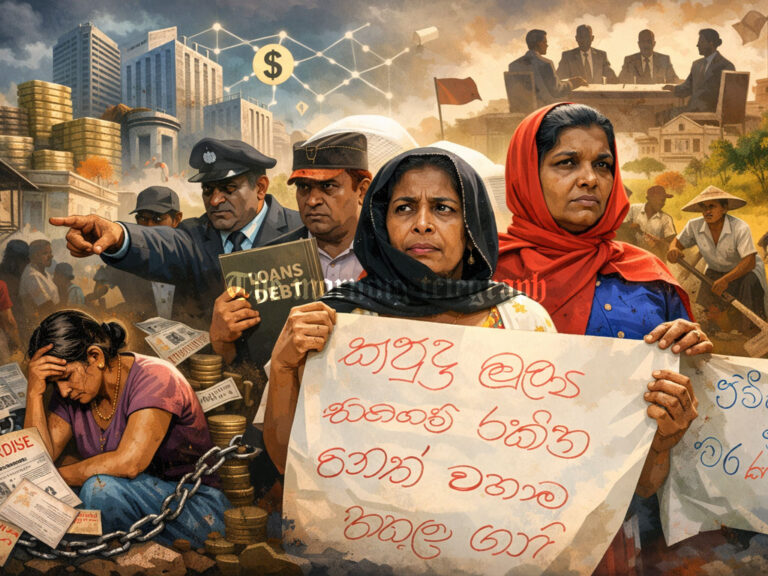
A slow collapse of accountability is unfolding as broken promises, weakened institutions, and executive overreach push Sri Lanka toward a familiar democratic abyss.
Sri Lanka is slipping into a troubling moral twilight, not heralded by tanks on the streets or emergency proclamations at dawn, but through something far more corrosive: the quiet erosion of ethical restraint disguised as reform. The present Government’s inability, or unwillingness, to respect basic ethical standards in public appointments has now hardened into a constitutional embarrassment, a democratic insult, and a clear warning of what lies ahead if this trajectory continues.

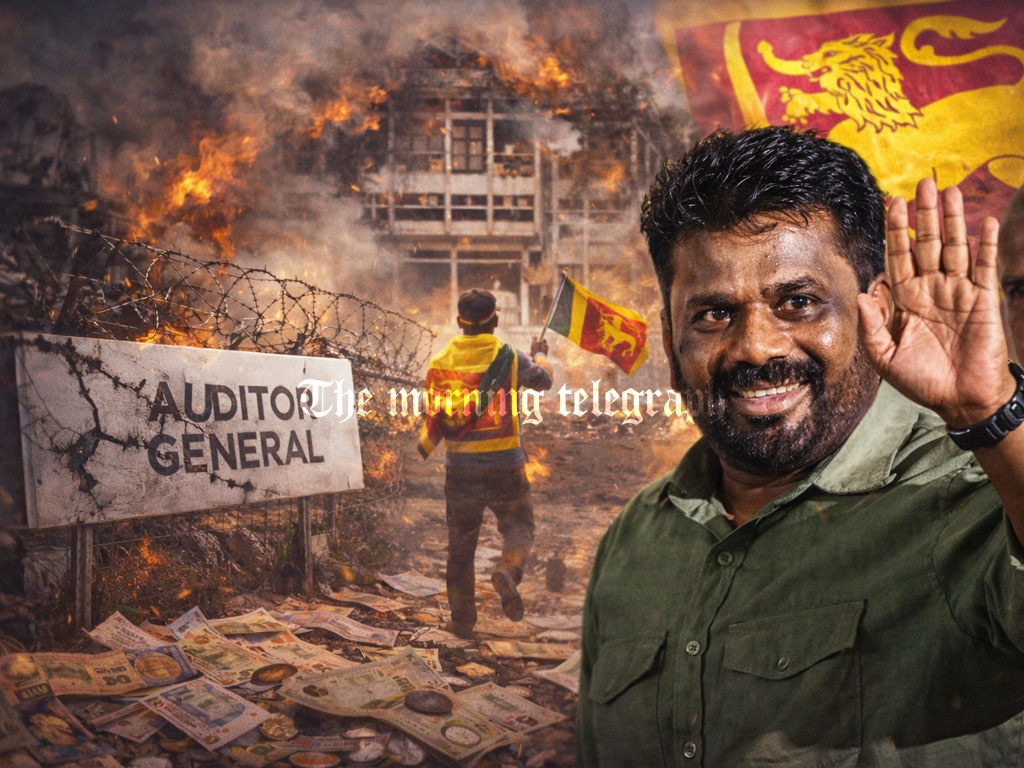
The most striking evidence of this decay is the extraordinary reality that Sri Lanka has operated for nearly a year without a properly appointed Auditor General. In a nation already scarred by sovereign default, deepening poverty, and the collapse of public trust, the absence of the state’s chief financial watchdog is not a minor administrative lapse. It is a scandal of the highest order, one that undermines the very foundations of public accountability.
Four nominees proposed by President Anura Kumara Dissanayake have been rejected by the Constitutional Council. Four. This cannot be dismissed as bad luck. It is a pattern. The repeated rejections, including the most recent attempt to install a serving military officer in the post, point not merely to flawed judgement but to a deliberate disregard for institutional independence. The consequence has been paralysis within the National Audit Office, disruption of state financial oversight, and the humiliating spectacle of a government unable to identify a candidate who meets even the minimum standards of acceptability.
This administrative failure becomes more alarming when contrasted with the moral certainty that defined the Government’s rise to power. The NPP manifesto railed against corruption, pledged ethical governance, and promised unwavering respect for independent institutions. It vowed to break from the entrenched culture of patronage, manipulation, and executive arrogance. Today, those promises lie not only broken but trampled, their remains barely visible beneath the weight of political expediency.
The failure to secure an Auditor General is not an isolated episode. It exists alongside an increasingly open tendency to sidestep parliamentary oversight altogether. Nowhere is this more disturbing than in the handling of the post-cyclone Ditvany fund, where a small group of businessmen was entrusted with managing public funds without parliamentary approval. In any democracy, disaster relief funds demand the strictest scrutiny precisely because they are vulnerable to misuse. Handing such responsibility to private actors selected without transparency and shielded from legislative oversight is not reform. It is an ethical aberration.
What is emerging is governance by decree rather than governance by consent. It reflects an executive mindset that treats Parliament not as an equal pillar of democracy but as an inconvenience to be bypassed. The growing tendency to undermine or belittle institutions such as the Constitutional Council, audit bodies, and the legislature itself signals something far more dangerous than bureaucratic incompetence. It points to a creeping authoritarian impulse that tolerates checks and balances only when they are obedient.
Authoritarianism rarely announces itself dramatically. More often, it advances quietly through procedural decay and the gradual erosion of democratic norms. Today it is the sidelining of Parliament. Tomorrow it may be the politicisation of oversight institutions. The next step is the normalisation of rule without accountability. Governments often dismiss such warnings as alarmist, but history repeatedly punishes those who ignore early signs of democratic backsliding.
Particularly troubling is the moral posture adopted in defense of these actions. The Government continues to present itself as ethically superior, as a corrective to past abuses, even as it mirrors and intensifies the very practices it once condemned. Ethical governance appears to have been a campaign slogan rather than a governing principle. Accountability was convenient in opposition and inconvenient in power.
As this impasse drags on, the damage deepens. Without an Auditor General, public spending slips into darkness. Without parliamentary scrutiny, executive authority expands unchecked. Without ethical coherence, public confidence evaporates. Democracies rarely collapse overnight. They wither through accumulated acts of neglect, arrogance, and institutional contempt.
The tragedy is that this decline is self-inflicted. The Government still has a chance to change course by respecting the Constitutional Council, nominating credible and independent candidates, restoring Parliament’s role, and treating institutions as safeguards rather than obstacles. Yet each week of stubbornness narrows the path to redemption.
Sri Lanka has witnessed this cycle before. Leaders intoxicated by moral certainty. Governments that confused electoral victory with absolute authority. Executives that weakened institutions until those institutions could no longer protect the public interest. The outcomes are never gentle.
What is unfolding now is not simply administrative failure. It is the abandonment of ethical restraint and a dangerous flirtation with authoritarian habits. If allowed to harden, it will reshape governance, corrode democracy, and burden future generations with the cost of today’s hubris. The real question is not whether promises have been broken. They have. The question is whether Sri Lanka will recognize the danger before ethical collapse becomes political destiny once again.