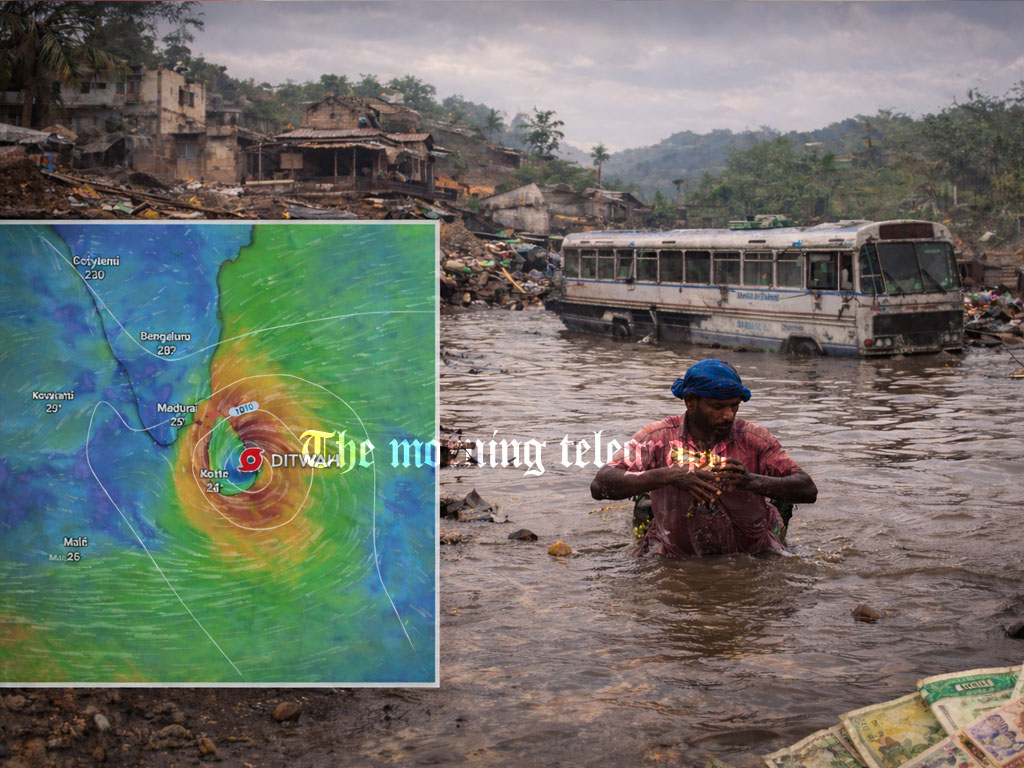
A devastating World Bank assessment reveals the true scale of Cyclone Ditwah’s destruction, exposing massive economic losses, shattered livelihoods, and deep vulnerabilities across Sri Lanka’s provinces.
The World Bank Group’s GRADE report released today, December 22, estimates that Cyclone Ditwah caused direct physical damage to buildings, agriculture, and critical infrastructure amounting to a staggering US$4.1 billion.
According to the report, this level of damage is equivalent to nearly 4 percent of Sri Lanka’s gross domestic product, highlighting the severe economic shock delivered by the cyclone.

Cyclone Ditwah, described as the most severe and destructive cyclone in Sri Lanka’s recent history, affected close to 2 million people and nearly 500,000 families across 25 districts. The disaster disrupted livelihoods, damaged essential services, and weakened the broader economy, the World Bank stated.
The World Bank Group report emphasizes that the estimated direct damage of US$4.1 billion has placed immense pressure on the most affected regions, creating urgent challenges for recovery and rebuilding efforts.
Kandy district emerges as one of the hardest-hit areas.
The assessment reveals that the Central Province suffered the most damage overall, with Kandy district alone recording losses estimated at US$689 million. The majority of this damage resulted from extensive flooding that destroyed homes, infrastructure, and agricultural land.
The World Bank Group noted that the Sri Lanka GRADE report is designed to deliver timely and critical insights to support emergency response operations, recovery planning, and long-term disaster risk reduction strategies.
The assessment relies on the World Bank’s rapid, robust, model-based GRADE methodology, which focuses on estimating direct economic damage to physical assets such as buildings, infrastructure, and agricultural systems.
However, the World Bank Group clarified that the report does not account for losses related to income, production disruptions, or the full cost of reconstruction and rebuilding. These additional economic impacts are expected to significantly increase the overall cost of Cyclone Ditwah in the months ahead.
As Sri Lanka confronts the aftermath of Cyclone Ditwah, the findings underscore the scale of vulnerability facing the island nation and the urgent need for resilient infrastructure, effective disaster preparedness, and sustained international support to safeguard future recovery.