Bold new US airstrikes in Nigeria ignite global attention as Washington claims it is acting to protect persecuted Christians and dismantle ISIS terror camps, raising fresh questions about faith, force, and foreign intervention in Africa.
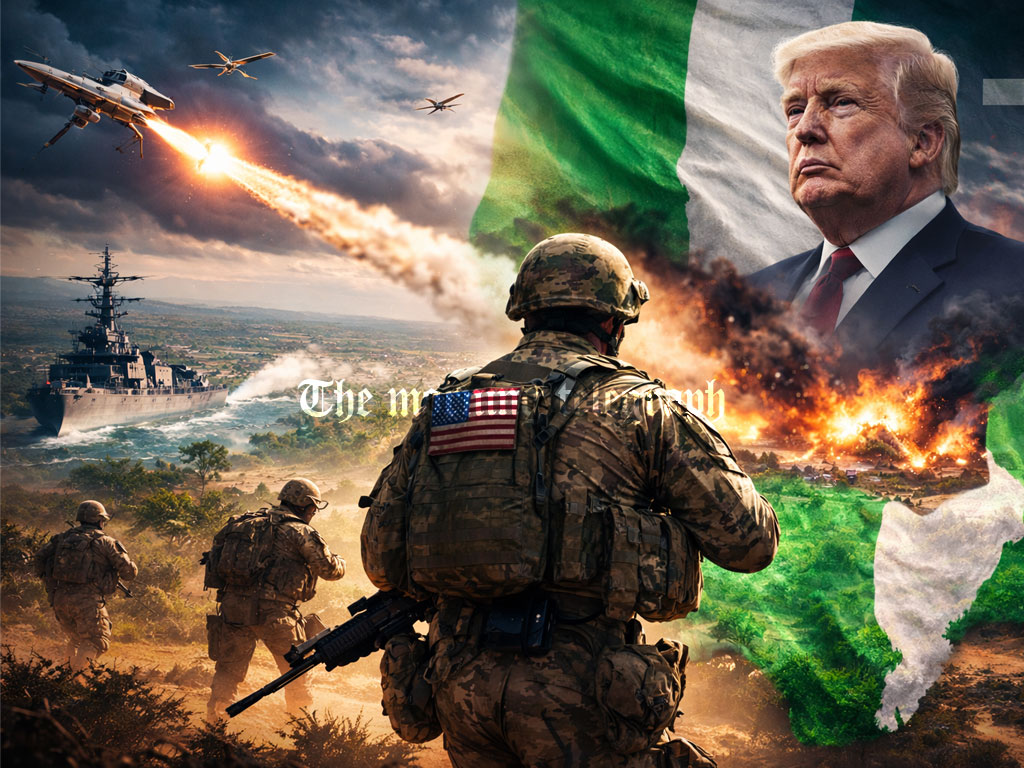
At the special request of the Nigerian government, the United States military has launched a powerful military attack targeting ISIS terrorists operating in the northwestern region of Nigeria. The operation was officially confirmed by US President Donald Trump and the United States Africa Command, marking a significant escalation in security cooperation between Washington and Abuja.

President Trump stated that the primary objective of the strike was to suppress violent terrorist attacks targeting Christian communities in Nigeria. He emphasized that extremist violence against Christians had reached alarming levels and required decisive international action.
The President made the following statement regarding the operation on his Truth Social account.
“As Commander-in-Chief of the Armed Forces, the United States military has conducted a deadly strike against ISIS terrorists in Nigeria. These terrorists have committed a brutal killing of innocent Christians in a manner not seen in years, perhaps centuries.”
According to the US Africa Command, the strike targeted ISIS-linked terrorist camps in Sokoto State. The operation was conducted in coordination with Nigerian authorities and reportedly resulted in the deaths of several terrorists. Pentagon-released video footage showed at least one missile being launched from a US warship during the operation.
US Secretary of Defense Pete Hegseth publicly thanked the Nigerian government for its cooperation and intelligence support. He also indicated that similar military actions could follow if terrorist threats continue to grow, signaling an expanded US counterterrorism posture in West Africa.
The Nigerian Foreign Ministry described the strike as the outcome of ongoing security cooperation and intelligence sharing with the United States. However, Nigerian officials were careful to stress that the country’s security crisis is complex. Armed groups in Nigeria target both Christians and Muslims, and the violence is not confined to one religious community.
Nigeria’s north is predominantly Muslim, while the south is largely Christian. This divide has often been exploited by extremist groups seeking to inflame sectarian tensions. On Thursday, police confirmed that five people were killed and 35 others injured in a suicide bombing at a mosque in northern Nigeria, underscoring the broader threat posed by militant groups.
President Trump has repeatedly warned since October that Christians in Nigeria face serious danger. He has previously stated that the United States would consider military intervention if the Nigerian government failed to contain the violence.
Last week, the United States also launched powerful airstrikes against multiple ISIS targets in Syria, operations that were similarly carried out under direct orders from President Trump, highlighting a renewed global campaign against Islamic State networks.