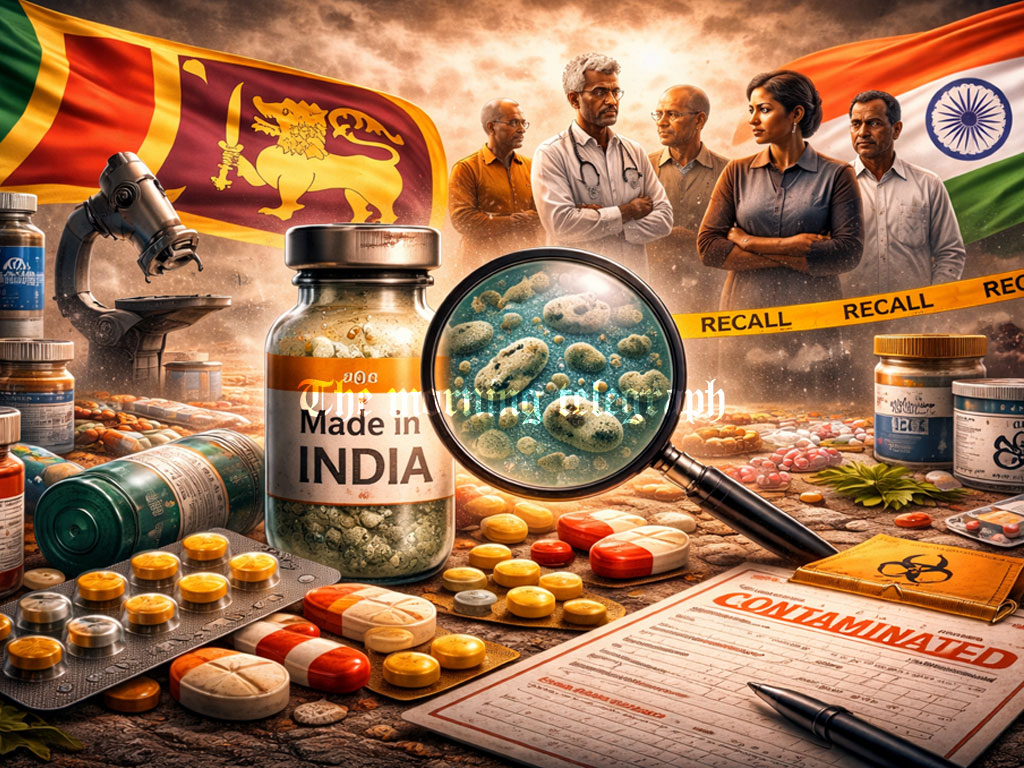
Serious safety concerns over Indian-made medicines have escalated into a diplomatic and public health issue, after Sri Lankan medical professionals flagged bacterial contamination in vaccines, prompting suspensions, withdrawals, and urgent questions about drug quality and regulatory oversight.
The Health Professionals’ Association has formally written to the Indian High Commissioner to Sri Lanka, Santosh Jha, raising serious concerns about the quality of certain Indian pharmaceutical products currently used in Sri Lanka. The letter highlights growing alarm within the medical community over patient safety and the integrity of the pharmaceutical supply chain.

The letter, signed by the Association’s chairman, Ravi Kumudesh, states that complications were reported after patients were administered the Ondansetron vaccine manufactured by India’s Man Pharmaceuticals. According to the complaint, these adverse outcomes triggered laboratory investigations to assess the safety of the product.
Laboratory tests conducted at Kandy National Hospital revealed that samples of the relevant vaccine contained bacterial contamination, raising immediate red flags about sterility and patient risk. Following these findings, swift regulatory action was taken.
The Chief Executive Officer of the National Medicines Regulatory Authority, Ananda Wijewickrama, disclosed the test results to the media. Based on these findings, the use of the Ondansetron vaccine in question was suspended with immediate effect to prevent further risk to patients.
Concerns deepened when nine additional vaccines manufactured by Man Pharmaceuticals were withdrawn from use. These suspensions followed suspicions that one of the products may have been linked to a death at the National Institute of Infectious Diseases. Authorities cited concerns over sterility and microbial safety as the primary reason for the withdrawals.
The article notes that Full Analytical Reports for these vaccines had been issued by OASIS Test House and SIPRA Laboratories in India. The vaccines were imported into Sri Lanka through the State Pharmaceuticals Corporation. Although these reports certified compliance with the United States Pharmacopeia standards, the discovery of bacterial contamination has raised serious doubts about the accuracy and reliability of the testing and certification process.
Approximately 60 percent of medicines used in Sri Lanka are imported from India, and this figure is expected to rise further following the government’s decision to adopt the Indian Pharmacopoeia. In this context, experts stress that while accountability is essential, it is equally important to avoid creating unnecessary fear or broad distrust among the public toward Indian medicines as a whole.
A formal investigation into the incident is currently underway. Findings are being communicated to Sri Lankan authorities, and steps are being taken to strengthen transparency, quality assurance, and reliability across the pharmaceutical supply chain.
Copies of the Health Professionals’ Association’s letter have also been sent to the President of Sri Lanka, the Minister of Health, the Secretary to the Ministry of Health, and the Chairman of the National Medicines Regulatory Authority.