A dramatic father–son political echo unfolds across seven decades, as Colombo’s most powerful municipal battleground changes hands through strategy, timing, and coalition power rather than street slogans.
In 1955, the Colombo Municipal Council became the stage for one of the most emotionally charged moments in Sri Lanka’s political history. The council, long regarded as the unquestioned stronghold of the United National Party, slipped into the hands of the leftists. For Sir John Kotelawala, then Prime Minister and UNP leader, this was not merely a political setback but a personal affront.

“Colombo Municipal Council is ours. Green flags have always flown over the Colombo Municipal Council. Are we supposed to sit back blind and deaf while this is handed over to the leftists…?”
Those furious words captured the shock of a ruling party losing control of its own heartland. The man who took over as Mayor was no ordinary opponent. N. M. Perera, a double doctor and towering intellectual of left wing politics, symbolised everything the UNP feared at the time. For Sir John, J. R. Jayewardene, and Dudley Senanayake, N. M. was a formidable political thorn.
Amid this turmoil, the UNP General Secretary attempted to calm Sir John by suggesting an internal plan to regain control of the council through a city councillor who had already been in discussion with the municipal group.
“Bring whoever it is. If you all can’t get this done, we’ll hand the job over to him…”
When Sir John asked who the man was, the answer came quietly.
“A person named Premadasa…”
That name belonged to Ranasinghe Premadasa, a young councillor from St. Sebastian’s Ward, elected through A. E. Gunasinghe’s Labour Party. Coming from a modest background in Kehelwatte, Premadasa knew that entry into the elite political circles of Colombo 7 and Sirikotha would not come easily. Yet he also understood the mechanics of power inside municipal politics.
Premadasa’s objective was clear. He wanted to become Deputy Mayor. His plan was not driven by flattery but by political calculation. When doubts were raised within the UNP about trusting a young man from Kehelwatte, the response was cautious but open.
“I don’t know the young man personally. But our councillors say he is capable…”
Premadasa proposed a simple but bold solution.
“Bring a motion of no confidence through the UNP. I’ll handle the rest…”
The UNP followed his advice. A no confidence motion was brought against Mayor N. M. Perera. N. M. challenged the move in court, and the ruling was scheduled for the same day as the debate. In the chamber, he attempted to delay proceedings by allowing leading socialist figures to speak for hours. But the strategy failed.
In a stunning reversal, two councillors crossed over, including Anthony Marshall from the Communist Party. The motion passed by two votes. The UNP regained control of the Colombo Municipal Council. Deputy Mayor J. Rudra was removed, and Ranasinghe Premadasa became Deputy Mayor.
Sir John’s reaction was swift.
“He’s talented. Bring him into the UNP…”
That moment marked the beginning of Premadasa’s rise within mainstream politics.
Seventy years later, history echoed itself. The Colombo Municipal Council once again slipped away from traditional power structures, this time falling into the hands of the JVP after the local government elections. Once again, no party held an outright majority. And once again, a Premadasa stepped forward.
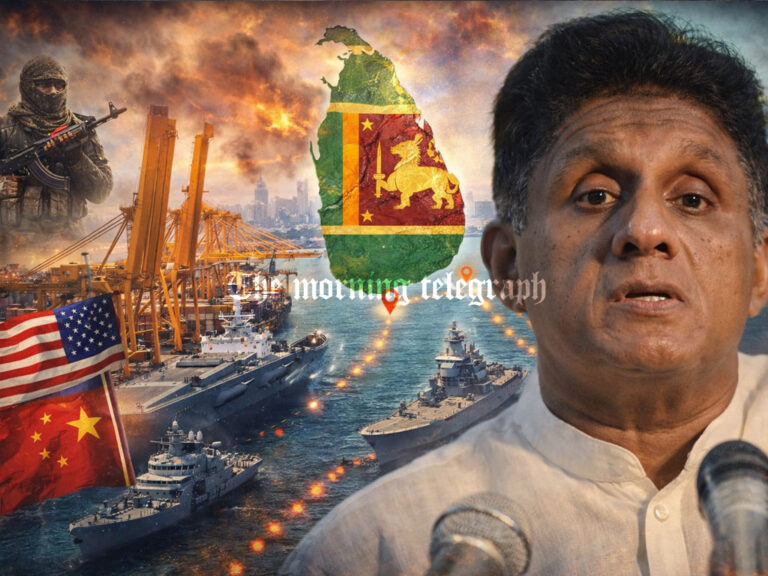
Sajith Premadasa, son of the man who once reclaimed Colombo through municipal strategy, attempted a modern version of his father’s maneuver. This time, the battlefield was far more complex. Sajith brought together Ranil’s UNP, Namal Rajapaksa’s Podujana Peramuna, the SLFP, Sarvajana Balaya, Janaraja Peramuna, and several independent groups. The operation was coordinated by Mujibur Rahuman.
However, the JVP government responded aggressively. Independent councillors were courted with privileges, hospitality, and five star accommodation. The authority of a pro JVP Municipal Commissioner was used to consolidate control. President Anura Kumara Dissanayake personally intervened. At that point, Sajith and Mujibur appeared cornered.
The political parallels were striking. The loss of Colombo in the mid 1950s had foreshadowed the sweeping electoral wave of 1956. In 2025, Sajith’s Samagi Jana Balawegaya faced the aftermath of the 2024 JVP tsunami under similarly hostile conditions, with the UNP contesting separately.
Yet, just as his father once did, Sajith managed to turn the tables. By bringing down the JVP led budget, he effectively reclaimed control of the Colombo Municipal Council. This time, however, the victory was not painted in a single colour. It was a coalition green, mixed with red, blue, and multiple political shades.
“The young man from Kehelwatte is capable. Bring him into the UNP…”
Sir John once said.
“Sajith has played the game well. Now let’s unite the UNP and the SJB and hand leadership to Sajith…”
That second statement may never be spoken aloud. But history has a way of repeating itself, especially in Colombo.