By Roshan Jayasinghe
There is a strange moment that arrives in every mature civilization.
It is the moment you realize the system is not broken by accident. It is broken by design, or at least by the design we refused to upgrade.
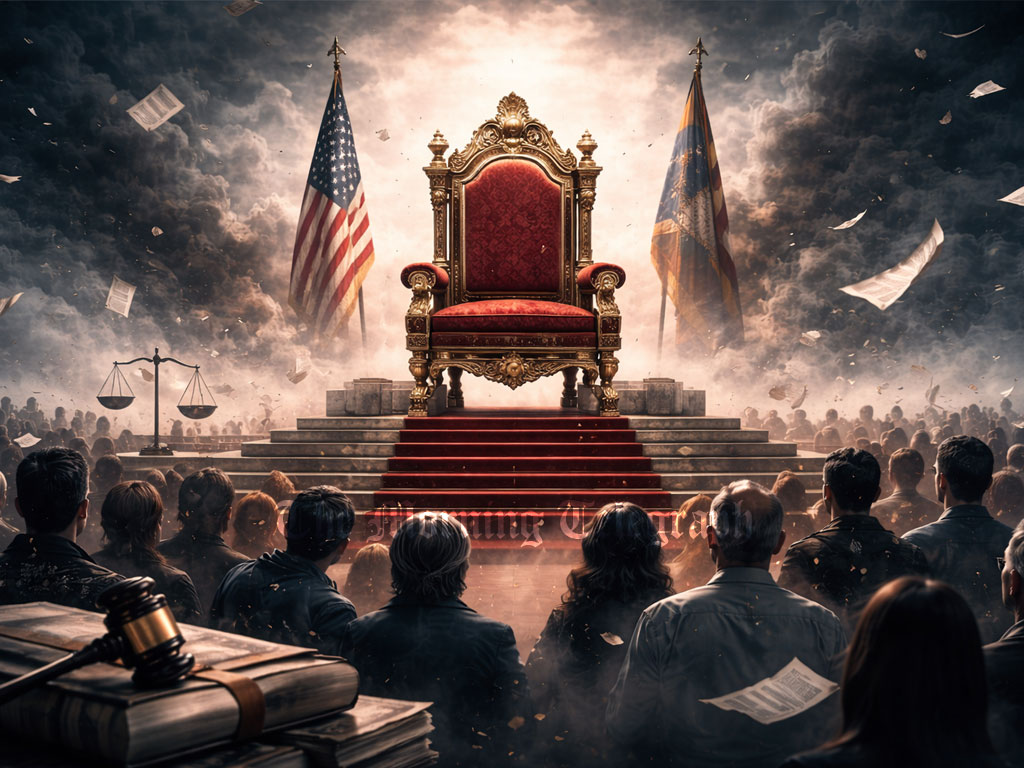
We built a structure where one human being sits inside the world’s most powerful executive seat for a limited term, and can move levers that affect markets, wars, borders, institutions, families, and the tone of public life. In theory, that concentration of authority was supposed to create speed, clarity, and accountability. One captain, one ship, one responsibility.
But in practice, it creates something else.
It creates a stage.
And once a nation becomes a stage, leadership becomes performance. Policy becomes a prop. Words become weapons. Trust becomes collateral damage.
This is not only an American concern. It is a human design flaw that many countries share in different forms. The United States simply displays it in high definition, on the biggest screen, with the loudest speakers.

The original bargain
The presidency was designed as a single executive. One person, one chain of command. Not a council. Not a rotating committee. The logic was simple. When decisions must be made quickly, a nation cannot always wait for slow agreement. Someone must act, and someone must be accountable.
So the bargain was this.
We will concentrate action in one office, but we will surround it with checks.
Congress will write laws and control funding. Courts will review legality. Elections will correct direction. And culture, the invisible layer that holds everything together, will restrain ambition through norms, shame, and civic expectation.
That last part is the part many people forget.
It was never only law. It was also self restraint.
When self restraint weakens, the bargain collapses. And what remains is raw authority dressed up as leadership.
How modern life inflated the presidency beyond its original shape
The modern world is faster than the architecture that created it.
A president now commands a vast permanent executive branch and an enormous national security apparatus. Over time, Congress has also delegated significant authority to the executive through statutes, especially in areas where lawmakers wanted speed, flexibility, or political cover.
This is how the presidency became an engine that can move quickly even when the rest of the system is stuck.
Now consider executive orders and presidential directives. They are not magic spells. They are instructions that carry legal force only when grounded in constitutional authority or in authority Congress has provided through law.
But here is the problem.
Even when the legal foundation is thin, the headline is thick.
A president can sign something today and flood the media cycle. Courts may take time to evaluate it. Congress may argue for weeks. By then, the public has absorbed the message: the leader is acting, opponents are obstructing, and the country is divided again.
So performance becomes governance.
And because executive actions can often be undone by the next administration, the nation begins living inside a swinging door. One side signs, the other side cancels, and ordinary people are left trying to build stable lives under unstable rules.
That is not civilization building. That is emotional whiplash dressed up as government.
Emergency powers: the unlocked door
If there is one area where misuse becomes easiest, it is emergency powers.
In the United States, a president can declare a national emergency and unlock special authorities that already exist in federal law. These declarations are not meant to be permanent, but they can be renewed. And when something can be renewed repeatedly, what begins as extraordinary can become ordinary.
Congress can terminate an emergency, but the pathway is difficult in practice. Ending an emergency requires a process that can collide with veto power and partisan alignment. In other words, it can be easier to activate exceptional authority than to deactivate it.
That is not a small detail. That is the entire story.
If a system makes it easier to create extraordinary power than to remove it, the system is inviting abuse.
Not always. Not by everyone. But inevitably, by someone.
This is why distrust grows.
People sense the imbalance in their bones.
They know something is off when the biggest national decisions arrive through sudden declarations, not through slow public reasoning, debate, and consent.
When the camera becomes the constitution
The tragedy of modern politics is that attention has become a form of power that rivals law.
In this environment, the temptation is obvious: govern through spectacle because spectacle moves faster than policy.
So you get moments that feel less like statecraft and more like theatre.
A leader can float extreme ideas, test the public’s fear, then retreat behind “I was joking” or “you misunderstood” once the reaction arrives. A leader can use the microphone of the presidency to blur the line between fact and faction, and then claim the nation is “finally hearing the truth.”
The damage is not only in whether the threat is real. The damage is in the fact that it was said at all, and in the way it trains the public to treat democratic stability as negotiable.
We have also reached a point where official platforms can be used to reshape public memory itself. When a government uses its most trusted megaphone to reframe a violent national rupture as something harmless, or to turn accountability into persecution, it does not only change the story. It changes the nation’s relationship with reality.
When power is paired with narrative control, governance becomes a battle over what is real. And when what is real becomes partisan, trust becomes impossible.
No society can remain mentally healthy under that condition.
The checks exist, so why does it still feel unchecked
People often ask why we cannot stop an unfit leader quickly.
The truth is uncomfortable.
The checks exist, but they are slow, political, and often depend on courage.
Courts can block unlawful actions, but law moves at the pace of procedure. Congress can investigate, defund, legislate, even impeach, but those mechanisms require numbers and public pressure. Elections can replace leadership, but elections are periodic, and the damage done between them can be lasting.
There is also a deeper point.
Presidential power is not supposed to be personal power. A president cannot simply do whatever he wants because he wants it. The structure was built on the idea that executive authority must come from the Constitution or from Congress, not from personal will.
So why does it still feel like the presidency runs beyond restraint.
Because spectacle outruns process.
Because culture is fractured.
Because public attention is distracted.
Because outrage is profitable.
And because many people now treat politics like a jersey. They do not want truth. They want victory.
In that environment, the system does not collapse from lack of rules. It collapses from lack of shared conscience.
Interlude: a simple human question
Before we propose reforms, we should ask a quieter question.
What kind of human being should hold that chair.
Not legally. Humanly.
What inner maturity is required to carry the weight of millions of lives without turning it into ego, revenge, vanity, or profit.
If you place a child in a room full of knives, the problem is not the knives. The problem is the mismatch between power and maturity.
Modern societies repeatedly create that mismatch.
And then we act surprised when someone cuts the fabric of society.
A civilization upgrade
If we want less abuse, less showmanship, and more human centered governance, we must tighten the doors that are easiest to misuse and change the incentives that reward performance over responsibility.
Here are practical principles, not slogans.
1. Emergency power should expire quickly unless the public’s representatives renew it
If an emergency is real, it can be justified openly. If it cannot be justified openly, it should not continue quietly.
2. Major executive actions should come with public legal reasoning in plain language
Not legal fog. Not ambiguity. Not vague claims of authority. A clear explanation that citizens can understand. The public should not be governed by mystery.
3. Build a standing civic council that must be consulted for high impact actions
Not to replace elections. Not to rule. But to force structured consultation and create a public record of reason and dissent before irreversible harm is done.
4. Strengthen independent oversight inside the executive branch
Inspectors general and protected whistleblowers are not enemies of government. They are the immune system of government. A healthy state welcomes internal truth early, rather than criminalizing truth after damage spreads.
5. Reduce the reward for performance politics
A society should not be able to win power by tearing down trust. If outrage is the easiest path to office, then outrage will be the product leaders deliver. The antidote is not censorship. The antidote is civic reform and cultural maturity that punishes reckless lying through consequence and demands real competence in return for authority.
6. Teach democracy as a daily practice, not a four year event
This is the part no law can do for us. Citizens must relearn calm disagreement, slow thinking, and moral consistency. If we only demand ethics from the other side, we are not building a civilization. We are building a tribe.
The deeper point
The presidency is not the disease.
It is the mirror.
It shows us what happens when ego meets visibility.
It shows us what happens when fear meets propaganda.
It shows us what happens when people confuse dominance with leadership.
And it shows us, painfully, that the world has advanced in machines faster than it has advanced in maturity.
A nation can land rockets, build algorithms, map the genome, and still behave like a frightened crowd in a village square, ready to throw stones at whoever is named the enemy that week.
This is why the concern is bigger than any one person, bigger than any one party, bigger than any one term.
Because the question is not only who is president.
The question is why our systems keep turning human beings into kings for a season, and then acting shocked when they behave like kings.
If the future of humanity is to be a progress forward, not a progress backward, we will need a new standard of leadership.
Not the leader who can dominate the news cycle.
The leader who can protect the public mind.
Not the leader who can sign the most orders.
The leader who can build the deepest trust.
Not the leader who can punish enemies.
The leader who can reduce enemies by repairing the social fabric itself.
That is not idealism.
That is survival.
Because in a nuclear age, in a climate age, in an AI age, the greatest danger is not what we can build.
It is what an immature mind can do with what we have built.
Author’s note
This is not written to deepen division. It is written to reduce harm.
If you support the current president, ask yourself whether you would still support these powers in the hands of someone you fear.
If you oppose the current president, ask yourself whether you were comfortable when your preferred leader used the same shortcuts.
If we want dignity, we must be consistent.
If we want freedom, we must build structures that protect it.
And if we want a future worthy of our children, we must stop confusing power with wisdom.
About the Author
Roshan Jayasinghe is a writer and observer of human systems. His work explores the gap between man made constructs and lived humanity, with a focus on how economics, trade and everyday choices intersect with questions of fairness, responsibility and inner alignment. Through essays for publications in The Morning Telegraph, he aims to remind readers that they are not passengers in a fixed machine, but active custodians of a shared world.