A single Grade 6 textbook error has triggered a nationwide debate on education reform, cultural safeguards, and the limits of technology in Sri Lanka’s classrooms.
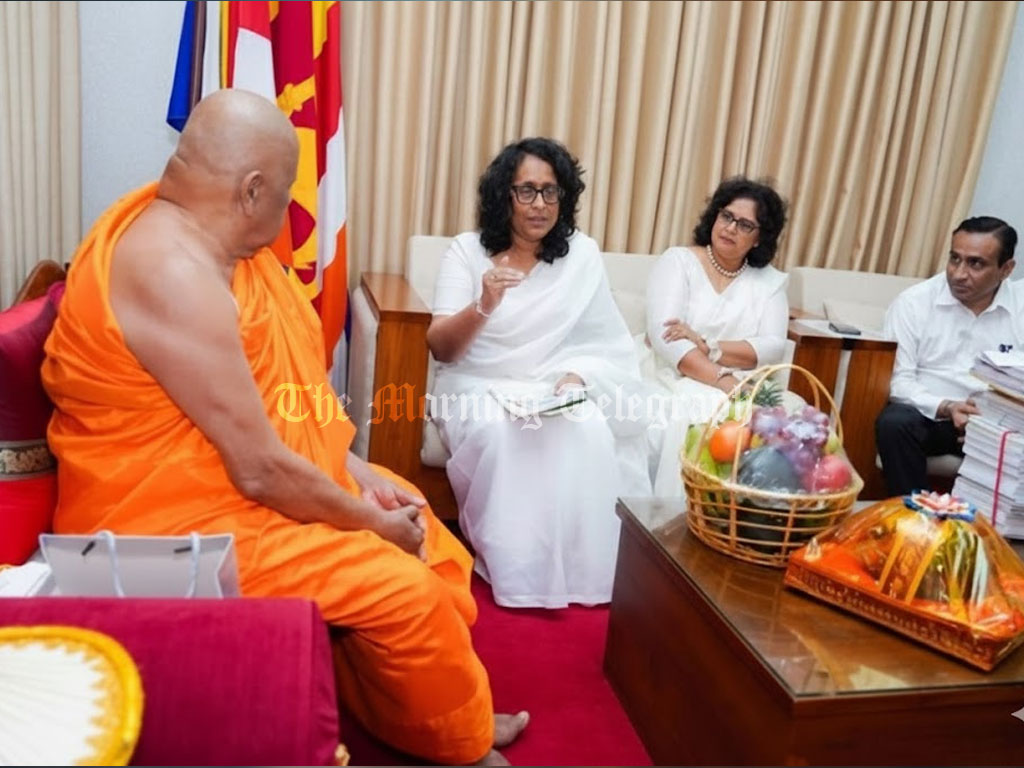
Sri Lankan Prime Minister Harini Amarasuriya has acknowledged a serious oversight in the country’s newly introduced Grade 6 English textbook, confirming that it contained a reference to a questionable website. The admission was made during meetings with senior Buddhist leaders, as the Prime Minister visited the Mahanayake Theros of the Malwathu and Asgiri Ubhaya Maha Viharaya to explain the issue and seek guidance.

The Prime Minister assured the senior monks that decisive corrective action was already underway. She confirmed that the Telecommunications Regulatory Commission had been informed, access to the questionable website had been suspended, and a formal investigation had begun following an initial review. The government, she said, recognized the gravity of the mistake and the concerns it had raised among parents, educators, and religious leaders.
During the discussions, Prime Minister Amarasuriya presented 106 sets of newly issued textbooks for Grades 1 to 6 under the current education reforms to the Mahanayake Theros for their review and feedback. Referring specifically to the English module, she stated that preliminary investigations were unable to identify how the website reference was included, underlining the seriousness of the lapse. Further scrutiny of the books also revealed additional errors, including spelling mistakes, which were only detected after closer examination.
In response to the incident, the government has decided to transfer responsibility for the preparation and printing of school textbooks to the National Institute of Education under the Department of Educational Publications. The Prime Minister noted that although nearly 5,000 teachers had already received the new materials and undergone training, the inclusion of website references had escaped notice. She confirmed that a new policy would prohibit website references in school textbooks and that clear guidelines were being drafted to ensure the safe and culturally appropriate use of technology in education.
The Maha Sangha also expressed deep concern. Venerable Naranpanawa Ananda Thero, Anunayake of the Asgiri Chapter, stressed that education reforms must remain sensitive to national culture, warning that society reacts strongly to content perceived as harmful to cultural identity. He called for firm accountability to prevent similar incidents.
Dr. Muruddeniye Dhammarathana Thero, Deputy Registrar of the Asgiri Chapter, highlighted the risks posed by online content controlled from foreign countries. He cautioned that without proper safeguards, inappropriate material could easily reach children. Drawing comparisons with countries such as Australia, which restrict social media access for children under 16, he urged Sri Lanka to carefully weigh the cultural implications of technology in education.