A nationwide uprising fueled by economic collapse has plunged Iran into chaos, as authorities cut internet access, protesters torch symbols of power, and global leaders issue stark warnings.
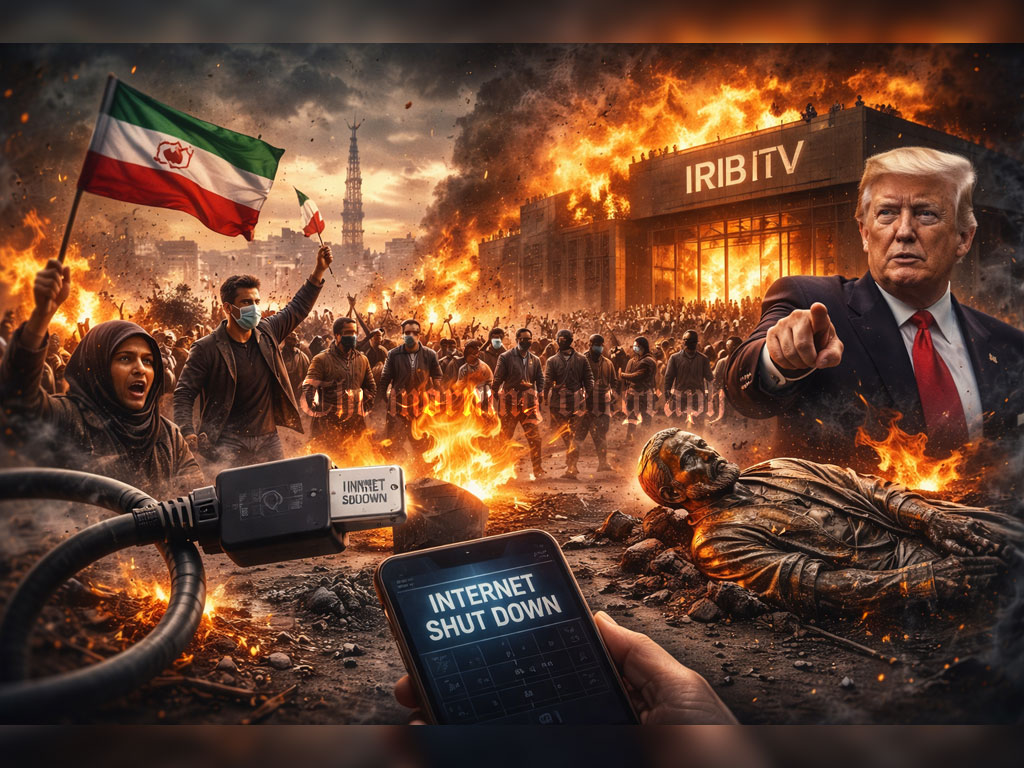
Iran has moved to completely shut down internet access across the country in a sweeping attempt to suppress mass protests that have erupted amid a deepening economic crisis. The demonstrations, which have intensified over the past twelve days, turned violent overnight as anger spilled onto the streets across the nation.

According to international media reports, protesters targeted key symbols of state authority. In the central city of Isfahan, demonstrators reportedly set fire to a government radio and television broadcasting center, a dramatic escalation reflecting public fury toward the ruling establishment. In the capital Tehran, numerous pro government billboards and banners were also burned as crowds clashed with security forces.
What began as scattered protests has now expanded into a nationwide movement, spreading to all 31 provinces of Iran. The unrest has been driven primarily by the rapid deterioration of living conditions, with the Iranian rial plunging in value and prices of essential goods soaring beyond the reach of ordinary citizens.
The Iranian Human Rights Organization reports that at least 45 people, including eight children, have been killed since the protests began, largely due to actions by security forces. Last Wednesday marked the deadliest single day, with 13 protesters reportedly killed. Hundreds more have been injured, and over 2,000 people have been arrested as authorities attempt to regain control. Official government statements, cited by Agence France Presse, place the combined death toll of protesters and security personnel at 21, though independent figures suggest it may be higher.
Economic pressure remains the central trigger. Food prices have risen by approximately 70 percent over the past year, while medicine prices have increased by around 50 percent. The government’s decision to abolish preferential exchange rates for importers has further worsened shortages and driven up costs, making daily survival increasingly difficult for millions of Iranians.
In response, the government maintains that the crisis is largely the result of Western sanctions, rejecting responsibility for the economic collapse. However, public frustration has continued to grow. A general strike called by Kurdish political groups led to widespread shop closures in several cities, adding momentum to the protest movement.
Social media videos, circulated before internet restrictions tightened, showed protesters toppling a statue of former military commander Qassem Soleimani in the southern province of Fars, underscoring the depth of dissent.
Iranian President Masoud Pezeshkian has urged calm, calling on citizens to avoid violence while promising to listen to their demands. Reports from the ground, however, suggest a widening gap between official statements and reality.
International reaction has been swift. US President Donald Trump warned that Iran would face forceful consequences if killings of protesters continue. Germany has also condemned what it described as the excessive use of force by Iranian authorities.
Tehran, meanwhile, accuses protesters of acting as agents of foreign powers. Analysts say the current unrest represents the most serious challenge to Iran’s leadership since the Women, Life, Freedom protests of 2022.