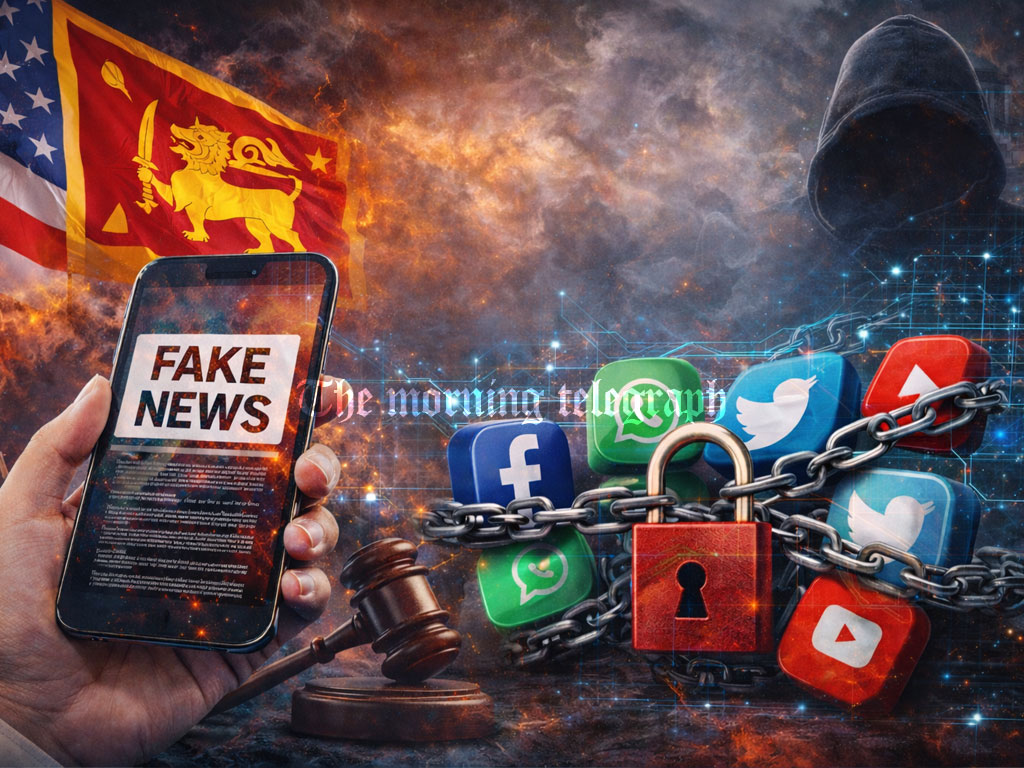
New amendments to Sri Lanka’s Online Safety Act aim to crack down on fake news, unverified reporting, and content that harms individual reputations, raising fresh debate over regulation and accountability in the digital space.
Sri Lanka’s government has decided to further strengthen existing regulations to curb the spread of false information on social media, with a particular focus on unverified news content, according to a report published by the Sunday Times citing a senior government official.
The proposed measures fall under amendments to the Online Safety Act and are intended to bring stricter control over individuals who deliberately create false news, as well as those who produce content that damages the image or reputation of individuals using misleading or inaccurate information.

“In many cases, information obtained from social media networks is broadcast as news without any verification. As a result, people are greatly inconvenienced and suffer serious harm,” the official said.
The move comes amid growing concern within the government over the rapid circulation of unverified social media content that often finds its way into mainstream news platforms. Officials believe this trend has contributed to public confusion, reputational damage, and social tension, highlighting the need for stronger oversight and clearer accountability.
A committee appointed to review and propose amendments to the Online Safety Act has already completed its work. The committee was chaired by Solicitor General Viraj Dayaratne and tasked with identifying weaknesses in the original legislation while recommending practical legal improvements.
According to the report, the committee’s findings are scheduled to be submitted to the Cabinet later this month. Once reviewed, the recommendations will be forwarded for Cabinet approval before the legislative process moves forward.
Government sources state that the proposed amendments have addressed many of the shortcomings identified in the original bill, particularly in relation to enforcement mechanisms and clarity in defining offences linked to online misinformation and defamatory content.
The revised Online Safety Bill is expected to be presented to Parliament in February. Once tabled, it is likely to trigger renewed public debate over social media regulation, press freedom, digital rights, and the balance between preventing harm and protecting free expression in Sri Lanka’s evolving online landscape.