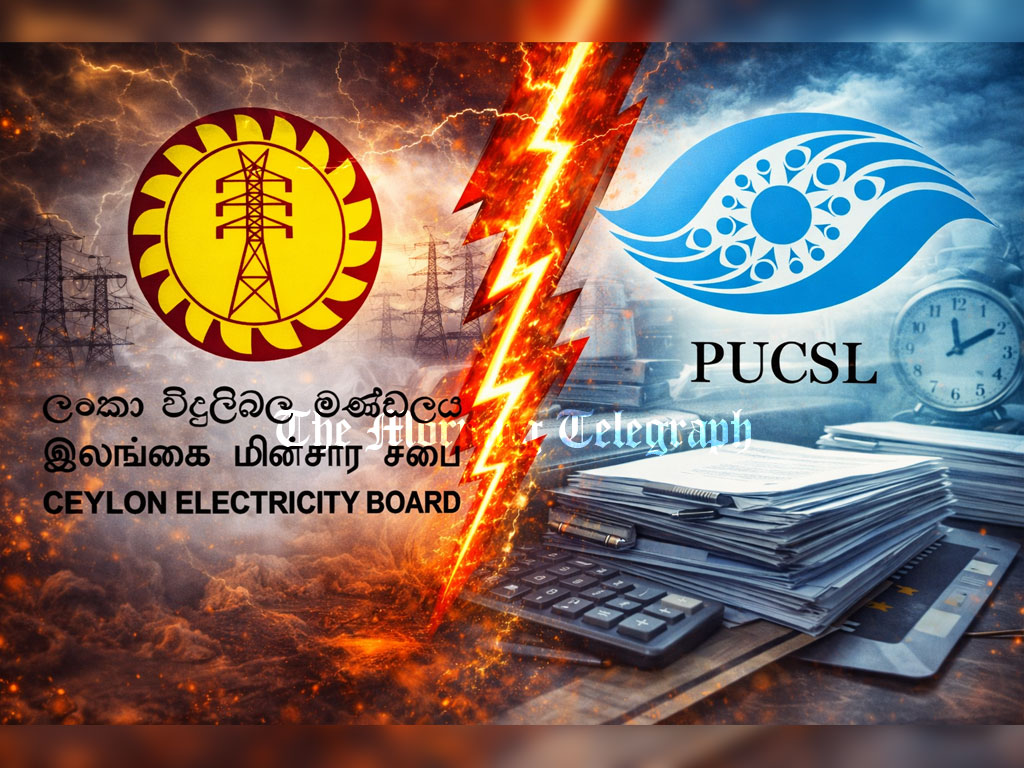
Sri Lanka’s power regulator has halted an electricity tariff increase for early 2026, citing serious procedural failures by the CEB and warning that rushed revisions could destabilize the wider economy.
The Public Utilities Commission of Sri Lanka has decided not to implement an electricity tariff revision for the first quarter of 2026, marking a significant regulatory intervention in the country’s power sector.
In a statement issued by the Commission, the decision was attributed to the failure of the Ceylon Electricity Board to submit a formal tariff revision proposal within the required timeframe. The Commission said it took this decision after considering several factors, including the absence of a valid proposal before the stipulated deadline, deficiencies identified in the original submission, and the potential disadvantages of imposing a high percentage change in electricity tariffs over the remaining short period of the quarter, even if a revised proposal were to be submitted later.

The Commission revealed that the CEB had been formally informed by letter in October to submit its electricity tariff revision proposal for the period from January to March 2026 on or before 14 November. Despite this directive, the CEB submitted its proposal for the first quarter of 2026 only on 29 December 2025. Following the identification of errors in that proposal, the Commission notified the CEB on 5 January 2026 to submit a corrected version by 8 January. On that date, the CEB informed the Commission that there would be further delays in submitting the revised proposal.
To date, the Commission has not received a corrected submission. It noted that even if a valid proposal were received now, implementation would be possible only for the final part of the first quarter, following regulatory review and public consultations. The Commission observed that adjusting electricity tariffs to account for income and expenditure changes over such a short period could lead to disproportionately high tariff increases, with potentially adverse consequences for the national economy.
After weighing the economic impact of delayed submissions against the risks of implementing a short term tariff revision, the Public Utilities Commission of Sri Lanka decided to suspend any electricity tariff changes for the first quarter of 2026. The Commission has also instructed the CEB to submit its tariff revision proposal for the second quarter of 2026 on or before 13 February 2026.