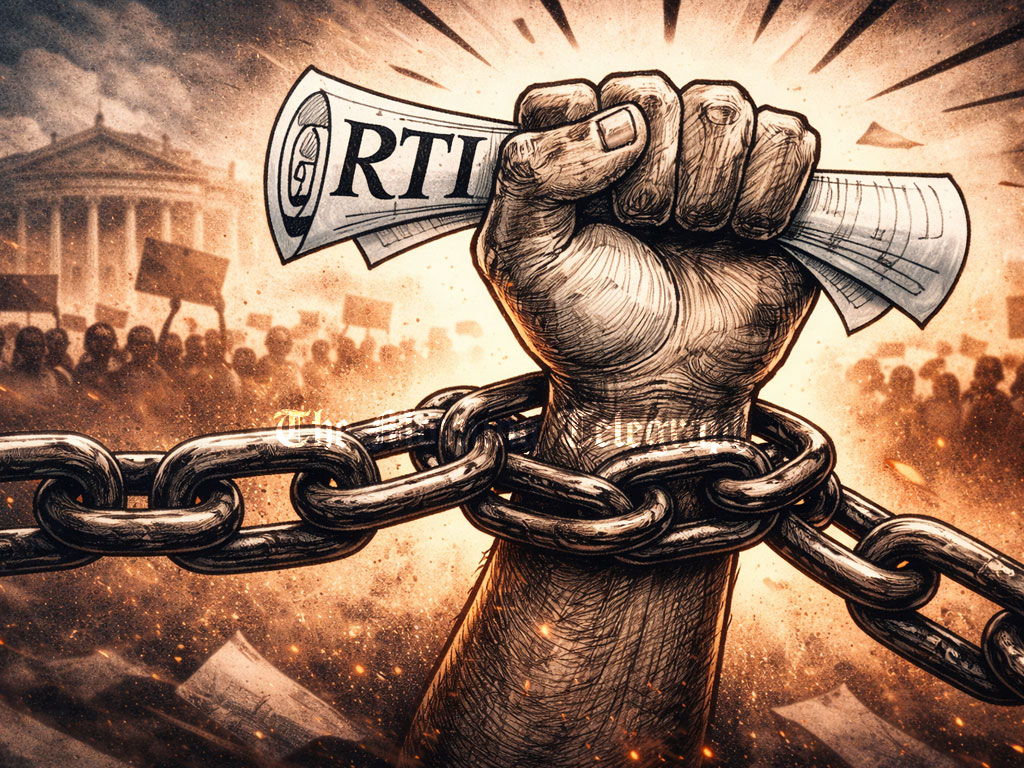
Fresh allegations of government interference have rocked Sri Lanka’s Right to Information framework, with claims that political pressure has forced a senior official to resign and weakened democratic safeguards.
Civil activist Keerthi Tennakoon has accused the National People’s Power government of taking deliberate steps to weaken and incapacitate the Right to Information Commission. He made these remarks while addressing a media briefing held at Hotel Nippon on behalf of a coalition of civil society organizations representing independent trade unions.

Expanding on his claims, Tennakoon said that Attorney at Law Jagath Liyanarachchi, who served as a member of the Right to Information Commission, recently resigned due to pressure exerted by the government that undermined the independence of the institution. He described the resignation as a direct consequence of actions that obstruct the lawful process of obtaining public information.
Tennakoon argued that a short sighted program pursued by the government to restrict the functioning of the Commission has created an environment where independent oversight is no longer respected. He warned that such interference strikes at the heart of transparency and accountability in governance.
The former CaFFE head further alleged that the government has issued instructions to the Presidential Secretariat to act contrary to the Right to Information Act passed by Parliament and to withhold information from the public. According to him, these directives effectively undermine the Information Act and weaken citizens’ legal right to access information.
Keerthi Tennakoon also cautioned that the broader situation poses a serious threat to democratic institutions in the country. He pointed to the failure to appoint an Auditor General and what he described as attacks on the Attorney General’s Department by groups linked to the government, warning that these developments together threaten the stability and credibility of Sri Lanka’s democratic system.