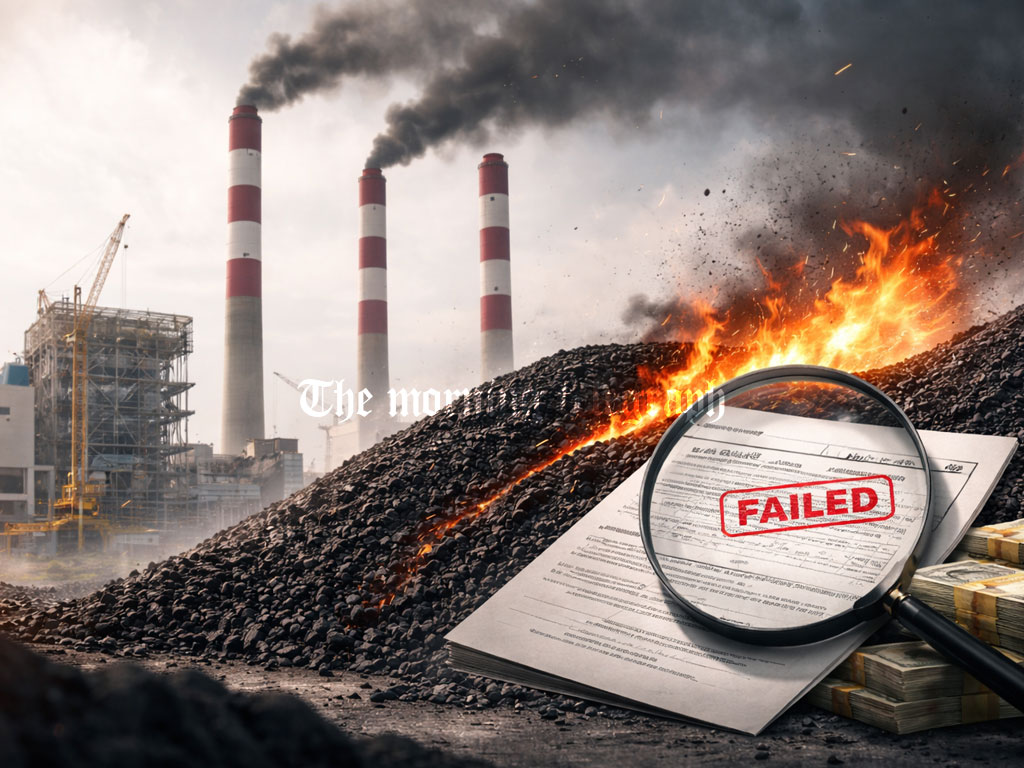
Coal shipments that failed quality tests were fed into the Norochchola boiler before official reports were released, triggering allegations of corruption, financial loss, and a rushed decision that has now drawn parliamentary scrutiny.
Former Minister of Power and Energy Patali Champika Ranawaka has revealed that coal samples imported into Sri Lanka recently failed two laboratory tests conducted at the Lakvijaya Power Plant in Norochchola. He said the investigation report prepared by the coal supplying company in connection with the transaction is scheduled to be released today.

According to Ranawaka, the government has already suffered a financial loss of nearly Rs. 700 million due to the import of two coal shipments that did not meet the agreed quality standards. He stressed that this loss could have been completely avoided if coal of the correct specification had been imported in line with contractual requirements.
The former minister further alleged that the minister in charge at the time made a determined effort to award the coal supply tender to the company concerned, claiming that serious corruption lay behind the tender process. He argued that the handling of the coal procurement raised serious questions about transparency, accountability, and governance within the energy sector.
Meanwhile, the Sectoral Oversight Committee on Infrastructure and Strategic Development, chaired by Member of Parliament S. M. Marikkar, also questioned officials extensively on the issue during its recent meeting. A key concern raised was the decision to burn the newly imported coal before laboratory tests confirming its quality had been completed.
It was revealed that the coal was sent directly to the boiler and burned even though the power plant still had old stocks of coal that met standard quality requirements. Before the test reports were received, the committee chairman instructed the officers present to immediately investigate the decision to burn the coal in such haste and submit a detailed report explaining who authorized the move and why it was carried out under those circumstances.