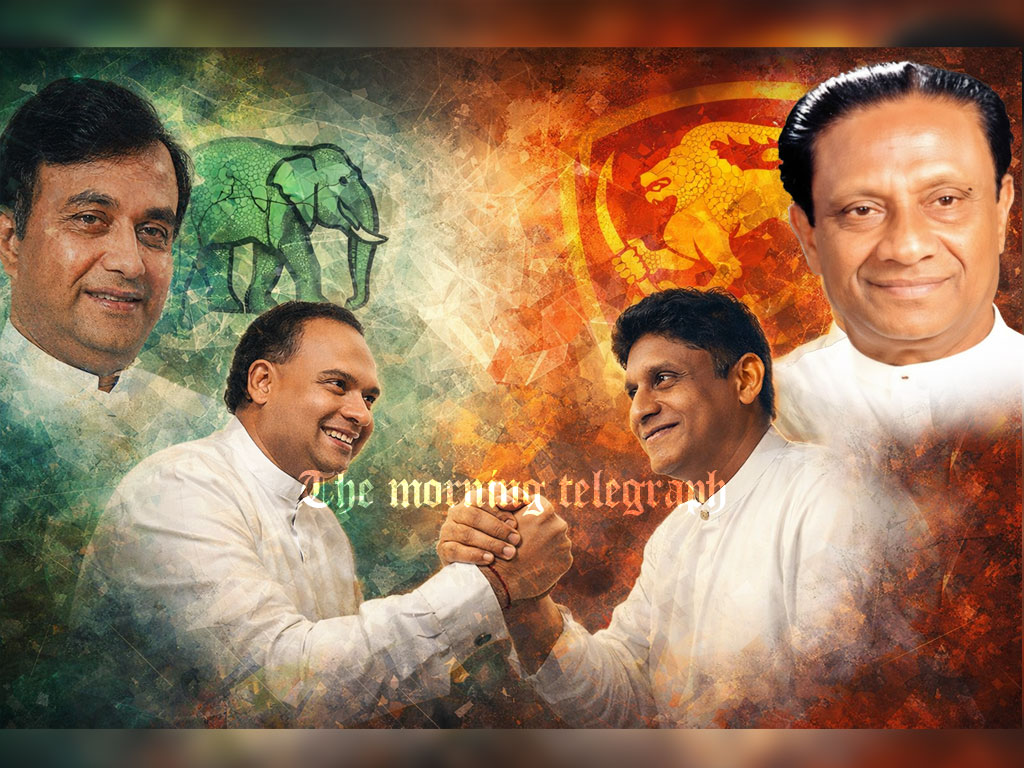
A surprising push to unite Sri Lanka’s rival opposition parties has revived old political ghosts, exposing generational shifts, buried rivalries, and a changing balance of power in the country’s volatile political landscape.
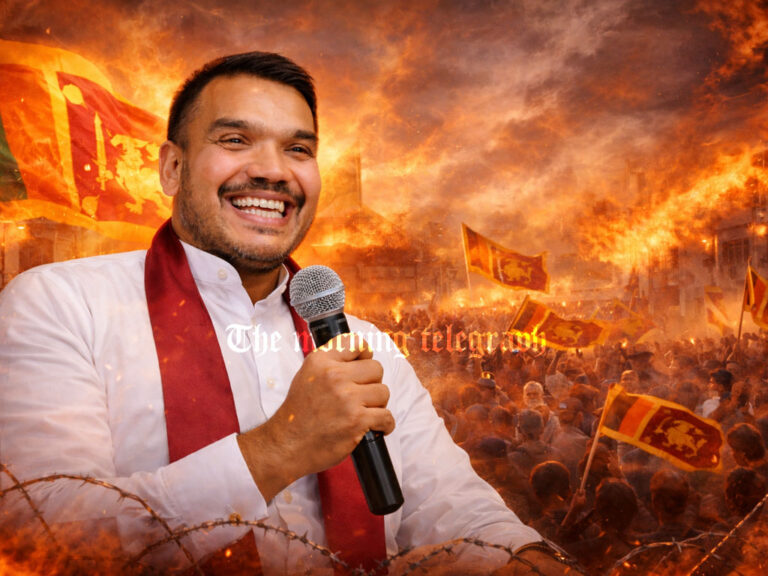
Sri Lanka remains an intensely active political arena, where scarcely a day passes without a headline grabbing controversy reshaping public debate. Among the issues currently dominating the political scene is a renewed campaign to reunite the United National Party and its breakaway faction, the Samagi Jana Balawegaya, into a single electoral alliance for upcoming elections. While the idea of reconciliation has been floated before, deep-rooted disputes have long prevented meaningful progress, particularly the unresolved rivalry between UNP leader Ranil Wickremesinghe and SJB leader Sajith Premadasa. Their clash in 2019 directly triggered the UNP split, though party divisions are nothing new in UNP history.

This week, reconciliation efforts took an unexpected turn when three senior UNP figures, Ruwan Wijewardena, Akila Viraj Kariyawasam, and Navin Dissanayake, met Sajith Premadasa for discussions. Speaking afterward, Navin described the meeting as positive and said there was agreement on the need to rebuild trust and explore mechanisms for cooperation. Importantly, he claimed the meeting had taken place with Ranil Wickremesinghe’s blessings, signaling at least tacit approval from the UNP leadership.
In an interview with Hiru TV, Navin expressed confidence that an alliance could be finalized in time for the next Provincial Council elections, which he noted the government would be compelled to hold this year. He argued openly that Sajith Premadasa should lead the proposed alliance, citing the SJB’s larger parliamentary representation, while Ranil Wickremesinghe would continue leading the UNP. Asked whether Ranil would accept such an arrangement, Navin said he saw no reason for resistance, framing the proposal as a practical and democratic compromise.
For seasoned political observers, the symbolism of this moment is difficult to ignore. Navin Dissanayake is the son of the late Gamini Dissanayake, while Sajith Premadasa is the son of the late President Ranasinghe Premadasa. In the early 1990s, Gamini and Premadasa were bitter enemies locked in a destructive political struggle. The irony of their sons now discussing unity and cooperation has not been lost on those familiar with that turbulent era. One cannot help but wonder how their fathers would have reacted to such a rapprochement.
The feud between Gamini Dissanayake and President Premadasa was driven by both ideology and personality. Gamini, along with other senior UNP figures such as Lalith Athulathmudali and G M Premachandra, rebelled against Premadasa largely due to deep personal and political differences. Premadasa’s well known hostility toward aristocratic elites clashed sharply with Gamini’s background and aspirations. Gamini also harbored presidential ambitions, intensifying the rivalry.
Tensions escalated dramatically when dissidents within the UNP attempted to impeach President Premadasa. The effort failed, and the rebels were expelled from the party. Gamini and Lalith went on to form the Democratic United National Front, an organization created explicitly to dismantle the Premadasa government. The political environment quickly turned violent. The Premadasa administration was accused of unleashing repression against DUNF leaders, and the assassination of Lalith Athulathmudali in April 1993 was widely blamed on the UNP, allegations Premadasa vehemently denied. Days later, Premadasa himself was assassinated by the LTTE.
Following Premadasa’s death, Gamini rejoined the UNP, but his return sparked fresh conflict, particularly with Ranil Wickremesinghe, who did not welcome his reentry. Their rivalry persisted until Gamini was killed by an LTTE suicide bomber in 1994 during the presidential election campaign. These events left deep scars within the UNP and reshaped Sri Lanka’s political trajectory.
The UNP took years to recover from the devastating 1992 split and a string of electoral defeats. It has not won an executive presidency since then. Ranil Wickremesinghe’s eventual ascent to the presidency came through extraordinary circumstances rather than electoral dominance. The UNP formed a fragile government in 2001 by engineering crossovers from the SLFP-led People’s Alliance, and returned to power in 2015 with the backing of Maithripala Sirisena, who secured the presidency through a UNP-led coalition. Both Navin Dissanayake and Sajith Premadasa served as ministers during these UNP-led administrations.
Another layer of irony lies in current political alignments. Navin has aligned himself closely with Ranil Wickremesinghe, who once supported President Premadasa during his confrontation with Gamini. Sajith Premadasa, on the other hand, has broken decisively with Ranil, despite Ranil’s earlier loyalty to his father during that same crisis. These reversals underscore how generational politics has reshaped loyalties once thought immutable.
Generational change has gradually eroded the dominance of aristocratic elites in party politics. The children of both aristocrats and non-aristocrats have adopted political styles markedly different from those of their parents. At the same time, political power and accumulated wealth have elevated many non-aristocrats into a new political elite. This transformation was starkly visible in the 2024 elections, when the JVP-led NPP framed its campaign as a social revolution against entrenched aristocracy. Sociologists describe such moments as social revolutions, characterized by rapid and fundamental transformations of state power and class structures, often driven by mass mobilization and class conflict from below.
Against this backdrop, the potential reunification of the UNP and SJB is likely to alarm not only the ruling NPP but also the Sri Lanka Podujana Peramuna, which is struggling to reclaim floating voters lost to the NPP. A UNP-SJB alliance could offer voters a credible alternative to both the NPP and the SLPP. Many traditional UNP supporters who reluctantly backed the NPP in recent elections out of frustration may return to their former political home if unity is achieved.
For the NPP government, the timing could not be more challenging. Unresolved economic issues, unmet campaign promises, and growing anti-incumbency sentiment have already weakened public confidence. The prospect of a unified opposition front contesting the next Provincial Council elections raises the stakes significantly. Both the UNP and the SJB are likely to seize this opportunity, moving swiftly to consolidate an alliance while the government struggles to stabilize its approval ratings.
Sri Lankan politics has always been cyclical, shaped by personal rivalries, historical grievances, and shifting social dynamics. The current attempt to unite the UNP and SJB carries echoes of past conflicts while highlighting how a new generation is rewriting old scripts. Whether this reconciliation will succeed remains uncertain, but its implications are profound. If successful, it could redraw the political map once again, proving that in Sri Lanka, history never truly disappears, it merely waits to be reinterpreted by the next generation.