A controversial arrest linked to a Buddha statue in Trincomalee has triggered sharp accusations of anti-Buddhist bias, with critics accusing the government of selective law enforcement and historic sacrilege.
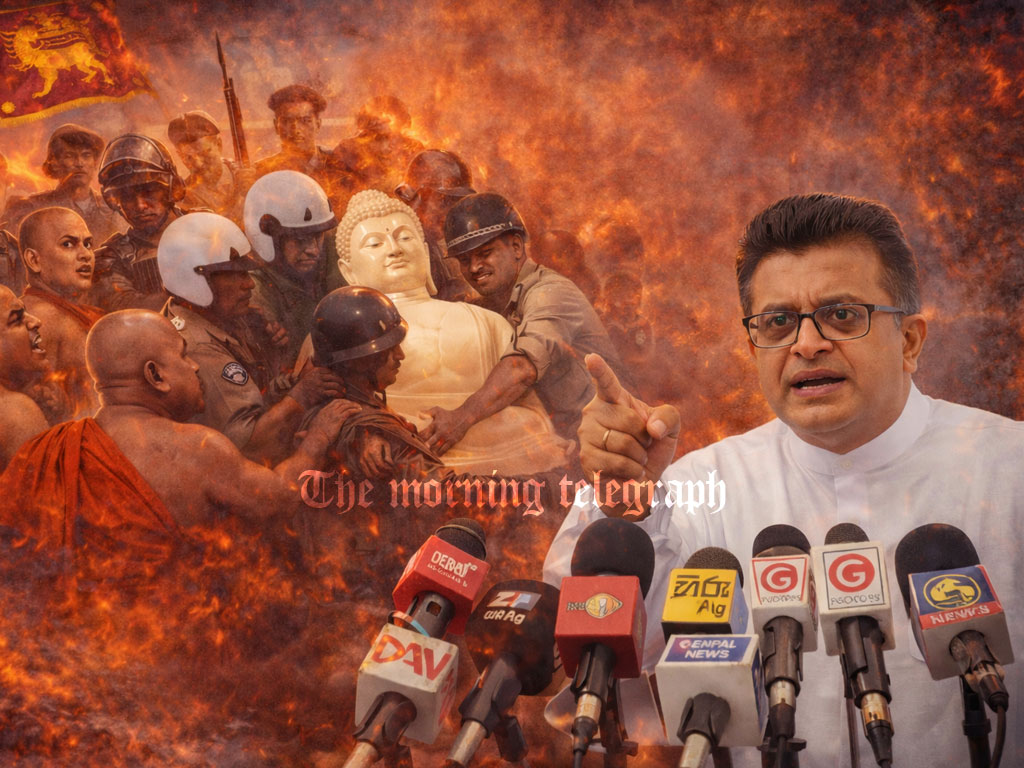
Pivithuru Hela Urumaya leader and lawyer Udaya Gammanpila has launched a scathing attack on the government, claiming that President Anura Kumara Dissanayake has gone down in history as the first ruler to “arrest the Buddha.” He made these remarks at a media conference held at the party’s headquarters.

Gammanpila was referring to a case filed by the Coastal Conservation Department against nine individuals, including four Buddhist monks, over the placement of a Buddha statue within a coastal conservation zone in Trincomalee. As a result of the case, the accused have been remanded. He said that while the President travelled to the North and shared Pongal rice with communities there, monks involved in this incident were given jail food. He added that one monk from Balangoda Kassapa, who is currently on a fast, is not even receiving prison meals.
Describing the administration as a secular and anti-Buddhist government, Gammanpila claimed that no Buddha statue had ever been arrested or detained even during Portuguese, Dutch, or British rule. He argued that for Buddhists, a Buddha statue represents the living Buddha, and worshippers offer flowers, lamps, and prayers believing they are directed to the Buddha himself. On that basis, he accused the government of effectively arresting the Buddha through this legal action.
Gammanpila emphasized that the statue was not erected at a roadside junction but within a government-registered temple. He questioned why the Coastal Conservation Department had ignored hotels, restaurants, and shops operating across Sri Lanka’s coastal conservation zones while focusing solely on a Buddha statue. Pointing specifically to Trincomalee beach, he said there are places of worship belonging to two other religions within the same protected area, yet no action has been taken against them.
He accused the authorities of selective enforcement and demanded that the law be applied equally to all communities. Otherwise, he warned, laws risk being turned into weapons that damage Buddhism rather than instruments of justice.
In his closing remarks, Gammanpila made a personal and political attack, claiming that many current government figures, including the President, survived the JVP terror period by taking refuge in temples. He alleged that some had even disguised themselves as monks to save their lives, receiving shelter and food from temples. He claimed it was deeply ironic that the same institutions that once protected them are now being targeted.