A state that jails a child for words cannot claim moral authority when its own leader fuels division and ethnic fear.
If a boy can be arrested and kept behind bars for months simply for writing a poem, Sri Lanka has already revealed a hard truth about itself. This is no longer a functioning democracy but a system that punishes expression and polices thought. That is the real scandal. Yet instead of collective outrage, the public is now being asked to accept something even more disturbing: a President who uses the same crude, divisive language that makes such arrests possible. This is not a debate about political preference or heated rhetoric. It is about whether Sri Lanka still respects the foundations of human rights or whether it has surrendered them to ethnic supremacy and unchecked state power.

The International Covenant on Civil and Political Rights is not a ceremonial document for speeches and press releases. It is a binding legal and moral commitment. Article 19 protects freedom of expression. Article 9 prohibits arbitrary arrest and detention. Article 26 guarantees equality before the law and protection from discrimination. These are not optional ideals or favors granted by governments. They are the minimum standards of a society governed by law rather than fear. Yet in Sri Lanka today, these rights are treated as irritations, brushed aside whenever the state feels challenged or offended.
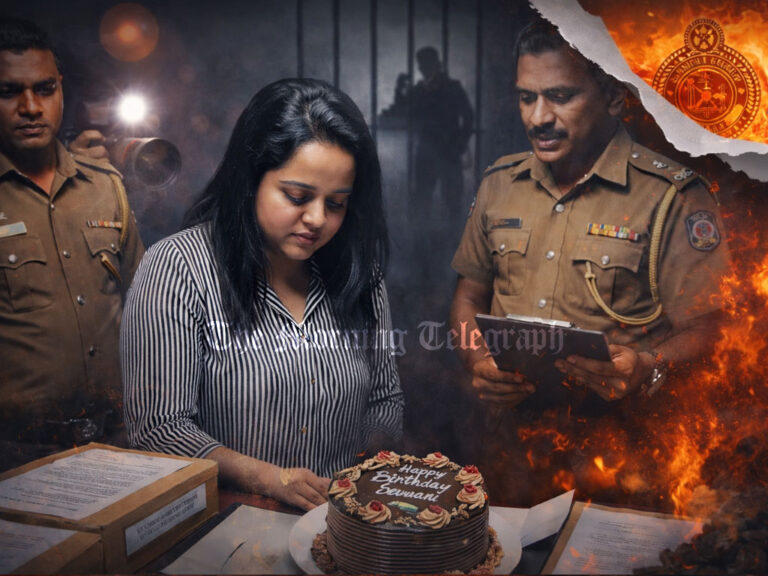
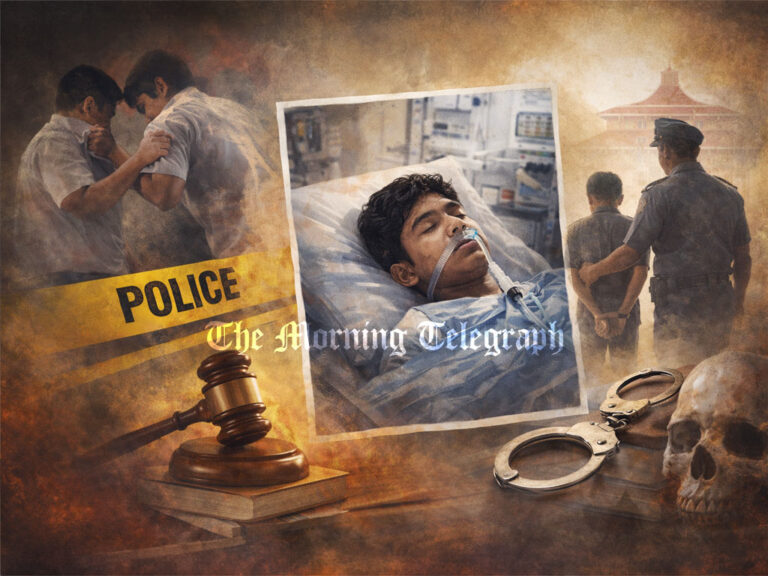
A child writes a poem. The state responds with handcuffs, prison walls, and months of detention. That alone should have triggered a national crisis. It did not. Instead, it followed a familiar pattern. Activists, students, journalists, and ordinary citizens have been detained for expressing opinions, sharing posts, or questioning authority. The message is unmistakable. The state is no longer protecting its people. It is intimidating them. This is not governance. It is repression dressed up as order. It is the behavior of a regime that believes power needs no justification beyond itself.
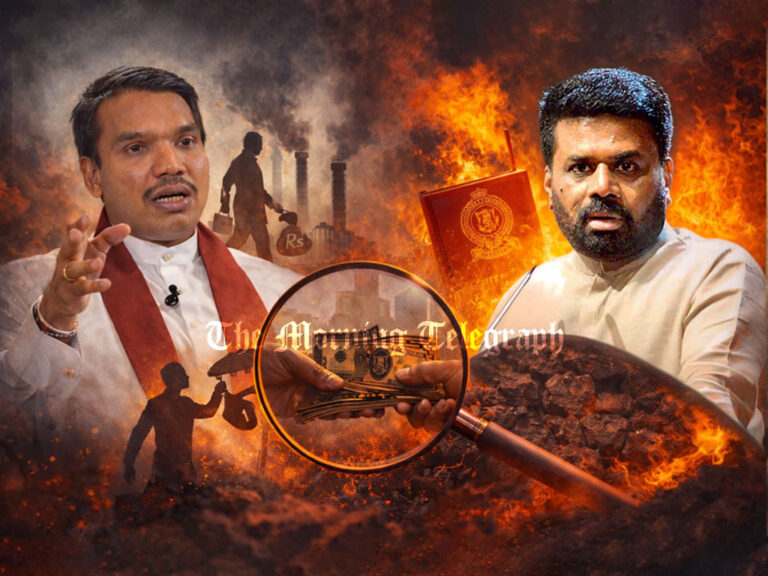
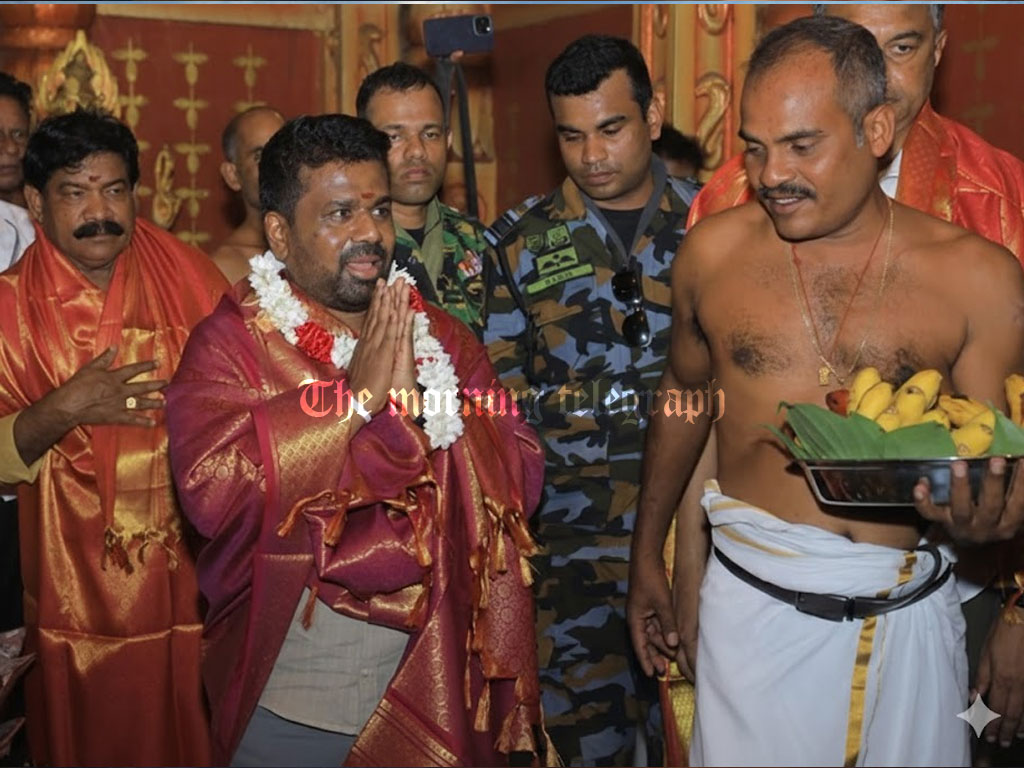
Against this backdrop, the President travels to Jaffna and delivers a speech that is not merely careless but deliberately provocative. He reduces complex questions of land, history, and religious heritage into a narrative of ethnic ownership. He speaks as though the North belongs to one community alone, as if Tamil people are secondary actors in their own homeland, as if centuries of history can be overwritten by rhetoric. Then he claims his government does not tolerate racism. The contradiction is staggering. It is a distortion of truth so blatant that it insults the intelligence of anyone paying attention.
The most troubling aspect is not that the President sparked controversy. Controversy is inherent to politics. The real danger lies in how his language echoes the same logic used to justify oppression. When he describes Buddhist return to Jaffna as a natural revival and labels objections as racist, he is not calling for coexistence. He is reframing religion and history to delegitimise Tamil identity. Without stating it openly, he implies that the North is not truly a Tamil space, but one open to Sinhalese dominance. This is not spiritual devotion. It is ethnic expansion disguised as faith, a tactic as old as authoritarian politics itself.
This is the point where the law ceases to protect and begins to attack. The same legal machinery that silences a child for poetry now shields a leader who inflames ethnic tension. The logic is the same. Only the scale differs. If the law can be weaponised against an individual child, it can also be turned against an entire community. When the President speaks of the North and East as spaces that should not belong to one ethnic group, he is not promoting inclusion. He is rewriting the post war reality through a nationalist lens, telling Tamil citizens that their belonging is conditional and their history negotiable.
That is racism by definition. When the state endorses such narratives, it violates the ICCPR guarantee of equality and non discrimination. Intentions do not matter as much as consequences. Leadership is judged by impact. And the impact here is clear. It encourages society to see Tamils as outsiders, as obstacles rather than equal citizens. This is the same ideology that fuelled decades of conflict, justified violence, and fractured the nation along identity lines.
The emptiness of government rhetoric is now fully exposed. There is no clear policy direction, no vision for reconciliation or justice. Instead, there is noise, distraction, and an appetite for control. The President’s speech replaces governance with spectacle. It diverts attention from economic failure, institutional decay, and social breakdown. When governments fail to deliver, they often turn to ethnic resentment, using history as a weapon and religion as a shield, transforming citizens into enemies.
The responsibility, however, does not rest with one individual alone. It lies with a system that permits such speech without consequence. If the law applies to a child with a poem, it must also apply to a President with a microphone. There cannot be separate standards for the powerful and the powerless. That is not justice. It is authoritarianism disguised as democracy.
The ICCPR demands equal protection under the law for all citizens, regardless of ethnicity, language, or belief. It forbids the manipulation of history to justify present day oppression. It insists that freedom of expression be safeguarded, not criminalised. And it requires that discrimination be confronted, especially when it comes from those who claim to speak for the nation.