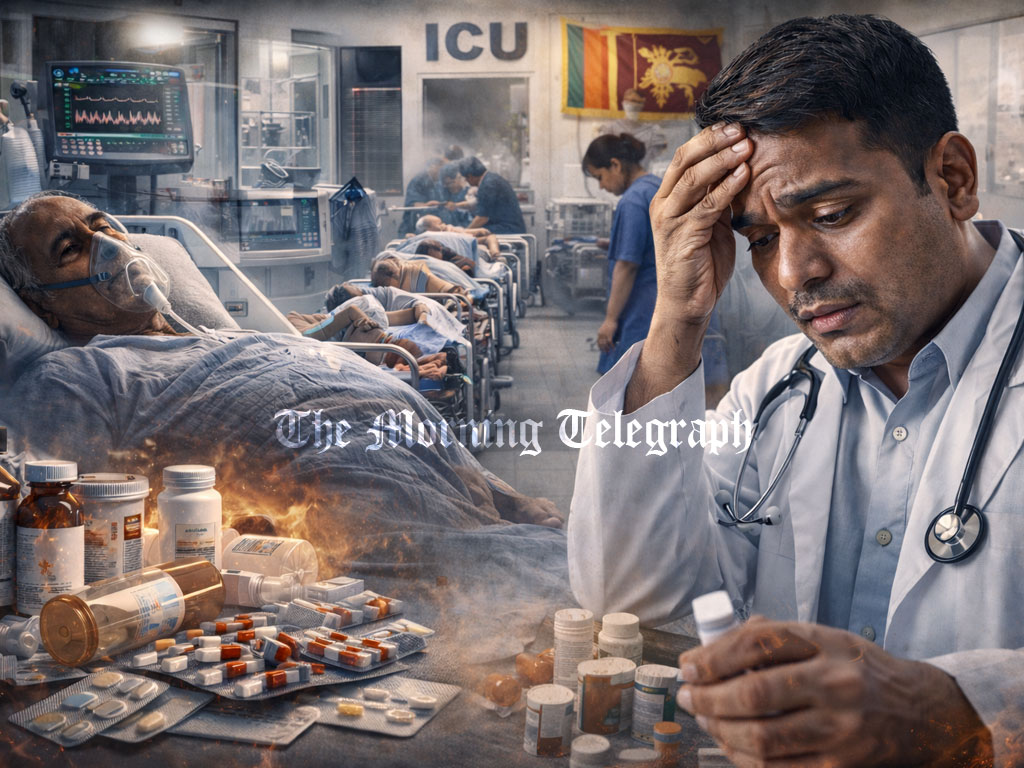
Doctors warn that medicine shortages, collapsing hospital services, and growing privatization are pushing Sri Lanka’s free healthcare system toward a full-blown national emergency.
The Doctors’ Trade Union Alliance for Medical and Civil Rights says Sri Lanka’s free health service is facing a severe and unprecedented crisis, with patients increasingly placed at risk due to shortages, delays, and systemic failures across the sector. The alliance warns that the situation now amounts to a major health emergency.

The President of the alliance, Specialist Dr. Chamal Sanjeewa, made these remarks at a media briefing held at the Nipan Hotel in Colombo. The event was organized by the Independent Trade Union Alliance to highlight the worsening conditions within the public health system.
Speaking at the briefing, Dr. Chamal Sanjeewa said the quality of healthcare is rapidly deteriorating under the current government. He accused authorities of failing to address core problems while moving gradually toward privatization and exposing the health sector to increasing Indian influence, rather than strengthening public healthcare.
He presented details of twenty major crises currently affecting the health system. Among them is a severe drug and laboratory crisis, including shortages of essential medicines for cancer and kidney patients, rising drug prices at private pharmacies, and the breakdown of laboratory services in government hospitals.
He also pointed to the disruption of critical testing services such as CT scans, MRI, angiograms, and radiotherapy. According to him, the collapse of proper drug regulation has allowed substandard medicines to enter the country, with undue advantages being given to Indian pharmaceutical companies.
Dr. Sanjeewa highlighted a growing shortage of human resources, noting that specialist doctors and other health professionals are leaving the country while vacancies remain unfilled. He also cited administrative failures, weak audits, lack of action against corruption, delays in approving a national health policy, and serious concerns in child and maternal health, including delays in providing Thriposha and shortages of primary health workers.
He warned that long queues for surgeries, including heart operations, and the lack of adequate intensive care units are placing patients in grave danger. Describing government responses as mere “band-aid solutions,” he urged the President and the Health Minister to intervene immediately. Failure to act, he said, will lead to joint trade union action and large-scale protests to protect Sri Lanka’s free health service.