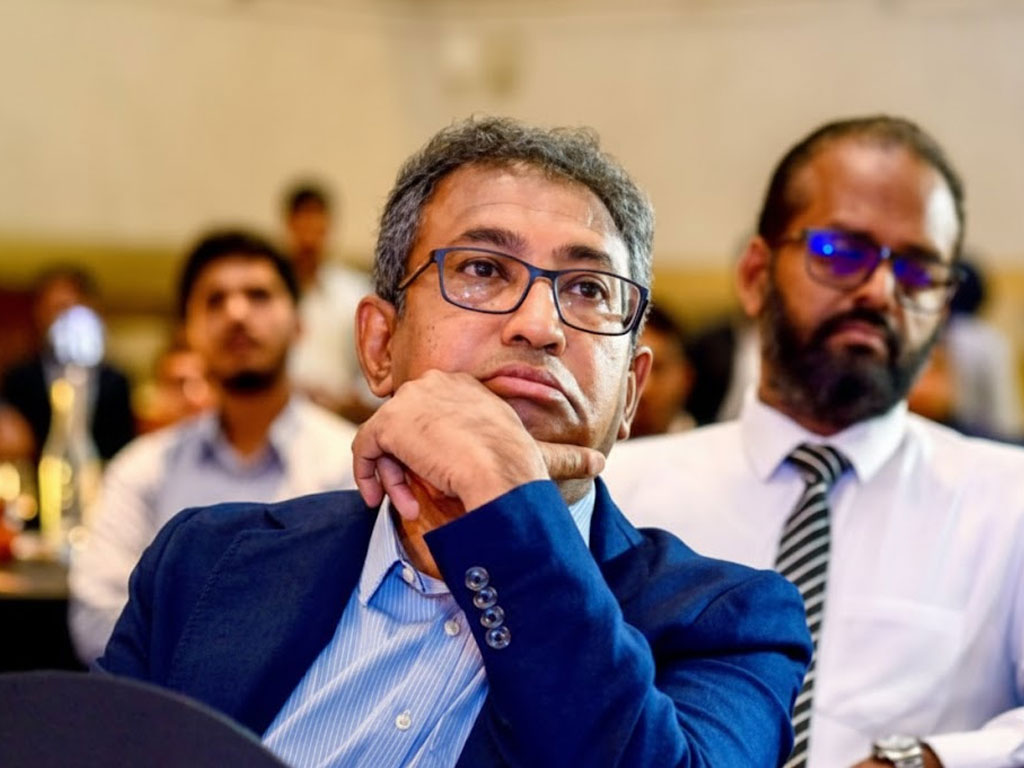
Opposition MP Harsha de Silva claims the Rebuild Sri Lanka Fund bypasses Parliament, violates constitutional safeguards, and operates without audit oversight, raising alarm over public finance accountability and executive overreach.
The Rebuild Sri Lanka Fund, promoted by the government as a central pillar of the country’s post crisis recovery strategy, has become the focus of intense parliamentary controversy after opposition MP Harsha de Silva declared it illegal and unconstitutional. Raising the matter in Parliament, de Silva accused the government of deliberately misleading both lawmakers and the public by claiming the fund was lawfully established under the Presidential Secretariat.

According to the government, the fund was created within the Presidential Secretariat to collect and manage donations intended for national rebuilding efforts. De Silva rejected this explanation outright, describing it as a serious misrepresentation of the law. He argued that no institution, including the Presidential Secretariat, has the authority to establish or operate a public fund outside the constitutional framework and the provisions of the Public Financial Management Act.
Addressing Parliament, de Silva stressed that control over public finance rests exclusively with Parliament under the Constitution. He pointed out that the Public Financial Management Act clearly sets out the procedures for creating statutory funds and does not permit the executive to establish financial mechanisms at its own discretion. While affirming that the opposition has no objection to the creation of a national reconstruction fund, he insisted that such a fund must be formed through proper legal and constitutional processes approved by Parliament.
The opposition MP further alleged that the government had failed to follow these mandatory procedures, rendering the Rebuild Sri Lanka Fund legally invalid. He warned that the fund now functions more like a private financial arrangement controlled by a small group rather than a transparent public institution subject to democratic oversight. De Silva also raised concerns over the lack of independent supervision, stating that there is no lawful authority enabling the Auditor General to audit the fund.
Concerns extended beyond the fund itself to broader governance failures within the executive. De Silva accused President Dissanayake of delaying the appointment of an Auditor General for over a year, creating what he described as a dangerous accountability vacuum. According to the opposition, the absence of an Auditor General undermines financial oversight and opens the door for large sums of money to be collected and spent without proper scrutiny, particularly under the banner of national rebuilding.
De Silva warned that no individual, political party, or institution has the right to solicit or collect funds for rebuilding Sri Lanka through a mechanism that has not been constitutionally established. He cautioned that continuing to operate the Rebuild Sri Lanka Fund in its current form could expose the government to serious legal challenges and further erode public trust in national recovery initiatives.
He concluded by emphasizing that transparency, parliamentary approval, and independent audit oversight are not optional but essential requirements for managing public funds. Without these safeguards, he argued, even well intentioned recovery efforts risk becoming symbols of executive overreach rather than instruments of national renewal.