By Roshan Jayasinghe
Over the past year I have written many Morning Telegraph pieces. Different subjects on the surface, but underneath I have been circling the same concern.
We are not short of intelligence. We are not short of information. What we are short of is clarity, and the kind of humanity that clarity naturally brings.
Not because people are inherently bad, but because life hardens us. Pressure, fear, pride, survival, status, money, shame, insecurity. These forces don’t just shape our lives, they shape our minds. And when the mind is shaped by fear, it becomes reactive. It becomes loud. It becomes certain. It can become cruel without noticing.

When I was about fifteen, I heard a song that lodged itself inside my mind like a quiet compass. Epitaph, by King Crimson. I did not have the vocabulary at that age to explain why it struck me, but I felt it. The song carried the ache of a world that looks confident on the outside, yet feels lost underneath.
One line in particular stayed with me all these years: confusion will be my epitaph.
Another line carried the same weight: and I fear tomorrow I’ll be crying.
I have never taken those words as fate. I have taken them as a warning. And strangely, as a beacon. Not a beacon that tells me what to think, but a beacon that tells me when I have drifted too far from clarity.
This piece is my reflection on how not to let confusion become our ending, personally or collectively. Not by chasing a magic formula, but by returning to what is most basic and most human.
We are shaped before we are conscious
None of us arrive as a blank page.
We are shaped by the home we were born into, the culture around us, the love we received or didn’t receive, what we witnessed, what we had to become to survive, and the roles we learned to play to feel safe.
Most people are not “bad.” They are conditioned.
That conditioning becomes our normal. We carry it into adulthood and call it personality. We carry it into relationships and call it love. We carry it into society and call it justice. We carry it into power and call it leadership.
Then life moves forward, and something begins to crack.
A relationship exposes us. A conflict shows us ourselves. A loss humbles us. A quiet dissatisfaction grows. Something inside says, this way of being isn’t working anymore.
Confusion arrives.
I have come to see confusion differently. Confusion is not the enemy. Confusion is often the first honest signal that we are ready to see more clearly.
The modern habit: noise instead of self knowledge
When confusion comes, most of us search outward.
We gather opinions. We join arguments. We adopt certainty. We treat intensity as truth. We make the other person the problem. We make the “other side” the enemy. We call our reactions “principles” and our anger “justice.”
But confusion does not dissolve through more noise.
It dissolves through self knowledge.
This is where a distinction becomes important.
Self analysis is endless thinking. It creates movement, but not clarity. It keeps the mind spinning in circles. It can make us feel productive while we remain stuck.
Self reflection is different.
Self reflection is the quiet willingness to look inward and ask: what is happening in me, right now.
Not as self blame. Not as performance. Not as a new identity. Simply as honest seeing. Self reflection is not self punishment. It is the simplest act of turning back toward reality inside ourselves.
The capacity to self reflect in this simple way, as a sincere desire to know oneself, is one of the most important human abilities we have.
Without it, we repeat patterns and call it fate.
Why the search gets messy
Here is what I have noticed in people, and in myself.
When we don’t have an inner road map, we skip steps.
We go straight to fixing.
We go straight to blaming.
We go straight to judging.
We go straight to punishment.
We go straight to being right.
We demand peace while carrying war inside. We want respect while speaking with disrespect. We want dignity while we are willing to humiliate. We want justice while secretly craving revenge.
This is not because we are evil. It is because we are unconscious to what is moving in us.
And this is why the basics matter. Not as instructions, but as anchors.
A simple inner road map
I don’t believe we need a magic formula.
But I do believe we need a basic sequence. A simple road map. Because when the steps are skipped, confusion grows.
Here is the order that keeps returning for me, again and again, across life. I don’t offer this as a formula, only as the order I keep returning to when I want to come back to myself.
First, notice what is happening in you.
Not what is happening in the other person. In you.
Then name it honestly.
Fear. Anger. Shame. Pride. Need to control. Need to win. Need to be seen. Need to be safe.
Then own it without drama.
This is mine to work with.
Then choose the next right action.
A pause. A clean word. A boundary. An apology. A repair. A restraint.
Then repeat.
Because character is not built through one insight. It is built through practice.
This is the polishing.
Not to become perfect, but to become real.
Not to shine above others, but to bring dignity into the room.
Dignity as the baseline
When I write about dignity, I am not asking for a perfect society. I am asking for a baseline.
Because when dignity goes, everything becomes permissible.
Cruelty becomes “necessary.” Humiliation becomes “discipline.” Punishment becomes “justice.” Fear becomes the main tool.
Dignity is not politeness. It is deeper than manners.
Dignity is the refusal to reduce another human being to a label, a category, a mistake, or a moment.
It is the decision to keep the human being human, even when we disagree, even when we are hurt, even when we are holding someone accountable.
Justice without poison
This is why I write about justice the way I do.
Justice is not revenge wearing clean clothes. Justice is not the pleasure of seeing someone suffer because we have decided they deserve it. Justice is not humiliation as a teaching method. Justice is not “my side wins, your side loses.”
Justice, to me, is dignity made practical.
Accountability without dehumanization.
Consequences without cruelty.
Truth delivered without poison.
Protection for the vulnerable without turning the powerful into monsters simply to feel morally pure.
The world does not become more just by multiplying hatred. It becomes more just when human beings learn to correct without becoming violent inside.
That takes maturity. That takes real strength. That takes a steady mind. That takes a heart that does not need cruelty to feel powerful.
And that is where compassion matters.
Compassion, love, giving, and real strength
Compassion is not weakness. Compassion is strength without arrogance.
Compassion says, I will not reduce you to your worst moment.
Compassion says, I can hold you responsible and still recognize you are human.
Compassion says, I do not need to hate you to correct you.
Compassion says, my ego will not drive the outcome.
Some people hear words like love, kindness, giving, and they think it is sentimental, something nice to say when life is easy.
But in my experience, love is not decoration. Love is architecture.
Love is what keeps a home from turning into a war zone.
Love is what keeps a society from turning into a machine.
Love is what keeps power from becoming a disease.
When I speak of caring, I mean the kind that shows up when it is inconvenient. The kind that does not need applause. The kind that is quiet, consistent, and real.
When I speak of giving, I do not mean charity as performance. I mean generosity as an expression of inner wealth. Time. Patience. Attention. Respect. Help. Forgiveness. A clean word when a dirty one would have been easier.
These are not small things. These are the building blocks of a sane civilization.
There is a moment I keep coming back to.
It is the moment I catch myself just before I speak.
The moment I notice my tone tightening. The moment I want to win. The moment my mind starts building a case. The moment I can feel the heat rise and the old machinery take over.
And sometimes that fifteen year old memory returns again, not as a song, but as a simple question.
Do I want confusion to be my epitaph.
Not because I fear tomorrow I will be crying, but because I know what it feels like to live without clarity. I know how quickly a human being can become a reaction machine.
If I catch that moment, I get my freedom back.
I can pause. I can return to dignity. I can choose the next right action.
That moment is small, but it is where the whole world changes.
The gem and the polishing
We already know what dignity feels like.
We already know what cruelty feels like.
We already know what truth feels like.
We already know what ego feels like.
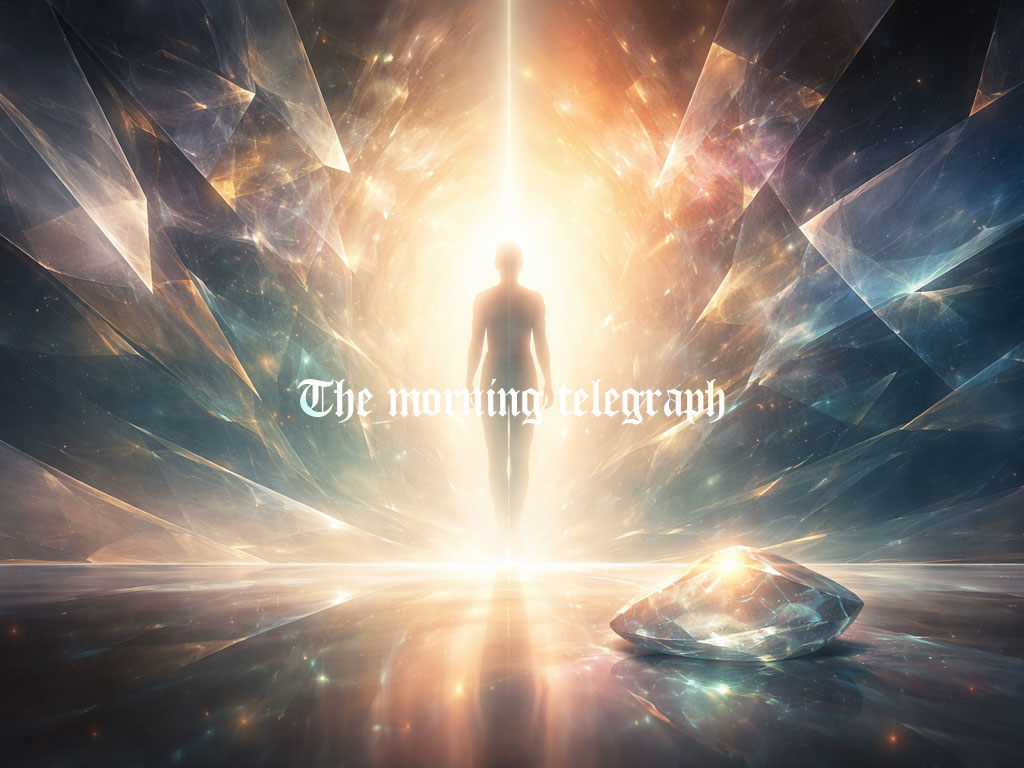
A gem does not become a gem by reading about sparkle. It becomes a gem by being cut, shaped, polished. The rough edges do not disappear through wishing. They soften through friction, through life, through self honesty, through correction.
That is the work.
Not to become “good” as an identity.
But to become clearer. Steadier. More human.
Polishing looks like pausing before we speak. Choosing words that correct without crushing. Listening to understand, not to win. Refusing to gossip in the name of bonding. Treating the stranger with the same respect we give our friends. Apologizing without defending ourselves. Letting someone save face when we could embarrass them. Telling the truth without adding humiliation to it. Being brave enough to examine our own hypocrisy.
Remembering that anger does not automatically make us righteous.
Remembering that the person in front of us carries fears, history, wounds, and hopes, just like we do.
This is not ideology. It is basic human work.
We can debate systems forever, and systems do matter. But systems are built and maintained by minds. If the mind remains unconscious, the system will eventually reflect it.
So my request is simple.
Don’t chase noise in the name of clarity.
Don’t outsource your conscience.
Don’t confuse being right with being free.
Return to the basics.
Notice. Name. Own. Choose. Repeat.
That is how the gem is polished.
And if enough of us do that, we won’t need to force goodness into the world.
Goodness will show up because more of us are becoming better human beings.
Author’s Note
This piece is not written from a place of moral superiority. It is written as a reminder, first to myself, and then to anyone who feels the same concern.
If any line in this helps you pause before you speak, or look inward before you blame outward, then it has served its purpose.
We do not need a perfect world to begin.
We need a world where each person begins writing their own human manual, building an inner road map and refining it as life continues to teach and their truth evolves, while staying anchored to the universal basics we all already know: self honesty, reflection, dignity, restraint, repair, and care for life, remembering we belong to something larger than ourselves in this shared existence within the universe.
About the Author
Roshan Jayasinghe is a writer and observer of human systems. His work explores the gap between man made constructs and lived humanity, with a focus on how economics, trade and everyday choices intersect with questions of fairness, responsibility and inner alignment. Through essays for publications in The Morning Telegraph, he aims to remind readers that they are not passengers in a fixed machine, but active custodians of a shared world.