Sri Lanka’s academic community is raising alarm over proposed legal changes that critics say could quietly place universities under direct political control.
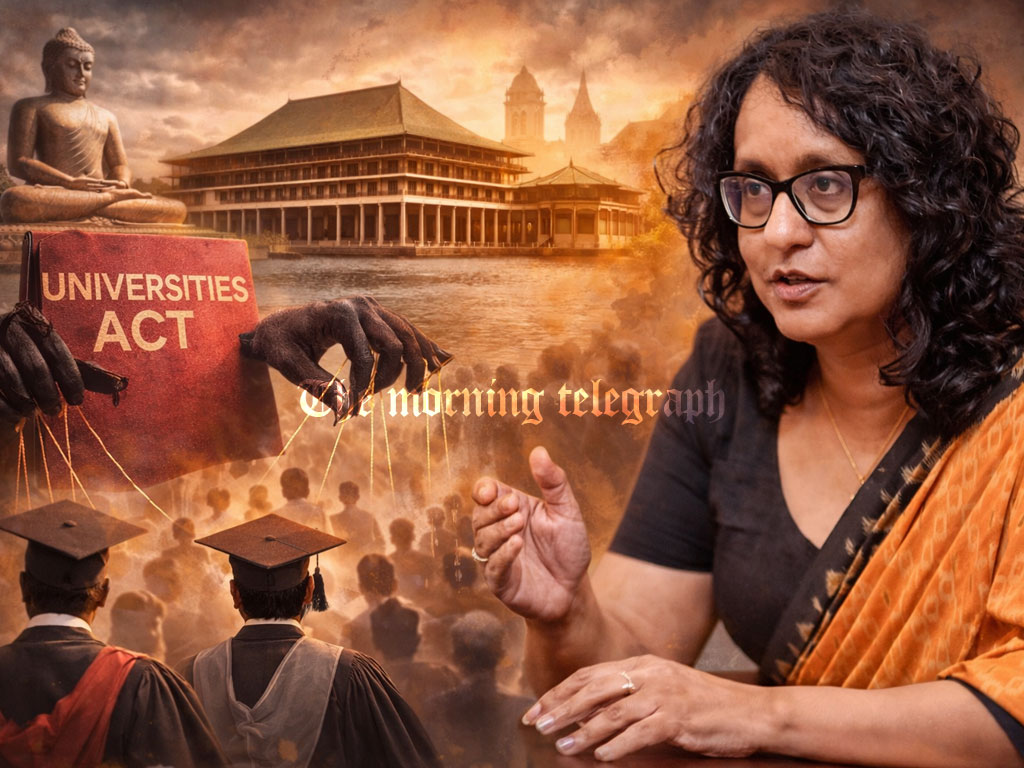
University lecturers and academics have voiced serious concerns over proposed amendments to the Universities Act to be introduced by Prime Minister Harini Amarasuriya, warning that the country’s university independence and academic freedom could be significantly weakened if the bill is passed in its current form.

Academics argue that a close reading of the proposed legislation reveals a shift away from democratic governance structures toward increased political authority over key appointments. Their main criticism focuses on changes to the appointment process for Vice-Chancellors.
Under the existing Universities Act No. 16 of 1978, Vice-Chancellors are selected from a shortlist of three candidates recommended by the University Governing Council, allowing for an internal filtering process. The proposed amendments are accused of removing this safeguard and granting the Minister or a special committee appointed by the Minister direct decision-making power.
Scholars also point to provisions that give political authorities extensive powers over appointments to the University Grants Commission, including the Chairman and members of its Governing Council. They warn that this could undermine the independent policy-making role of the University Grants Commission and effectively turn it into an extension of the Ministry of Education.
Further concerns have been raised about changes to the composition of individual university Councils. Academics argue that allowing the government to appoint all external members would enable direct intervention in university administration and internal decision-making.
Last week, university academics met with Opposition Leader Sajith Premadasa to present their objections. They also visited Parliament on Tuesday, where Premadasa stressed that the impact of certain provisions on academic freedom and institutional independence should not be underestimated.
While acknowledging that political influence has existed within the university system for years, scholars warn that the proposed amendments would formalize and strengthen such interference through law.
Both academics and opposition figures maintain that they are not opposed to modernization or reform of higher education. However, they urge the government to ensure that any new legislation protects university autonomy and does not compromise the independence that underpins credible higher education.