Despite record tourist arrivals in 2025, hard numbers suggest Sri Lanka’s tourism revenue narrative may be overstated, raising serious questions about income quality, policy direction and the future of the industry.
Sri Lanka’s tourism industry is being promoted as the government’s biggest revenue success story, with official claims that 2025 delivered the highest tourism income in the country’s history at US $3.2 billion. But a closer examination of the data tells a far more complicated story.

In 2025, Sri Lanka recorded 2,362,521 tourist arrivals, the highest number ever achieved. This marginally exceeded the previous peak of 2,333,796 arrivals recorded in 2018. The increase between the two years was only about 29,000 tourists, yet the revenue outcomes were vastly different.
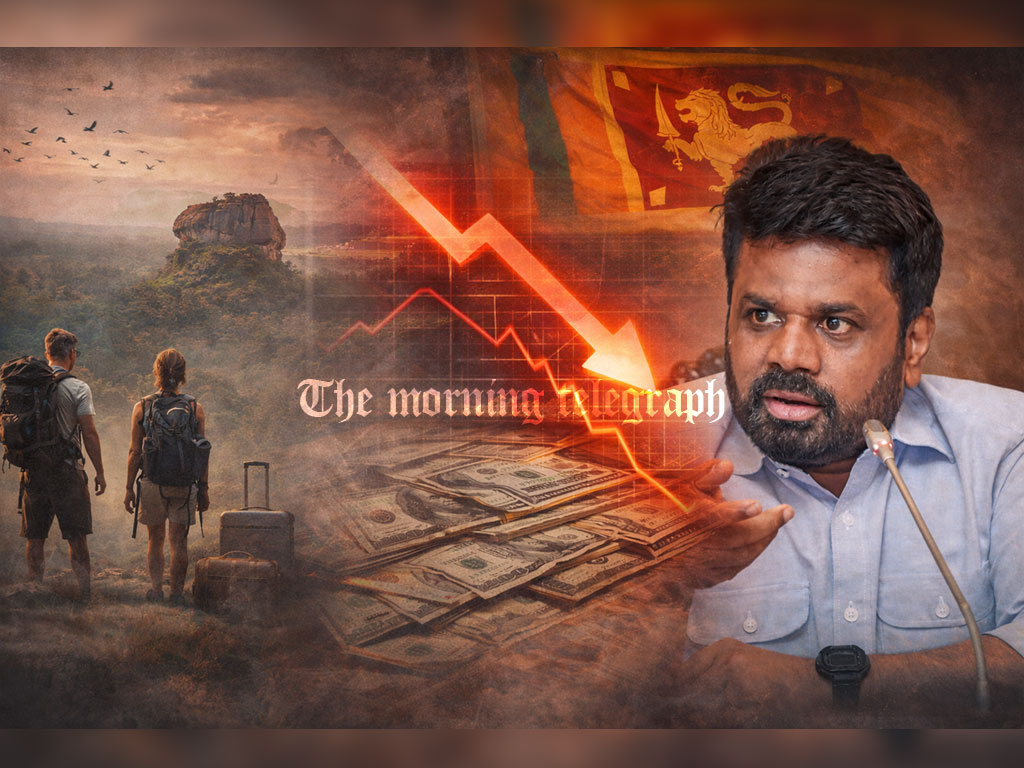
In 2025, 2.36 million tourists generated US $3.2 billion in revenue. In comparison, 2 million tourists in 2024 generated US $3.16 billion, meaning an additional 300,000 tourists in 2025 produced only US $4 million in extra income. This raises concerns about declining per capita tourist spending.
More significantly, the total tourism revenue earned in 2018 stood at US $4.38 billion, far higher than the 2025 figure. This directly contradicts claims that 2025 was the most successful year in revenue terms. When currency depreciation is factored in, the picture worsens. In 2018, the US dollar traded at approximately Rs. 180. In 2025, it stood at around Rs. 310. In real terms, the 2025 dollar earnings are significantly weaker, reflecting a depreciation of nearly 58 percent.
To illustrate this imbalance, critics point to a simple analogy. In 2025, 500 people attended a wedding and paid Rs. 3,200. In 2024, only 300 people attended but paid Rs. 3,160. More people did not translate into meaningful additional income.
The government led by Anura Kumara Dissanayake has also been criticised for failing to launch any major tourism promotion campaigns in 2025. Industry observers note that current arrivals are largely the result of promotional initiatives carried out in 2024 under then Tourism Minister Harin Fernando.
Tourism experts warn that Sri Lanka is undergoing a structural shift from a high end tourism destination to a low budget market dominated by backpackers, who typically spend less. This trend is evident in revenue stagnation despite higher arrivals.
Symbolic gestures and poor communication by officials have further damaged confidence. Critics argue that without serious investment in promotion, professional leadership and language skills at ministerial level, the long term prospects of Sri Lanka’s tourism industry remain uncertain.