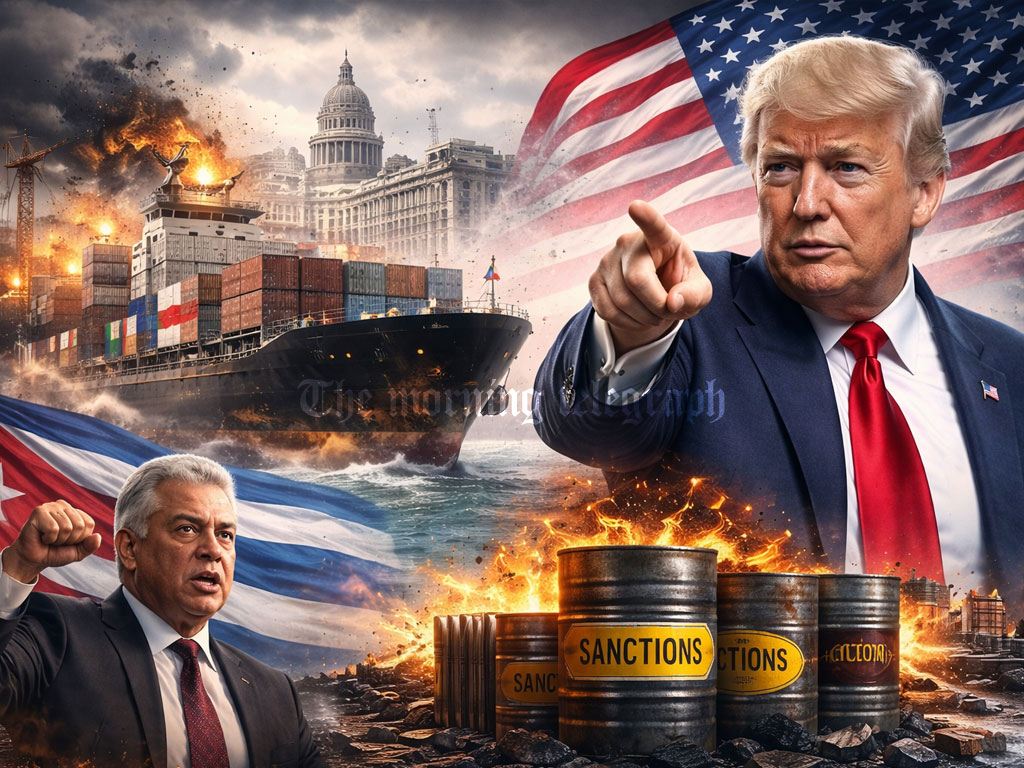
The United States has taken a sweeping new trade stance aimed at Cuba’s economy by imposing punitive taxes on oil suppliers, triggering international tensions and warnings of a regional humanitarian impact.
The United States has launched a significant escalation in its economic approach toward Cuba, with President Donald Trump signing an executive order designed to weaken Cuba’s socialist government by targeting its access to fuel. The order, issued on January 30, imposes additional taxes on goods imported from countries that sell or supply oil to Cuba, a move the State Department says is justified on the grounds of protecting U.S. national security and advancing its foreign policy objectives.

Under the new system, the United States can identify any country that supplies oil, directly or indirectly, to Cuba and then determine the level of punitive taxes that should be applied against that country’s imports. According to official statements, the U.S. intends to use this authority to cut off economic support to Cuba by discouraging other nations from providing it with vital fuel resources.
Analysts have noted that the new tax strategy resembles the U.S. policy of imposing extremely high tariffs, reportedly up to 500 percent, on countries that trade oil and uranium with Russia. In essence, the United States appears to be applying similar pressure tactics to curb economic relations that it believes undermine its geopolitical interests.
The Trump administration has accused Cuba of supporting hostile states and extremist groups like Hezbollah and Hamas, claiming that such associations pose a danger to U.S. national security. Officials have also asserted that Russia operates a large foreign intelligence outpost in Cuba, further complicating the strategic calculus behind the sanctions.
One direct consequence of the announcement is its impact on Mexico, which has become Cuba’s primary oil supplier in light of Venezuela’s economic collapse. Mexican President Claudia Sheinbaum Pardo reacted strongly, warning that the punitive tariffs risk triggering a “humanitarian crisis” across the region by disrupting fuel supplies and exacerbating existing economic hardships.
Cuba’s response was equally forceful. President Miguel Díaz-Canel condemned the move as an attempt to “suffocate” and devastate the Cuban economy. He described the sanctions as “fascist and criminal,” asserting that they serve narrow political aims at the expense of ordinary Cubans and ignore the broader interests of the American public.
The unfolding situation marks a significant turning point in U.S.-Cuba relations and highlights broader geopolitical tensions in the Americas. As countries assess the impact of these new measures, international debate is likely to intensify over economic sanctions as a tool of foreign policy.