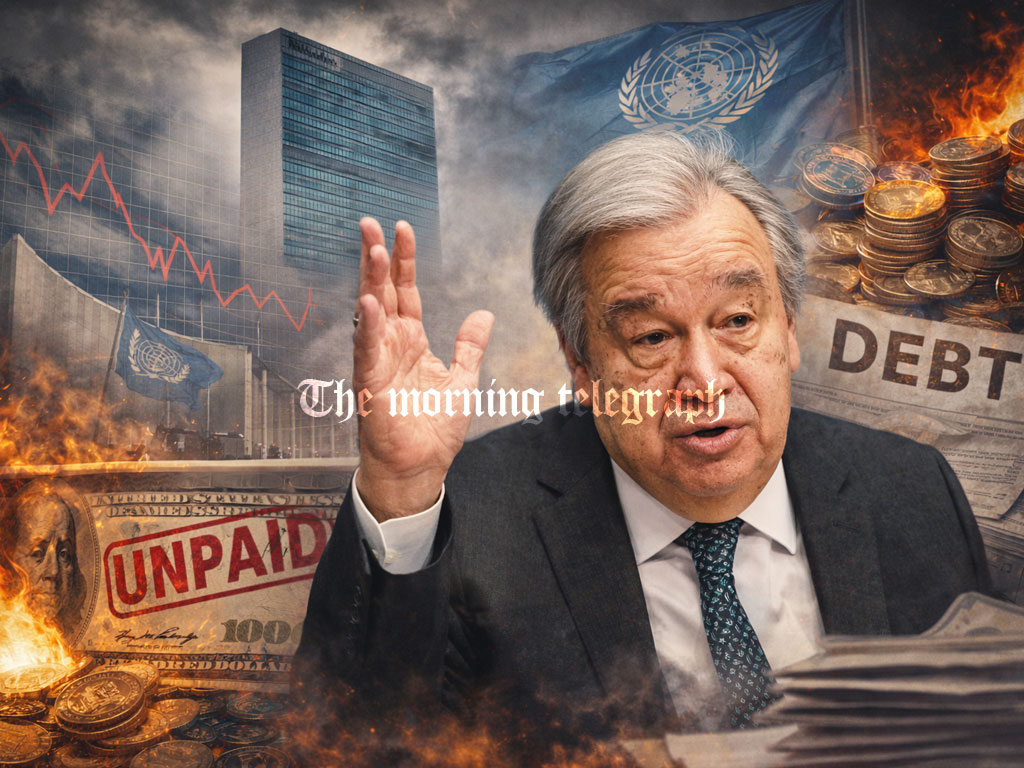
The UN chief issues his starkest warning yet, saying unpaid dues and outdated budget rules are pushing the world body toward an unprecedented financial breakdown.
United Nations Secretary-General Antonio Guterres has warned member states that the UN is facing an “imminent financial collapse,” delivering his most serious assessment yet of the organisation’s worsening liquidity crisis. In a letter dated January 28 and seen by Reuters, Guterres said chronic non-payment of dues and rigid financial rules are now threatening core operations and programme delivery across the UN system.

Guterres has repeatedly raised concerns about funding shortfalls, but this message was unusually blunt. “The crisis is deepening, threatening programme delivery and risking financial collapse. And the situation will deteriorate further in the near future,” he wrote. The warning comes as the United States, the UN’s largest financial contributor, continues to retreat from multilateral engagement and cut funding.
The US has reduced voluntary contributions to UN agencies and declined to pay mandatory fees to both the regular and peacekeeping budgets. President Donald Trump has previously said the UN has “great potential” but is failing to meet it, while also launching a Board of Peace that critics fear could weaken the existing international system.
Founded in 1945, the UN now has 193 member states and plays a central role in peacekeeping, humanitarian aid, human rights protection, and global development. Under current rules, member contributions are based on economic size, with the US responsible for 22 percent of the core budget and China 20 percent.
By the end of 2025, unpaid dues had reached a record $1.57 billion, Guterres said, without naming the countries involved. He warned that unless states pay in full and on time or agree to reform outdated financial regulations, the UN could run out of cash as early as July.
One major flaw, he noted, is a rule requiring the UN to return unspent funds to member states each year. “In other words, we are trapped in a Kafkaesque cycle expected to give back cash that does not exist,” Guterres said.
Despite cost-cutting reforms under the UN80 initiative and a 7 percent reduction in the 2026 budget to $3.45 billion, Guterres stressed that structural change is now unavoidable if the organisation is to survive.