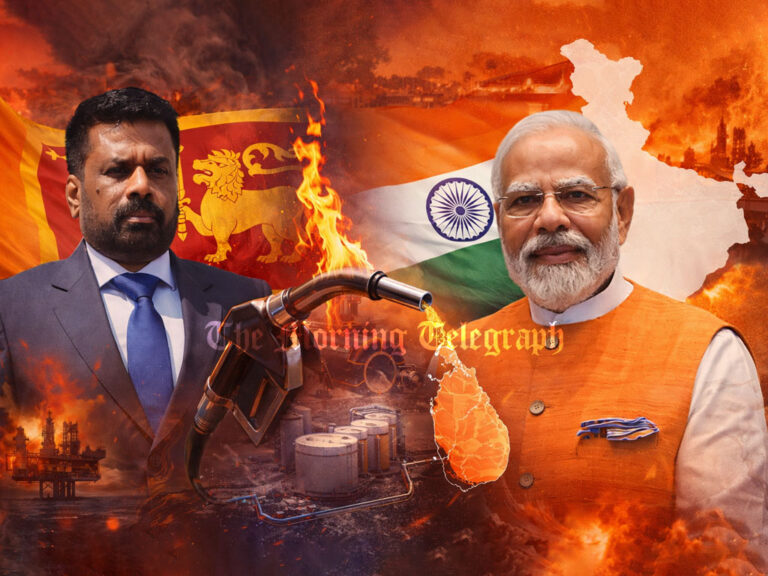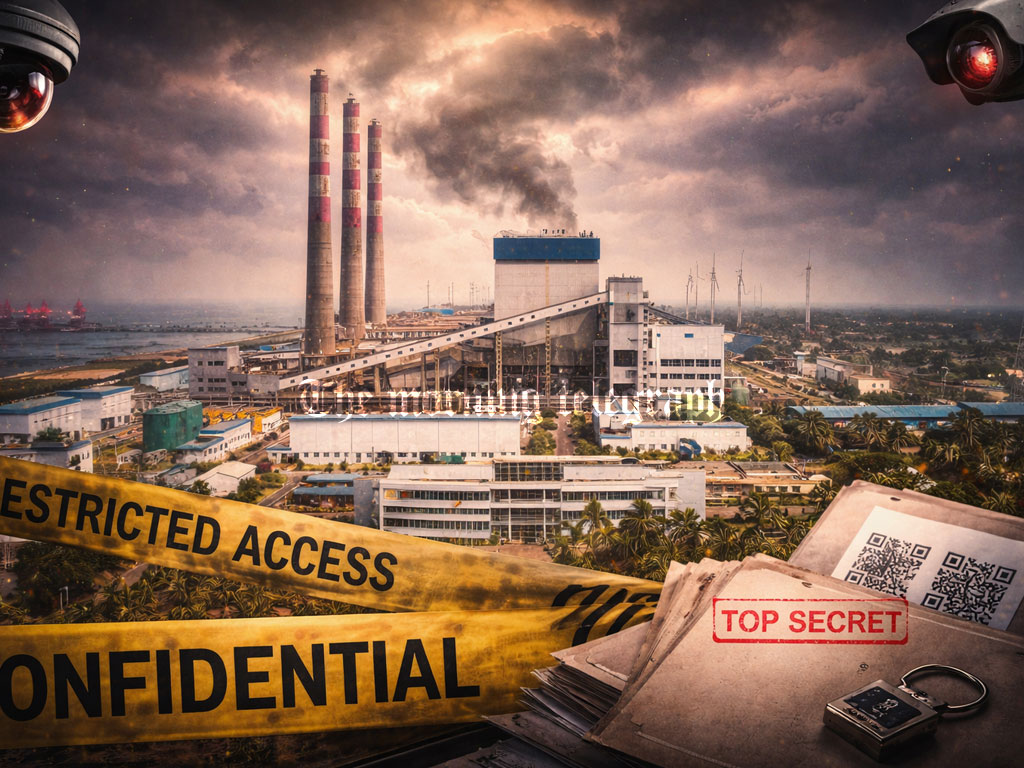
Bold allegations of secrecy, foreign meetings, and a controversial coal supply have ignited fresh political heat around Sri Lanka’s main power hub.
Employees at the Norochcholai Power Plant have been formally instructed not to share any internal information with external individuals or institutions without prior approval from management. The directive was issued through a special internal circular circulated in mid-January, significantly tightening controls on the flow of operational data and internal communication.

Electricity sector workers say the move has sharply restricted transparency at a time when the plant is already under intense scrutiny. According to union sources, the decision appears aimed at containing the growing controversy surrounding allegations of substandard coal imports and the competing narratives that have emerged around the issue.
Adding a political dimension to the dispute, Member of Parliament D.V. Chanaka has alleged that the minister responsible for the subject has travelled to Russia to meet representatives of a company accused of supplying inferior coal to Sri Lanka. The MP made the claim while appearing on the Red Sun programme on a private television channel.
“Never in history has a minister in charge of a subject traveled abroad to meet with coal companies and hold discussions like this. But the current minister has gone to Russia to meet with representatives of the company that is accused of these allegations. This is the first time such an incident has been reported in the history of this country.”
Chanaka stressed that the overseas visit raises serious suspicions, particularly given the unresolved questions surrounding the coal procurement process. He further revealed that despite repeatedly inviting the minister to engage in a public debate on what he described as a massive coal scam, there has been no response so far.
As pressure mounts, critics argue that restricting internal disclosures while key decisions are questioned publicly risks deepening mistrust rather than restoring confidence in Sri Lanka’s energy governance.