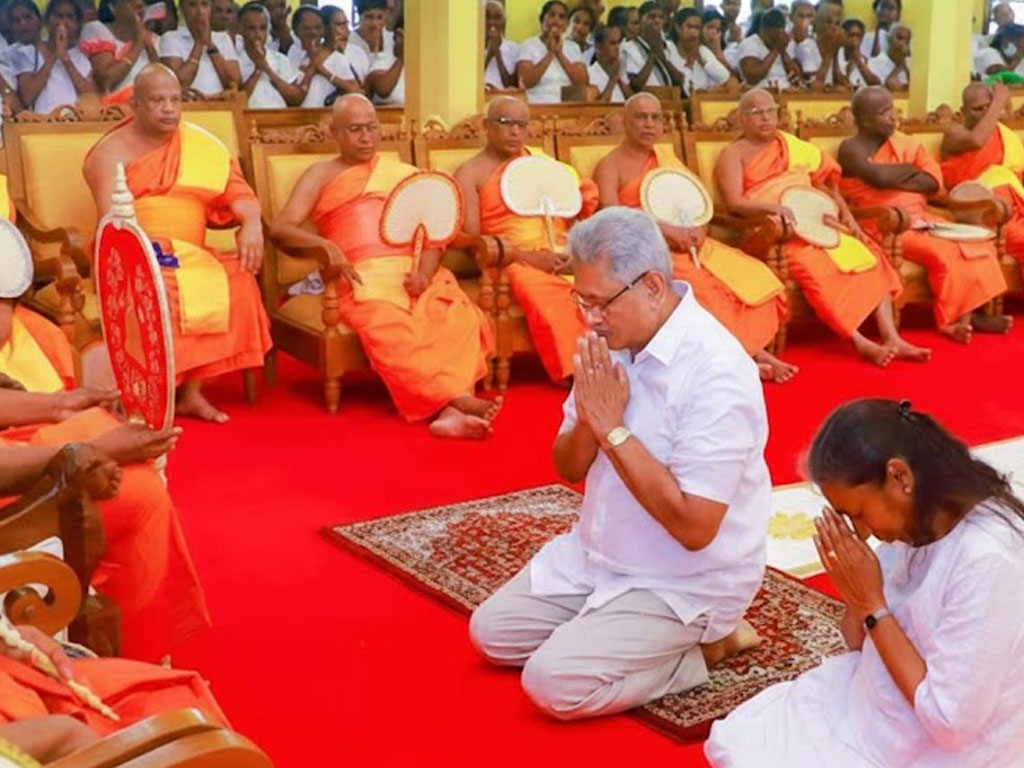
A former wartime leader retreats from politics into meditation and Buddhist study, fuelling quiet speculation about a life-changing final chapter.
At a time when the influence of the Mahanayakes is said to be shaping key state decisions, the State Secrets column reveals a striking personal transformation involving former President Gotabaya Rajapaksa. Once at the very centre of Sri Lanka’s political and security establishment, Rajapaksa is now reportedly leading a life far removed from public power and political engagement.

Rajapaksa holds a unique place in the country’s history. He is widely recognised as the first Sri Lankan President to be forced from office through a mass public uprising. Prior to his presidency, he played a decisive role as Defence Secretary in bringing an end to the country’s thirty year civil war. His name is also closely linked with the large scale urban development and beautification of Colombo, which reshaped the capital during his tenure.
Despite these credentials, his presidency collapsed amid intense public opposition, driven by economic hardship and what are said to have been flawed decisions and advice from those around him. Following his departure from office and temporary exit from the country, Rajapaksa largely withdrew from political life, avoiding public appearances and refraining from issuing political statements.
According to information now emerging, the former President is spending much of his time immersed in Buddhist philosophy and meditation. Sources indicate that he has significantly limited meetings with outsiders and is dedicating long hours to studying Buddhist texts and contemplative practice.
In this context, there is growing speculation that Rajapaksa may even consider entering the Buddhist monastic order later in life. If such a decision were ever made, it would mark an unprecedented moment in Sri Lanka’s political history, with a former President choosing the robes of a monk over a return to public power.