By Dwayne Ferreira
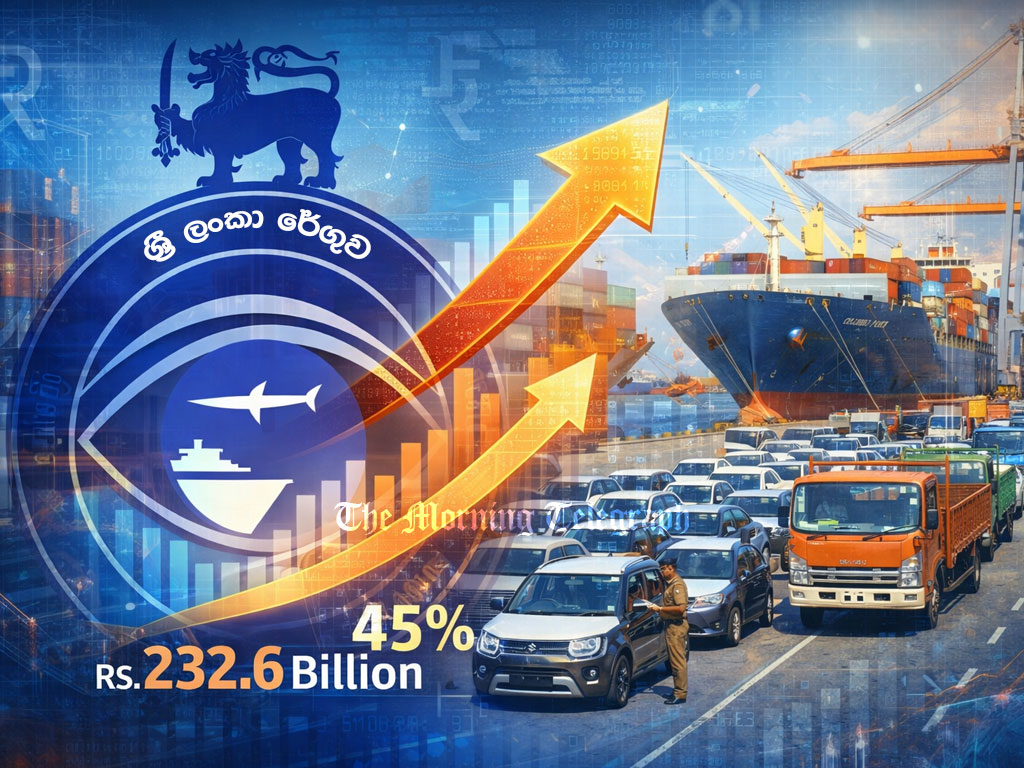
In a major boost for the national treasury, Sri Lanka Customs (SLC) reported a staggering revenue surge to start the 2026 fiscal year. Official data released yesterday reveals that the department outperformed its January revenue target by a massive 45%, collecting Rs. 232.6 billion against a projected goal of Rs. 160.2 billion. This unexpected windfall marks a significant turning point in the state’s fiscal recovery, providing the government with a vital liquidity cushion.

The primary catalyst for this revenue explosion is the continued momentum from the 2025 relaxation of vehicle import restrictions. After years of stringent bans to conserve foreign exchange, the reopening of the automobile market has proved to be a goldmine for the taxman.
In 2025, vehicle-related taxes alone contributed approximately Rs. 900 billion to the state coffers. While analysts had predicted a “revenue shock” in 2026 due to potential market saturation, the January figures suggest that pent-up demand remains surprisingly resilient. The influx of both commercial and personal vehicles—many of which were cleared after delays caused by Cyclone Ditwah late last year—has funneled billions in excise and import duties directly into the Treasury.
Beyond the “vehicle factor,” Customs officials attribute the outperformance to a series of structural reforms. Stronger enforcement against under-invoicing and more rigorous valuation practices have ensured that the government captures a higher percentage of the value of goods entering the country.
Furthermore, the stabilization of the Sri Lankan Rupee has encouraged a steady flow of general imports. By clearing the backlog created by weather disruptions in late 2025, the SLC has managed to maintain a “frictionless” trade flow that has expanded the overall trade volume, particularly in the industrial and consumer goods sectors.
This revenue surprise comes at a critical time for Sri Lanka’s economic management. With a target of Rs. 2.2 trillion set for the entirety of 2026, the January performance puts the country well ahead of its fiscal schedule. This surplus provides the government with more breathing room to meet the stringent primary balance targets required under the ongoing IMF-supported program, potentially reducing the need for further emergency tax measures later in the year.
As the island transitions from crisis management to sustainable growth, the Customs performance serves as a clear indicator: when trade barriers fall and efficiency rises, the national balance sheet follows suit.