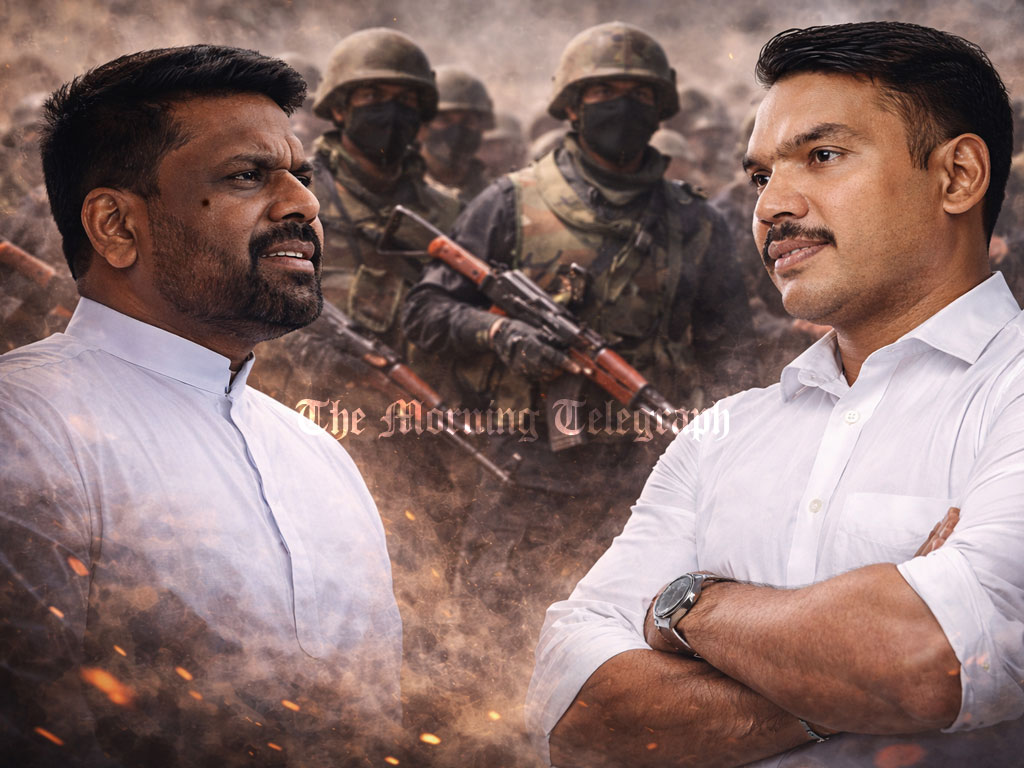
A fiery parliamentary speech reignites Sri Lanka’s war legacy debate, as Namal Rajapaksa accuses the government of lacking courage, conviction, and respect for those who ended decades of terrorism.
Namal Rajapaksa, National Organizer and Member of Parliament of the Sri Lanka Podujana Peramuna, launched a scathing attack on the President and the government, accusing them of lacking the backbone to openly honour war heroes on Independence Day.

Speaking in Parliament on February 5, Rajapaksa insisted that Sri Lanka did not wage war against the Tamil people but fought and defeated terrorism that the world believed could not be defeated. He said the tri forces, police, and civil defence forces achieved what many nations thought impossible, yet the current leadership lacks the courage and self confidence to say so with pride on the nation’s most important day.
Namal Rajapaksa responded to comments made earlier in the House about development and port expansion, welcoming the shift in tone from those who once opposed such projects. He reminded MPs that terminals and ports now praised were fiercely protested against when first initiated, adding that he was glad the government had finally accepted their importance to national development.
However, he warned that economic progress cannot come at the cost of national security. Rajapaksa questioned the release of 323 red labelled shipping containers without proper investigations and alleged that even containers linked to international intelligence reports on narcotics had been released. He accused the government of silence and inaction, asking whether Parliament was now expected to clean up decisions already made without accountability.
Mocking the government’s legislative priorities, Rajapaksa said it would be better to merge the Money Laundering Act and the Public Property Act into a new law called Political Revenge, claiming it was being used selectively against political opponents while serious security concerns were ignored.
Turning to Independence Day celebrations, he said most countries proudly recount military victories and honour the sacrifices of their armed forces, including those from World War I and World War II. In contrast, he argued Sri Lanka avoids acknowledging the defeat of Liberation Tigers of Tamil Eelam terrorism, even though it was not an act of racism but a victory against violence that threatened all communities.
Rajapaksa said if the President cannot confidently acknowledge this achievement, it reflects a deeper problem in the government’s political journey and its relationship with the police and armed forces. He added that while the government may pursue its own political agenda, it should at least show respect to war heroes on National Day.
He also criticised ministers and MPs for publicly attacking religious leaders, calling it wrong and harmful to social harmony. He urged the government to listen to the Maha Sangha and accept mistakes with humility rather than pride.
Raising concerns about law enforcement, he questioned why protests in Jaffna on Independence Day received police protection while Buddhist clergy faced arrests elsewhere, warning of selective application of rights and rising resentment.
On fishermen’s safety, Rajapaksa said Sri Lankan fishermen face attacks within national waters amid rising fuel costs and broken promises of technological support. He questioned whether organised criminal groups were behind some attacks and reminded the government of its duty to protect the coastline using naval strength.
He concluded by urging the government to stop inciting divisions, respect religious leaders, protect fishermen, address cyclone victims properly, and avoid alienating the majority while courting diaspora support.