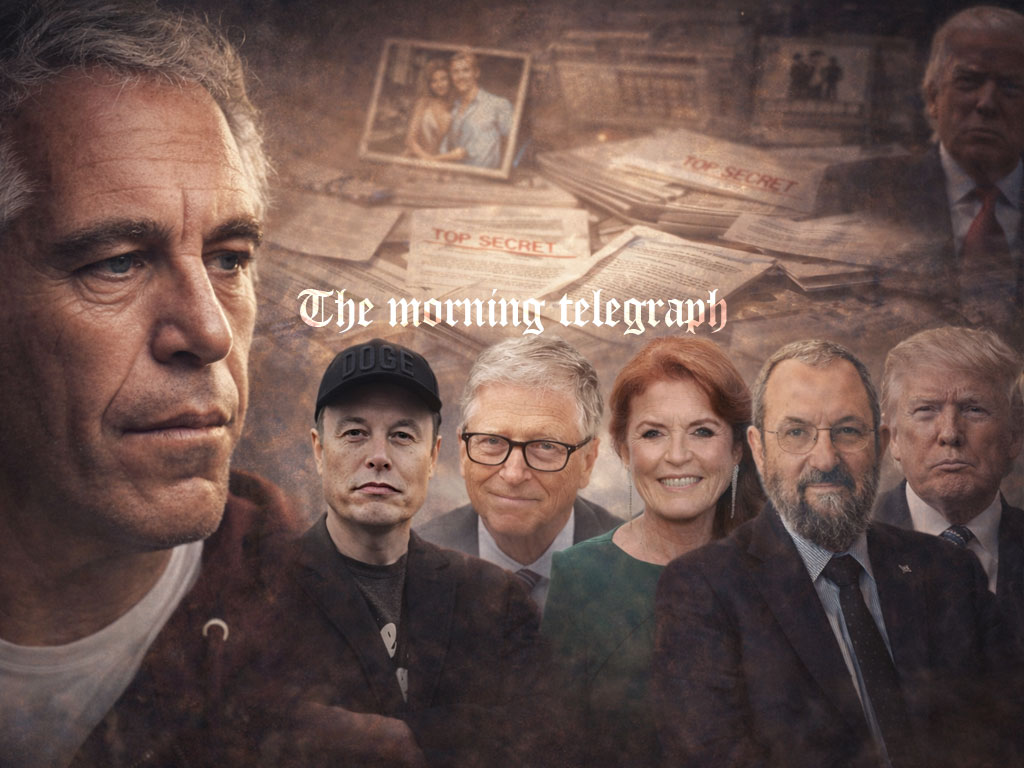
A sweeping document release has dragged billionaires, politicians, royals, and cultural icons into the orbit of Jeffrey Epstein, reigniting global scrutiny while raising urgent questions about power, proximity, and accountability.
The world has been gripped by a story of unimaginable crime, immense wealth, and powerful connections. At the center of it all is Jeffrey Epstein, the financier and convicted sex offender whose death in a Manhattan jail cell in 2019 turned a sordid criminal case into a global conspiracy of silence. For years, the full extent of his network—the so-called “Epstein client list” has been the subject of feverish speculation, court battles, and journalistic investigation. Now, a monumental release of documents is pulling back the curtain further than ever before.

Driven by the Epstein Files Transparency Act, a federal mandate signed into law to demand accountability, the latest disclosure is seismic. It unleashes a staggering three million pages of material into the public domain, a digital avalanche comprising 180,000 photos, 2,000 videos, and countless emails, flight logs, and investigative reports. This is not merely an update; it is a floodlight being switched on in a very dark room. The Epstein document release names a breathtaking roster of the world’s most famous and powerful individuals, from tech titans and former presidents to European royalty and renowned academics.
It is a foundational point of justice and responsible reporting to state unequivocally: appearance within these files is not an indictment of guilt. The documents serve as a vast map of Epstein’s social archipelago, detailing points of contact, correspondence, and association over decades. Many of those named have long insisted, and continue to insist, they had no knowledge of his horrific crimes. Their presence may indicate a social connection, a professional consultation, or an accepted invitation, but it does not, on its own, prove complicity in criminal activity. The purpose of this release is transparency, to allow the public and investigators to see the full landscape of relationships that Epstein cultivated and exploited.
This landscape reveals a man who operated with chilling precision, leveraging his wealth and persona as a philanthropic businessman to infiltrate the highest echelons of society. The Epstein flight logs for his private jets, the “Lolita Express,” show a passenger manifest of staggering influence. His homes in New York, Palm Beach, and his private island in the U.S. Virgin Islands, Little St. James, were hubs where the famous, the intellectual, and the powerful crossed paths. The newly released documents provide granular, often unsettling, detail about these interactions, raising profound and uncomfortable questions about what was known, what was ignored, and how a predator could navigate these rarefied circles for so long.
The global interest in the Epstein list stems from a fundamental desire for answers and accountability. For the victims, who have endured unimaginable trauma and a legal system that initially failed them, these files represent a painful but necessary step toward a fuller truth. For the public, they fuel a necessary examination of how power and privilege can create shields of impunity. This deep dive explores the key figures named in this latest release, the context of their connections as revealed by the documents, and their responses to being entangled in one of the most notorious scandals of the 21st century.
The Tech Titans: Silicon Valley’s Entanglement
The world of cutting-edge technology and vast digital fortunes was not immune to Epstein’s outreach. Two of its most prominent billionaires find their names woven into the narrative through electronic correspondence.
Elon Musk: The SpaceX and Tesla founder appears in email exchanges that discuss travel plans. The messages, dated from late 2012, include casual banter about Epstein’s infamous private island. In one, Musk writes, “Is the wildest party on your island in the afternoon or at night?” Another states, “I really want to go to a party in St. Barts or somewhere and have a great time,” while also referencing a desire for a more subdued “peaceful island experience.” The tone is informal, suggesting a degree of familiarity.
Musk has publicly addressed these emails, suggesting the correspondence may have been fabricated or that his name was being used for “smear purposes.” He has consistently and categorically denied ever visiting Epstein’s island or participating in any activities there. His focus has been on distancing himself from the saga and supporting the prosecution of those directly responsible for crimes.
Bill Gates: The Microsoft co-founder and philanthropist is referenced in two particularly bizarre emails from July 18, 2013, which are purportedly from Epstein. The authenticity and even the intended recipient of these emails are unclear within the document trove. One constructs a fabricated resignation letter from the Bill & Melinda Gates Foundation, making grotesque and unverified claims about Gates’s personal conduct. Another, beginning “Dear Bill,” contains similarly outrageous allegations about hiding a sexually transmitted disease.
A spokesperson for Gates dismissed the claims in the strongest possible terms, labeling them “completely absurd and untrue” and attributing them to “a proven liar.” They represent the kind of unsubstantiated assertion that fills the edges of this case. Separately, Melinda French Gates spoke to the emotional impact of the document releases, telling an interviewer it brought back difficult memories of her marriage’s end and expressing profound sympathy for Epstein’s victims. “I can look at those young girls and say, ‘Oh my God, how did that happen to those girls?’… I hope that those women will get some justice,” she said.
Sergey Brin: The Google co-founder’s name surfaces in the Epstein documents in the context of social invitations. Correspondence shows Brin was invited to dinners at Epstein’s New York home by Ghislaine Maxwell, Epstein’s longtime associate who was convicted for her role in his scheme. In an April 2003 email, Maxwell wrote to Brin, “Jeffrey’s dinners are always fun and easy,” and expressed a desire to connect. Further records suggest a visit to Epstein’s private island was planned or discussed.
The emails present as typical social networking within elite circles. There is no evidence within the released material of wrongdoing or of Brin accepting every invitation. The communications highlight how Epstein and Maxwell used the lure of exclusive gatherings to build their roster of influential contacts. A request for comment on the specific documents was not returned.
Political Power: From the White House to Global Diplomacy
Epstein’s network displayed a particular strength in the realms of politics and diplomacy, spanning multiple administrations and international borders. The documents reveal a bipartisan allure and a concerning persistence of contact even after his sex crime conviction.
Donald Trump: The former U.S. president’s name appears hundreds of times. Importantly, a significant portion of these mentions are contained within an FBI log of unverified tips and allegations called into a public threat hotline. This log, compiled as part of the investigation, is a raw data dump that includes countless accusations against numerous public figures, including Trump and Epstein. They are presented without investigative conclusion, corroborating evidence, or vetting, reflecting the chaotic influx of information that often surrounds high-profile cases.
Trump has addressed his relationship with Epstein numerous times over the years. He has stated they socialized in Palm Beach circles in the 1990s and early 2000s but that he fell out with Epstein and had not spoken to him for over a decade before his arrest. “I was not a fan of his,” Trump has said, emphasizing that he had no knowledge of any criminal activity. He has also pointed out that no Epstein victim has brought criminal charges against him.
Bill Clinton: The former Democratic president’s association with Epstein has been public for years, cemented by photographs of them together and records of trips on the Epstein plane. The latest files reinforce this historical link, including photographs from the early 2000s. A Clinton spokesman, addressing a prior document release, drew a clear line, stating Clinton had no knowledge of Epstein’s crimes and cut ties well before they became public. The spokesman created a defining dichotomy: “There are two groups of people here. The first group knew nothing and cut off contact with Epstein before his crimes were exposed. The second group has continued to maintain contact with him since then. We are in the first group.”
Ehud Barak: The former Israeli Prime Minister and military chief’s connections are detailed in the files, showing correspondence and meetings that continued after Epstein’s 2008 guilty plea in Florida. One communication indicates Barak planned to stay at Epstein’s luxurious New York townhouse in 2017, years after Epstein was a registered sex offender.
Barak has been open about knowing Epstein, describing him as a “friend” in a 2019 interview. He has adamantly stated that he never witnessed or participated in any improper behavior during his visits to Epstein’s homes. He framed their discussions as centered on science, philanthropy, and business.
Larry Summers: The renowned economist and former U.S. Treasury Secretary is referenced in documents detailing meetings and dinners. More pointedly, emails from 2017 show Summers and Epstein exchanging messages that mock and criticize then-President Donald Trump. In one, Epstein writes of Trump, “Your world really doesn’t understand how stupid he is.”
Summers has expressed public regret for maintaining a connection with Epstein. After being named in an earlier batch of documents, he stated he takes “full responsibility for the wrong decision I made to continue communicating with Epstein.” This regret translated into action, as he resigned from several high-profile board positions, including an advisory role at OpenAI, to avoid being a distraction.
Miroslav Lajčák: A seasoned Slovakian diplomat who has served as Foreign Minister and President of the UN General Assembly, Lajčák appears in a stark text message exchange from October 2018. After Epstein sent a photo (not visible in the released files), Lajčák replied, “Why don’t you invite me to these games? I’ll take the ‘MI’ girl.” Epstein’s response was, “You can have both of them, I’m not the owner. And their sisters too.”
The casual and troubling nature of this exchange, which appears to trivialize the treatment of women, had immediate consequences. Following the document release, Lajčák resigned from his position as Slovakia’s national security adviser. He has not been charged with any crime, but the incident demonstrates how the Epstein files can end careers through revealed judgments and associations.
British Royalty and Aristocracy: A Palace Connection
Perhaps no strand of the Epstein web has captured the British public’s attention more than its connections to the Royal Family. The documents add new layers to a story that has already caused profound reputational damage.
Prince Andrew, Duke of York: The latest release includes several previously unseen photographs of the Prince. They are socially awkward and instantly inflammatory: one shows him kneeling over the body of a clothed, unidentified woman lying on the ground, his hand on her abdomen. Another captures him looking directly at the camera with a slight smile. The images are presented without context, date, or location, but their visual impact is powerful and disturbing.
These photos add to the mountain of problematic imagery surrounding the Prince’s friendship with Epstein. He has consistently and categorically denied any wrongdoing or inappropriate behavior. In 2022, he settled a civil lawsuit brought by Virginia Giuffre, who accused him of sexual abuse, for a reported sum believed to be in the millions. The settlement included no admission of liability. The new photographs, however, ensure the controversy remains firmly in the public eye, symbolizing the recklessness of the association.
Sarah Ferguson, Duchess of York: The ex-wife of Prince Andrew, known popularly as Fergie, appears in email chains. In one from the period when Epstein was serving his controversial work-release jail sentence, an email believed to be from Epstein states, “I think Fergie can now say that I am not a psychopath who experiences sexual attraction to young children.” Another from April 2009 effusively praises Epstein: “My dear, great and special friend Jeffrey. You are a great man, I am very proud of you.”
The emails suggest a friendly, supportive relationship between the Duchess and Epstein during a time when he was a convicted sex offender. They do not, in themselves, indicate criminal activity on her part. They do, however, illustrate how Epstein maintained social bonds within prestigious circles even after his legal downfall, using figures like Ferguson to bolster his image as a misunderstood philanthropist. A representative did not provide a new comment specific to this release.
Lord Mandelson: The senior Labour peer and former Cabinet minister is implicated in the files through financial records and emails. Bank statements show Epstein made two payments totaling around $75,000 to accounts linked to Mandelson and his partner, Reinaldo Avila da Silva. In a 2009 email, after Epstein’s conviction, da Silva asks, “Is there anything you can do for me?” Epstein replies, “I will forward your loan immediately.” UK authorities have investigated Mandelson for allegedly passing sensitive market information to Epstein.
Mandelson has expressed clear regret, calling it a “big mistake” to have associated with Epstein after his conviction. He maintains that his interactions were purely in the context of seeking economic advice during the turbulent 2008 financial crisis. “I was never guilty or complicit in (Epstein’s) crimes,” he stated. “Like everyone else, I only found out about him after his death.” He has not commented on the specific allegations of leaking information.
The World of Business, Media, and Academia
Epstein’s tentacles extended deeply into the worlds of finance, entertainment, law, and intellectual thought, revealing a strategy to gain credibility and influence across a spectrum of elite society.
Richard Branson: The Virgin Group founder’s name appears frequently. A 2013 email exchange is telling: Epstein thanks Branson for hospitality and public relations advice. Branson warmly replies, calling it “a real pleasure,” and adds, “I’d be happy to see you whenever you come to the area, as long as you bring your harem.” Virgin Group later clarified that “harem” referred humorously to three older, male members of Epstein’s entourage.
Virgin Group issued a detailed statement, explaining that Branson had limited, group-oriented contact with Epstein over a decade ago. It revealed that when Epstein offered a donation to Virgin’s charitable arm, due diligence was conducted. This process uncovered serious allegations, leading them to reject the funds and cease all contact immediately. “Richard believes that Epstein’s actions were abhorrent and he supports the right of his many victims to seek justice,” the statement concluded, drawing a firm ethical line.
Steve Bannon: The former Trump strategist and media figure is revealed to have had extensive text message communication with Epstein in 2018 and 2019. This was after Bannon left the White House and while he was reportedly developing a film project about Epstein. The messages show Bannon acting as an informal advisor, suggesting Epstein needed to “push back on the lies” and strategically “rebuild your image as a philanthropist.”
The exchanges reveal a collaborative, strategic relationship aimed at rehabilitating Epstein’s public persona in the final year of his life. Bannon, who has not been accused of any criminal activity related to Epstein, did not respond to requests for comment on the document release. The messages underscore how Epstein continued to seek counsel from influential figures in media and politics to reshape his narrative.
Brad Karp: The situation was particularly consequential for the then-chairman of the prestigious law firm Paul, Weiss, Rifkind, Wharton & Garrison. Emails emerged showing Karp discussing legal strategy with Epstein in March 2019, just four months before Epstein’s arrest on federal sex trafficking charges. The subject was Epstein’s effort to preserve his controversial 2008 non-prosecution agreement. One email from Karp states, “The draft motion is in very good shape.”
The revelation led directly to Karp’s resignation from the firm’s leadership. In a statement, he said the reporting had “created a distraction” and focused attention on him in a way that was not in the firm’s best interests. While not admitting any ethical breach, his departure highlights the severe professional repercussions that can follow from being enmeshed in the Epstein narrative, even in a professional legal capacity.
Brett Ratner: The Hollywood director of films like Rush Hour and X-Men: The Last Stand is pictured in photographs within the files. One image shows him sitting on a sofa in close proximity to Epstein and two unidentified women. Another shows him embracing a young woman in a social setting.
The photos place Ratner within Epstein’s social orbit, a fact that has been reported previously. The documents do not provide new narrative context for the images. A representative for Ratner did not provide a new comment in light of this specific release.
Steve Tisch: The New York Giants co-owner and film producer appears in email exchanges that are notably direct. In one, Tisch asks Epstein about a woman he met at his home, inquiring if she was a professional or a “civilian.” In other messages, Epstein tells Tisch he has a “gift” for him, describing a group of women as “Tahitians, mostly French speakers, they’re an extraordinary bunch.”
Tisch stated he had only “a little interaction” with Epstein, never accepted his invitations to travel, and “never been to his island.” The emails, however, depict a communication style that is casual and familiar, with Epstein explicitly offering the kind of “gift” that aligns with the core allegations against him.
Peter Attia: The popular health and longevity expert, a medical doctor and podcaster, exchanged hundreds of emails with Epstein, according to the documents. Their correspondence included lewd jokes about female anatomy and sexual practices. They also discussed media strategy regarding the growing allegations against Epstein, with Attia apparently offering advice on how to handle the press.
Attia addressed the release head-on, stating he “was not involved in any criminal activity.” He drew clear geographic boundaries, asserting he was “never on his plane, never on his island, and never attended any sex parties.” His statement attempts to separate social or advisory email communication from direct participation in Epstein’s criminal enterprises.
Howard Lutnick: The billionaire CEO of Cantor Fitzgerald and a former official in the U.S. Commerce Department is shown planning a family trip to Epstein’s Little St. James island in December 2012. An email from Lutnick’s wife to an Epstein aide reads, “We’re going to come see you” and “We’d love to have you for lunch.”
A statement indicated Lutnick had “limited contact” with Epstein and was not accused of any wrongdoing. The planning of a family trip, however, suggests a relationship that was social and familial in nature, presented as perfectly normal at the time.
Noam Chomsky: The revered linguist and political philosopher appears in the documents advising Epstein on media strategy as late as February 2019. In an email exchange, Chomsky laments the “horrible treatment” of Epstein and the “increasing hysteria over the abuse of women.” He offers his counsel: “It’s painful to say, but I think the best way forward is to ignore it.”
Chomsky’s inclusion is perhaps one of the most intellectually jarring for many observers. It demonstrates how Epstein successfully courted and retained the sympathy of leading liberal thinkers. Chomsky’s advice to “ignore” the allegations stands in stark contrast to the brutal reality of the crimes. His name in the files does not suggest wrongdoing, but it powerfully illustrates the depth of Epstein’s deception and the breadth of his support network. Requests for comment were not returned.
The Unending Quest for Truth and Justice
The release of this colossal cache of Jeffrey Epstein documents is not the end of the story. It is a critical, explosive middle chapter. The Epstein Files Transparency Act has achieved its primary goal: forcing a level of disclosure that was unimaginable years ago. The Epstein list is no longer just a whispered rumor; it is a sprawling, documented reality filled with famous names.
For the victims, these pages are a brutal validation of their long-ignored stories. They see their abuser’s world laid bare, the powerful people he dined with, flew with, and emailed. This transparency is a form of justice in itself, countering the secrecy that protected Epstein for decades.
For the public, the files present a complex moral puzzle. They force us to confront the uncomfortable gray areas between association and culpability, between social oversight and willful ignorance. They ask how a man like Epstein could become a fixture in so many prestigious worlds. The documents do not provide easy, uniform answers, but they demand that the questions be asked with renewed vigor.
The legal and social repercussions will continue to unfold. Careers may falter, reputations may be permanently scarred, and further investigations may be sparked. The global conversation about power, privilege, and accountability has been irrevocably shaped by the contents of these files. The story of Jeffrey Epstein is, at its heart, a story about a failure of systems, legal, social, and moral. This latest document dump ensures that the work of addressing those failures, and seeking a full measure of justice for the victims, remains squarely and unavoidably in the spotlight.