A reflection on parallel concerts, shrinking common ground, and the quiet erosion of shared humanity
By Roshan Jayasinghe
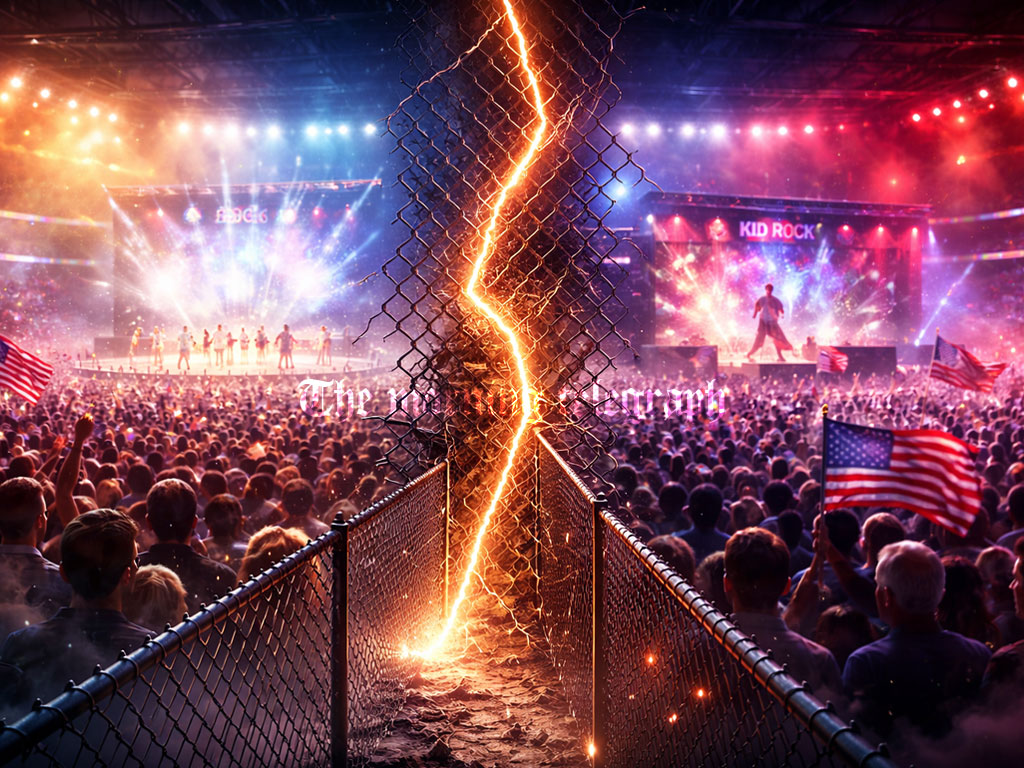
During what was meant to be a shared national pause in the Super Bowl, two halftime stages emerged.
One broadcast to the world.
One streamed to an ideology.
This is not a reflection about music.
It is a reflection about what happens when even our moments of play can no longer hold us together.
These are my observations from today, during the Super Bowl halftime, and what that moment quietly revealed to me about where we are as a society.

I’m not judging what anyone chooses to watch. I’m observing what it says about us when we can’t share even a pause.
There was a time when halftime did not require ideological alignment.
You watched the game.
You watched the show.
Or you went to the kitchen and missed both.
No one needed a political filter to sit through twelve minutes of music.
That intermission space belonged to everyone because it was never designed to represent anyone in particular. It was simply part of the spectacle of sport.
A pause inside competition.
Today, during that intermission, an alternative halftime concert was staged. Organized through MAGA aligned circles. Headlined by Kid Rock and others. Streamed online as a cultural counter to the official NFL halftime show.
Not an after party.
Not a separate festival.
A deliberate parallel stage.
And that distinction matters.
Because it was not created out of musical creativity. It was created out of ideological separation.
The numbers quietly tell the story
The official halftime show sat inside the Super Bowl broadcast itself.
Historically that audience sits somewhere around one hundred million viewers in the United States alone, with global spillover far beyond that. It remains one of the most watched entertainment segments in the world each year.
The alternative concert drew livestream numbers in the range of a few million viewers across platforms.
Not insignificant. But not comparable.
Stadium versus digital rally.
Mass cultural moment versus ideological gathering.
And yet numerical comparison was never really the objective.
The objective was symbolic existence.
To say, “We have our own halftime.”
When leisure becomes political territory
This is where the observation moves beyond humor.
Sport traditionally functioned as neutral ground.
You may disagree on immigration, taxes, religion, or economics.
But for a few hours you sat in the same emotional arena.
You cheered the same touchdown.
You groaned at the same referee call.
You watched the same halftime show whether you loved it or criticized it.
Shared experience softened division.
Now even that intermission space is being partitioned.
It is one thing to protest policy. That is democratic expression.
It is another thing to fragment entertainment itself along political lines.
When halftime needs a border, something deeper is happening beneath the surface.
It is worth pausing here for a quieter observation.
Parallel stages are not built because people love music differently.
They are built because people no longer trust shared spaces to hold them safely.
So they create smaller rooms.
Rooms where everyone thinks the same.
Feels the same.
Claps at the same moments.
Comfortable spaces, yes.
But smaller ones.
The psychology behind parallel stages
The alternative concert was framed not just as music, but as cultural refuge.
A place for those who felt the NFL halftime show did not represent their identity or values.
Entertainment became ideological shelter.
And once people begin building separate shelters for leisure, it signals social fatigue more than cultural strength.
It means we no longer trust common ground.
So we construct parallel ground.
A humorous but telling contrast
If one steps back without hostility, the contrast itself becomes quietly symbolic.
On one side, a global broadcast production watched by over one hundred million viewers.
On the other, a politically framed livestream drawing a few million aligned viewers.
Not meaningless. But not equivalent.
It was less two equal concerts and more two different emotional purposes.
One sought spectacle.
The other sought belonging.
Leadership and the responsibility of unity
This is where national leadership enters the reflection.
Any president, regardless of party, symbolically represents all citizens living under one nation.
Not just supporters.
When cultural fragmentation accelerates under political permission or encouragement, it signals a concerning direction.
Leadership, at its highest form, widens shared space.
It reminds citizens of common belonging even in disagreement.
When parallel cultural stages emerge with ideological blessing, it suggests movement in the opposite direction.
Inward.
Smaller.
More tribal.
The undertone of cultural isolationism
There was also language surrounding the alternative concert that leaned toward exclusivity.
Phrases about “real America” or “true patriots” may energize a base, but they narrow the definition of belonging.
A nation built from many migrations, histories, and identities cannot sustain unity if entertainment itself begins defining who counts and who does not.
When culture becomes nationalistic theater rather than shared expression, humanity quietly recedes behind ideology.
And that is always a regression of values, not an elevation of them.
What the contrast really revealed
This moment was never about which concert sounded better.
It revealed deeper social signals.
Shared spaces are shrinking.
Identity now dictates leisure.
Society is becoming more comfortable building parallel realities than negotiating common ones.
The halftime show remained global spectacle.
The alternative concert remained ideological statement.
Both existed.
But only one functioned as collective cultural ground.
Closing reflection
Sport was meant to be one of the last arenas where humanity could sit together without preconditions.
Where the jersey mattered more than the voter registration card.
Where halftime was just music, not messaging.
When we begin dividing even those spaces, it is not cultural progress.
It is social retreat.
Not forward movement in human values, but a quiet step backward toward tribal comfort zones dressed in modern production.
The question is not which concert won.
The question is whether we still remember how to share the same stadium without needing separate stages to feel seen.
Because once even play requires ideological alignment, we are no longer just watching games.
We are watching the slow fragmentation of common humanity itself.
Author’s Note
This reflection is written not from political allegiance, but from human observation.
I write from what I see unfolding in shared spaces, cultural behavior, and leadership tone. My intention is not to criticize preference, but to question fragmentation.
About the Author
Roshan Jayasinghe is a writer and observer of human systems. His work explores the gap between man made constructs and lived humanity, with a focus on how economics, trade and everyday choices intersect with questions of fairness, responsibility and inner alignment. Through essays for publications in The Morning Telegraph, he aims to remind readers that they are not passengers in a fixed machine, but active custodians of a shared world.